(I’m reposting/resending this because the first time WordPress dropped the text when it sent out the email. Sorry about that!)
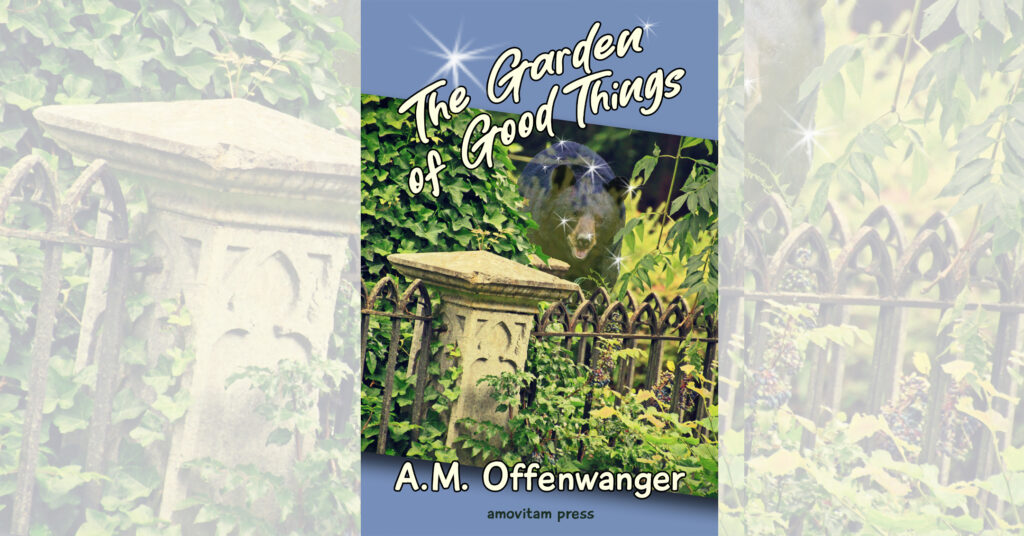
“No, darling,” Marina said, “that’s just a reflection.” But it wasn’t, Arlo was sure of it. It had moved. Under the water. Like something alive. Something not a fish. Some of his thoughts must have shown on his face, because Marina put on that really annoying voice she had when she was “explaining” something. “See, darling,” (why was she always calling him “darling”? She seemed to think that would make him feel more like she was his mom. It didn’t.) “all this is is light bouncing off the surface of the water, and it creates wave lengths that bounce off each other, making it look like there is something there. But there isn’t, see?” She gave a tinkling laugh, as if to say, Only a silly child like you would think there was. Maybe he was a silly child, so be it. But he had seen it. There was the creamy brown sand, the blue of the water – a bluer blue that he had ever seen in the water, blue like the little cream jug in the cupboard at his granny’s house, the one that granny used to serve him hot chocolate in when he was small. Hot chocolate with whipped cream on top. Creamy brown sand, the cream jug blue of the water rippling over it – and between them, it. A white-pink streak like a cloud darting across his vision, from left to right. Streaking, undulating. And as it flashed by, it had turned its – its head? And it looked at Arlo. He knew it had looked at him. And it liked him.
What is Cozy Fantasy, you ask? (Well, you probably don’t, if you’ve been around here for a while… But I’ll tell you anyway.) I describe it as Gentle Fantasy – nary a sword and no sorcery. In fact, off the top of my head I can’t think of even one sword in any of my books (so far). So, there’s magic, but it’s gentle and subtle. The term “cozy” comes from the Cozy Mystery genre (prime example, Agatha Christie), which is defined by stories that are centred on people and relationships and don’t focus on or describe disturbing blood and gore.
So Cozy Fantasy books tend to be low on scary critters, and there’s generally no battles and evil monsters etc. If there are critters or non-humans, they are often friendly – one of the books that kicked off the popularity of the genre, Travis Baldree’s Legends and Lattes, is about an orc who gets tired of slaying people and goes to open a coffee shop in a nice village. Coffee shops or friendly inns are a popular staple of the genre, as is – my personal favourite – Found Family.
The funny thing about Cozy Fantasy, for me, is that I thought I invented the term myself when I first published Seventh Son. And then a few years ago the genre suddenly took off! Now it’s even a keyword category on Amazon.
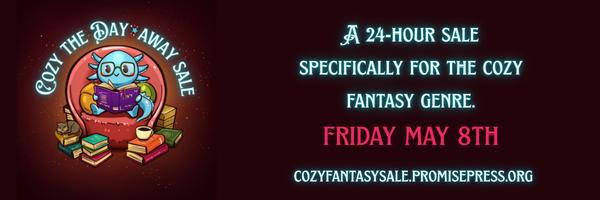
So if you like stories that are fun, often funny, gentle, but magical – this is the genre for you. Hie thee to the Cozy the Day Away sale page (you have til midnight tonight) and pick up some lovely reads.
My friend-and-editor, E.L. Bates, is part of the sale as well, with her Whitney and Davies series – the first book is on for 99¢, the others for $1.99. Highly recommend!
However. If May 8th is over (ahem, I might be a bit late on sending out this mail – I’m sorry), here’s some Cozy Fantasy books/authors I enjoyed that you might want to check out (of the library, perhaps). Just some examples off the top of my head, there’s lots of others!
–Victoria Goddard: She’s a Canadian writer whose work I discovered last year, and I burned through her whole collection in the course of a few months. I recommend starting with the Greenwing & Dart series (lighter, more YA style), or else The Lays of the Hearth Fire (very long books, almost epic, but oh-so-satisfying). A lot of the books are interconnected, so you’ll find yourself meeting old friends from one book as side characters in another. Goddard is amazing – gentle, funny, entertaining, but so well written, so profound, and so moving.
–Heather Fawcett’sEmily Wilde series, or her new Agnes Aubert’s Mystical Cat Shelter (haven’t read it yet, but I treated myself to a hardcover copy that’s sitting next to me as I write this). Hmm, another Canadian author – coincidence, I wonder?
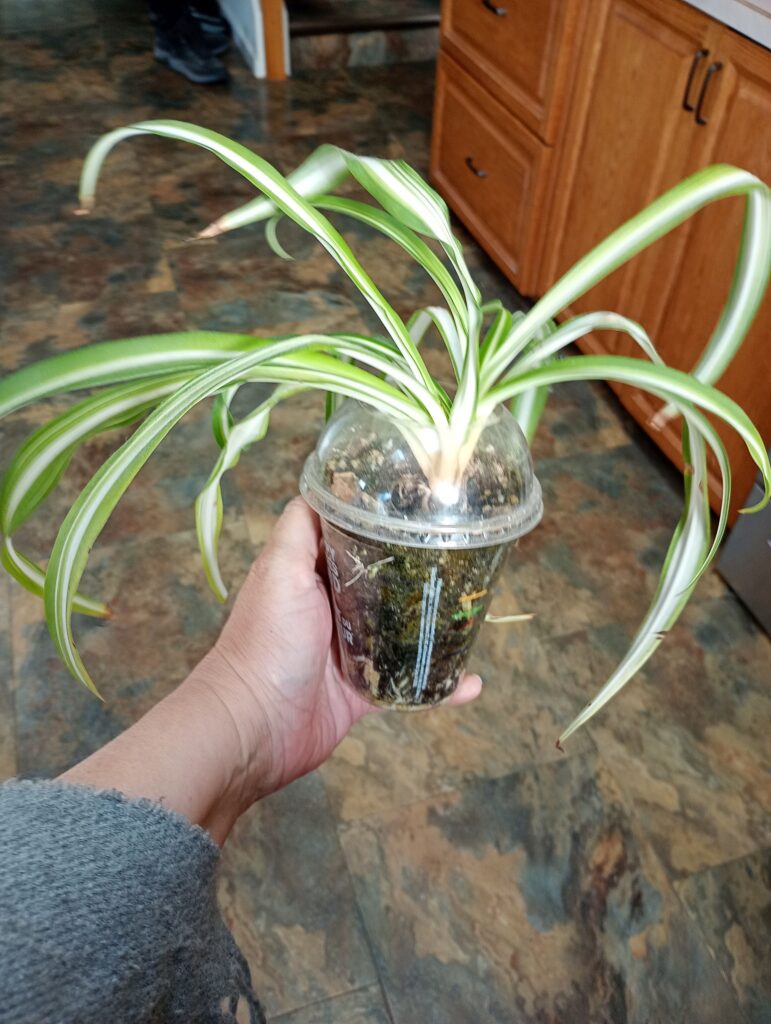
–Sarah Beth Durst, The Spellshop and The Enchanted Greenhouse.The Spellshop features a sentient spider plant named Caz. I mean, sentient spider plant! So I had to have one too. He lives in a takeout cup and I intend to take him camping. (The one in the book is a lot more lush than mine. But then mine fits in a cup holder in the car, so there.)
There are many others, of course, but those are a few to start with. It’s not necessarily high literature (although Goddard comes close – some of her work is more literary fiction than commercial), but they’re all throughly enjoyable.
I was thrilled to find that I’m not the only one who wants stories with gentle magic that are also about people and kindness and family and caring about one another. It’s not that there’s anything wrong with epic battles and what-not, but frankly, I find battles and high adventure really boring. Crash, bang, slash, boom, and so on and so forth – just tell me who wins already and get on with the story! Which, for me, is all about people. The best part of Lord of the Rings is the Shire, as far as I’m concerned. Cozy Fantasy is all Shire, no Mordor.
So if you’re one of those (quiet & weird) people who prefer hobbit feasts to epic battles, come on over to the inn, pull up a chair to the fire, put a tankard of cider or a mug of hot tea at your elbow, and get lost in a cozy fantasy world with me.
That’s Life, the Universe, and Cozy Fantasy. There’s lots to choose from!
“I cooked a simple breakfast of omelet and toast,” says the main character of a historic novel I recently read, in a throwaway half sentence. A simple breakfast. Of omelet and toast. In a cottage in the backwoods of Ireland, in 1911. Wait, simple?
Let’s break this down, shall we.
In order to make an omelet (or omelette, depending on where you live), you need to, of course, crack eggs, and… Hold on, back up.
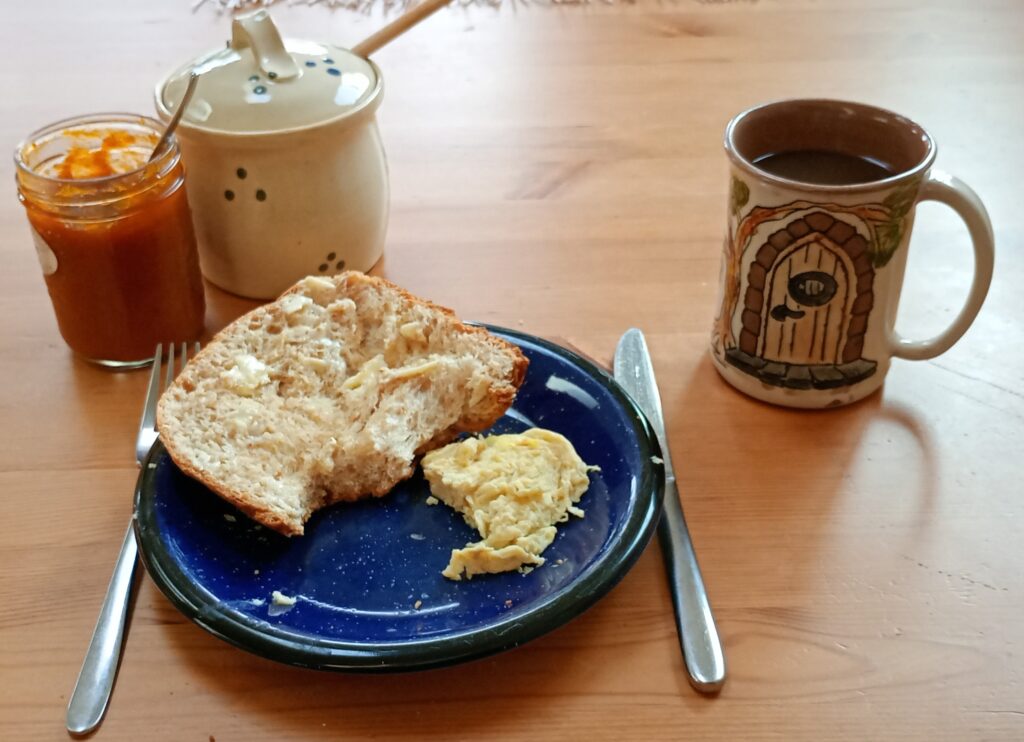
I, too, had a simple breakfast this morning of eggs and fresh-baked bread (yes, I know! Just bear with me). At 8am, my breadmaker beeped, whereupon I dumped the loaf out of the bread pan and set it to cool on a rack. At around 8:30, I cracked an egg into a bowl, bunged a frying pan onto the stove, turned the knob to medium, melted a bit of butter in the pan, poured the egg into the pan, pushed it around with a spatula, then put it on a plate with the buttered end of the warm loaf of bread. I poured myself another cup of coffee from the coffeemaker, and voilà, my simple breakfast!
But with the MC of our story, oh dear me, no.
Yes, she also cracks eggs and slices bread. But before she does any of that, she has to make a fire. Probably on an open hearth, as this is a rural cottage in the woods—but we’ll be charitable and give her a closed stove (more on that in a minute).
So, making a fire. Probably raking out the ashes of last night’s fire, getting some kindling, hauling in (hopefully already chopped) wood, stacking the fire, setting it alight, waiting however long it takes for it to catch, then to sort of die down to something less than an enthusiastic flame… Truth be told, I’ve never actually cooked on a wood or coal stove, let alone an open fire, aside from roasting wieners or marshmallows on a stick (it’s on the things-to-learn list). But I’m pretty sure you can’t cook on a fire when you first set it alight, you have to let it establish itself. Especially when you want a sort of middling flame for your medium-hot pan, which you absolutely need for an omelet (the pan can’t be too hot—you don’t want to know how I know).
Okay, so now she’s waiting for the fire to get to cookable dimensions, which gives her time to work on her omelet. That’s not much different from what we do today—crack the eggs, beat them up with a fork, then… Is it a plain omelet? Or does it have cheese, and chopped onion, and maybe some chopped bell peppers or tomatoes or herbs…? All of which would need dicing, grating, otherwise preparing… Well, we’ll just go with a plain omelet, it’s easiest. So, beaten eggs are in a bowl, the fire is at a cookable state, you heat the pan to medium, melt the butter, pour egg into pan.
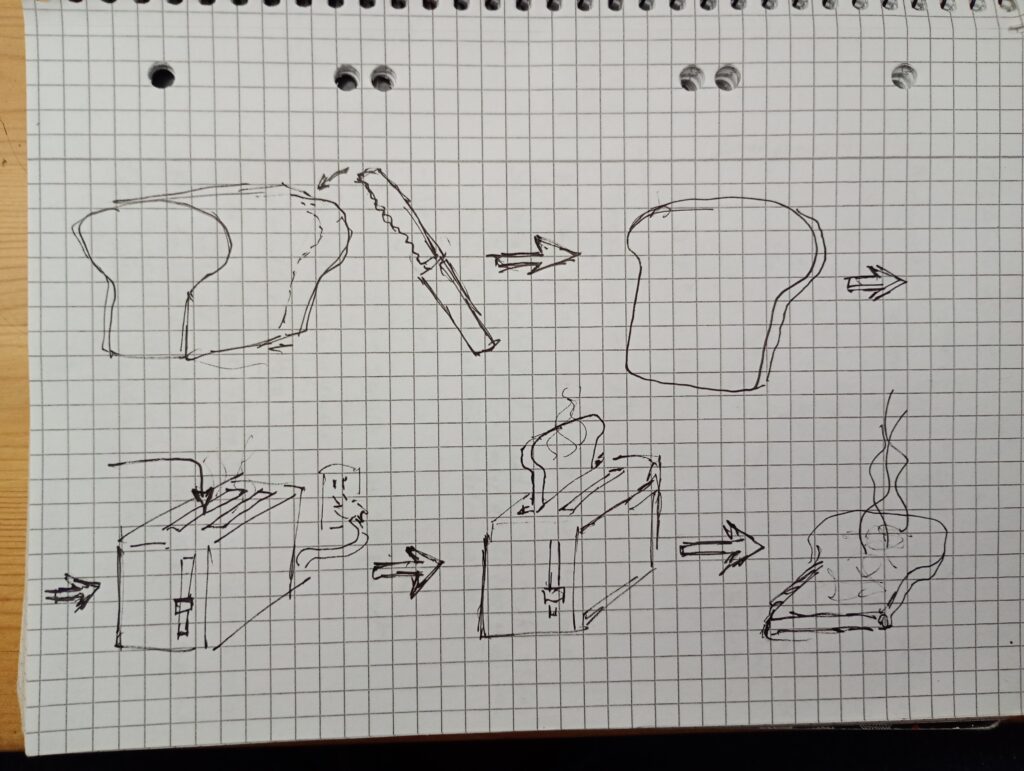
But then we get to the toast. Not just a slice of bread, toast. Which, in case you don’t know, is a slice of bread that’s toasted (you’re welcome). How does one make toast? Hang on, I can show you, I did a drawing (it was for a class):
That’s how you make toast, right? Every one of my classmates drew something almost exactly like this.
But our intrepid MC, she doesn’t have a toaster. No simply sticking your bread slice into an electric machine and pushing down a lever, to have a crispy golden brown slice pop up a few minutes later, steaming, for your delectation. So, again, I haven’t really made toast on an open fire myself, but I’ve burned marshmallows, so I know that they don’t work terribly well for toasting on an open flame. They want glowing coals. Which requires letting the fire burn down. And then you’re sitting there, patiently, with your item-to-be-toasted skewered on your toasting fork, and you carefully hold it to the heat source trying not to burn it (Whoosh! Marshmallow torch! Oops, sorry, that’s your modern Canadian campfire. Back to the topic—toasting bread on a breakfast fire). Which is not something you can do at the same time as carefully cooking an omelet, in an open pan, over that same fire, as you only have two hands.
And then—I did say we’d come back to the “closed stove” topic—our MC, after having consumed her simple breakfast, takes the leftovers and “tucks them in the oven” for her still-sleeping friends. That’s why she has to have a closed stove available to her. But woodfired ovens even in a woodstove are notoriously difficult to handle, from what I’ve read. They aren’t just on with a nice even heat like our electrical thingamagigs, they require fiddling with and knowing exactly what you’re doing, so you’re not burning one side of whatever-is-in-there and having the other side go cold.
Conversely, if our MC’s cottage-in-the-backwoods didn’t have a closed stove but an open fire and a separate oven, which is more likely for that time and place, that oven would be one of those stone or brick recesses in the wall with a door in front, like the one in Hansel and Gretel. That kind of oven you heat by building a big fire inside of it (that’s what the witch had Gretel do, intending to cook her), then when it’s at the right temperature, you rake out all the hot coals and quickly shove your bread (or witch) inside, clapping the door shut, to bake things in the residual heat being held by the thick stonework around it. All extremely time-consuming, not to mention highly skilled work.
In other words, very, very far from simple.
Okay, you’re probably tired of my ranting here. But you get the point: if you’re writing a historic novel, please think through what life “back then” was actually like. What’s “simple” now was actually very complex in times past. It took a huge amount of labour. Labour that, in most cases, was done by servants, or by your wife. And if you didn’t have servants or a wife, as is the case for the MC in this novel, you just didn’t have the things that took work. You made toast for a treat for Sunday afternoon tea, not for a quick, simple breakfast. You didn’t “tuck things in the oven”, you maybe put them “to simmer on the back of the hob” (which I’m not entirely sure of what that means, either, but have read about lots of times), and reserved the oven for baking once a week or so.
Today, I can have fresh-baked or toasted bread, scrambled eggs, and hot coffee for my breakfast, because I have an electric breadmaker, and a toaster, and an electric stove, and a coffee machine. I have electric servants. So for me, that kind of breakfast is simple. But in 1911, the terms “cooked” and “simple breakfast” did not belong in the same sentence.
It annoys me when today’s writers or readers completely disregard the amount of sheer labour that goes into having everyday creature comforts in the absence of the convenience that today’s electric and electronic machinery can give you. We disregard the work that people had to do in the past to get what we totally take for granted. We disregard the value of labour, and that means we disregard the value of the people who did that labour. “Simple” things actually take a lot of work. Let’s honour the people who did that work, shall we?
So next time you give your servantless MC in her historic-cottage-in-the-woods a “simple breakfast”, make it a (cold) slice of bread and hardboiled egg (cooked last night when she made dinner). I promise I won’t jump on you for it.
Life, the Universe, and Cooking a Simple Breakfast. I do like my electric servants.
PPS: I won’t tell you the title or author of the novel that I’m talking about here, because my rant only pertains to that one, tiny half-sentence. In all other respects it’s quite a good book, and I don’t want to spoil anyone’s enjoyment of it.
PPPS: I said I’d stop ranting, but, don’t even get me started on the labour of producing textile work and the authors that sneer at “homespun”… I know, I know, that’s a post for another day.
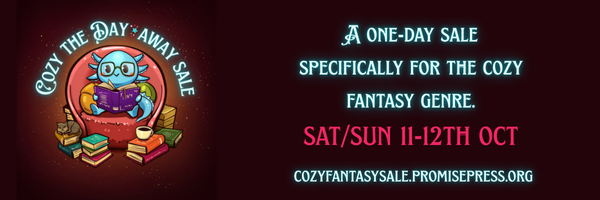
Actually, it’s a two-day sale! And the new Seventh Son is part of it! The ebook version is on for US$0.99 (or its equivalent in your currency) all weekend, Saturday and Sunday. The Cozy the Day Away Sale: Over 150 books, all Cozy Fantasy, all on sale!
It’s a great sale again, with so many different authors and books. To mention just a few of my favourites, of course there’s E.L. Bates with Whitney and Davies; there’s Shanna Swendson (through whose newsletter I found the sale in the first place); there’s Victoria Goddard whom I discovered at the first sale I participated in at the end of December and whose books I have since devoured like they’re going out of style (which, thankfully, they’re not – rather the opposite…) – so many good books, so many amazing deals.
So hie thee over to the Promisepress website and check out the Cozy the Day Away sale! But do so right away, because the sale really is only on for those two days; the listings go away after that.
Life, the Universe, and a Cozy Fantasy Sale! Which books will you pick up on sale?
“Heddle,” she muttered. “Warp. Weft. Raddle. Warping board. Bobbin. Shuttle. Harness. Shed, reed, ratchet. Sett, castle, breast beam, cloth beam. Heddle, warp and weft.”
“Stop!” he shrieked. “Stop throwing curses at me! And put down that, that, that spell book!”
She glanced up at him with a mild, enquiring look, then closed the book in her lap with a finger pinched between its pages and turned it over to look at the spine.
In gold-imprinted letters it said THE BEGINNING WEAVER.
The world has become a bad place in the last few years. So many things are going wrong, so much strife, so much floods and fires and earthquakes and wars and rumours of wars.
But Story can set a counterpoint. Story allows us to escape the trap of perceived reality.
And that’s the key, isn’t it—perceived reality.
Story allows us to perceive a different reality. It lets us experience a different world, one in which plots resolve, problems come to a conclusion. Unlike the so-called real world, where everything is just a muddle, Story brings order to the world. As renowned folklorist Max Lüthi says*, the story world shows us not what could be, but what is.
Why do I tell Story? In order to create worlds and places for people to enter into, worlds of truth. Worlds of justice and joy. Worlds not without problems, but worlds where those problems can and will be resolved.
Story is not escapist in the sense of letting us run away from our problems. But is is escapist in the sense of setting us free from the confines of our perceived reality. It allows us to see the bigger picture, opens our eyes to what is actually there. Even when it is Story about ostensibly “unreal” things, about elves and fairies and little dwarfs under the mountain. Maybe especially then.
We need Story—the World needs Story. The world needs Story to make sense of itself, to keep from sinking into a morass of muddle and chaos.
And that is why I tell Story. Unabashedly and unapologetically, I tell stories of joy and pleasure and home and warmth and family, where tiny people live in tiny homes and big ones get whirled away into other worlds where they find belonging.
Because in entering into these worlds, entering into Story, we can step out of the bondage of perceived reality, and we can find what is really real.
The world needs Story. That is why.
[*Lüthi, The European Folktale: Form and Nature (Philadelphia: ISHI, 1982), p.89. I quoted the full piece in a post on my research blog some ten years ago, here.]
And here are two more exciting announcements about this week’s literary releases! (Must be the season…) Neither of them are my own publications, but I had a part in both of them.
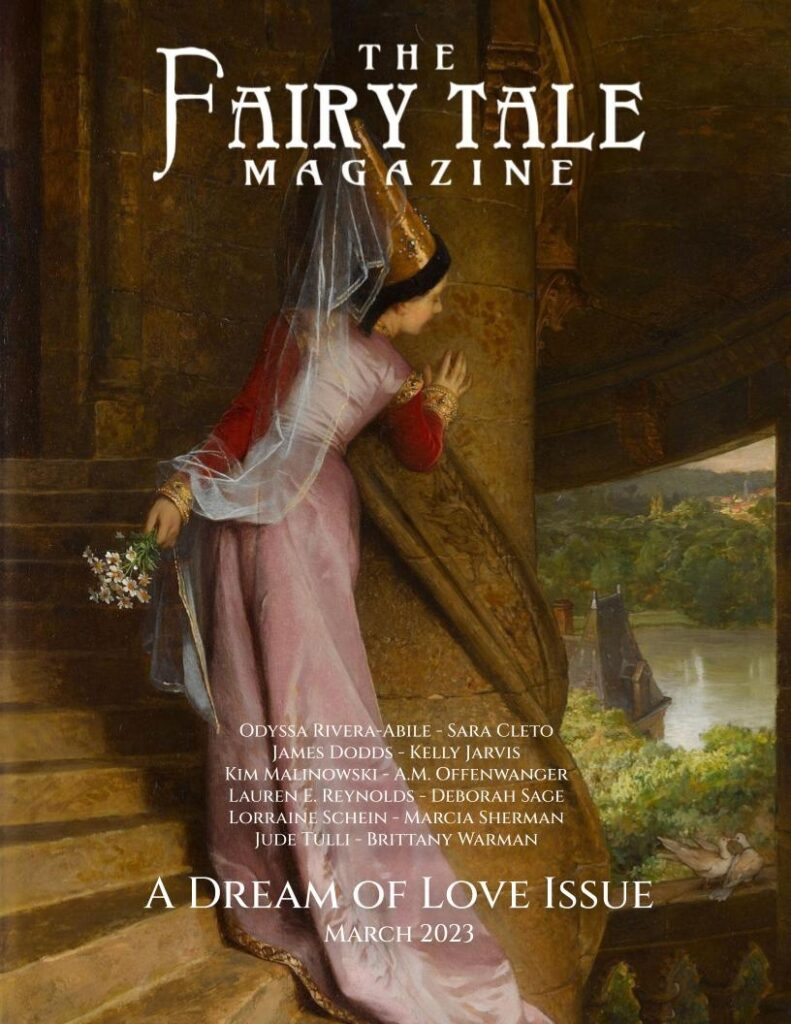
#1: The March issue of The Fairy Tale Magazine with a story by Yours Truly
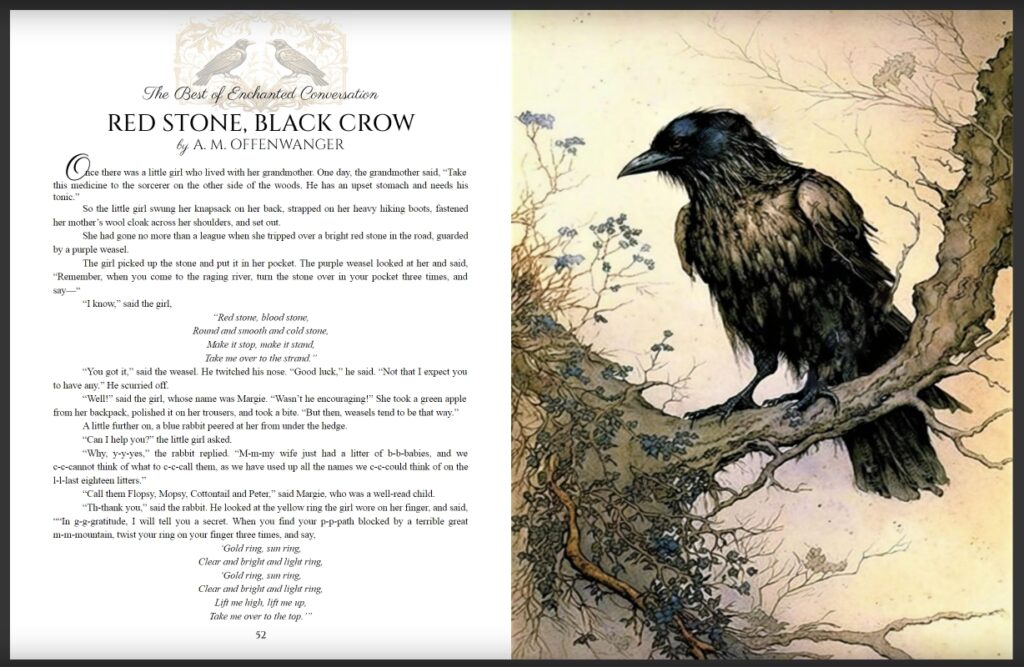
Enchanted Conversation magazine has recently been reborn in a new and utterly gorgeous format as a web magazine under the nameThe Fairy Tale Magazine. I was honoured by having one of my stories that EC had published in 2018 included in the “Best of Enchanted Conversation” section in the March edition, which is now out. So “Red Stone, Black Crow” is now available to read in the illustrious company of 70(!) pages worth of original fairy tale stories, with stunning illustrations that Amanda Bergloff created from public domain art (mine got an Arthur Rackham image! I mean, Arthur Rackham!). Check it out – it’s well worth the price of US$5.99 for the issue, or even better, $16 for the whole year (4 issues). (Also, the mag features an ad for Martin Millerson – how cool is that, an ad for my book in a real magazine!)
The screenshot of my story. If you want to see the rest, get the magazine!
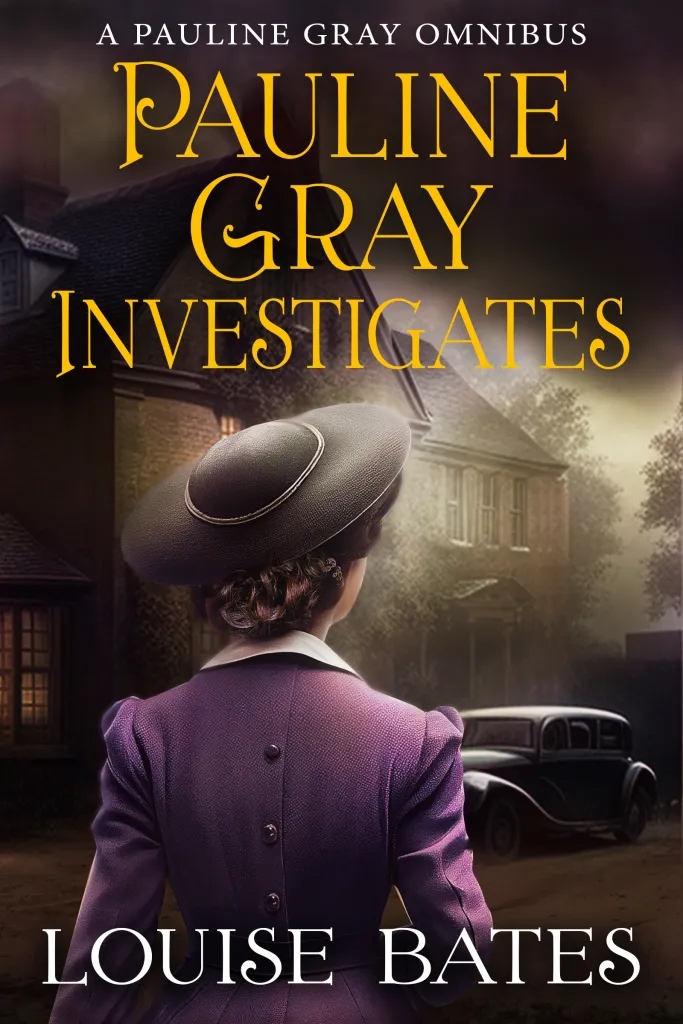
Welcome to Canton, NY, a small farming town nestled in the northern foothills of the Adirondack mountains. It’s the 1930s, and to an outsider’s eye, this looks like an idyllic village mostly untouched by the Great Depression that is ravaging so much of the nation. But even the most idyllic towns and villages have their dark sides. When trouble comes to Canton, the folk there rely on each other to help out. And that includes one young woman in particular …
Meet Pauline Gray. A graduate of the prestigious St. Lawrence University, she fell in love with the town while in college and has never left. A journalist by day and a secret novelist by night, Pauline’s compassion and drive for justice pull her into mysteries that are too small or too peculiar for the police. She would really prefer a quieter life, but when people need her help, she can’t turn them away.
Canton, NY, is, of course, Louise’s own home town, so the historic and geographic details in this series are absolutely spot-on. But more to the point, Pauline Gray and the people she meets are drawn with a deftness and sensitivity that makes the stories a delight to read. Go get a copy of the books – either the omnibus or the individual novellas – you won’t regret it!
And that’s Life, the Universe, and TWO new releases this week! Get yourself some good new reads!
They came around the corner, and there it was in front of them. The blossom, enormous like a vast bowl, more than six men could span. The soft pink of the petals had a velvet sheen to it; in the centre, the golden richness of the stamens beckoned.
“The Giant Water Lily of Medulisan!” Mardrom breathed, once again exercising his proclivity for stating the obvious.
She took the lid off the sugar bowl and absentmindedly reached in for a sugar cube. She’d really have to get herself some sugar tongs.
“Oy!” cried an indignant little voice from the bowl. “Do you mind?”
She gave a startled glance into the sugar bowl. A tiny man stared up at her from under a pointy blue hat, clutching a sugar cube in front of him which was unsuccessful at hiding the fact that he was butt naked.
“I beg your pardon!” she said politely. “I didn’t realize you were using my sugar bowl for… for… What are you using it for?”
“I’m too tired,” the witch said. “Aw, c’mon!” the wizard wheedled. “Just once? Just one teeny, tiny time?” “No.” “Pleeeeease?” He batted his long, silky eyelashes. The witch sighed. “Oh, fine.” She raised her short, stubby black wand. “Bibbety-boppety-booh!” Sparkles shot out of the end of the wand and rained down on the wizard’s hat. “Wheee!” he trilled, clapping his fingers together and spinning in the glittering shower. Reluctantly, the witch gave a smile.