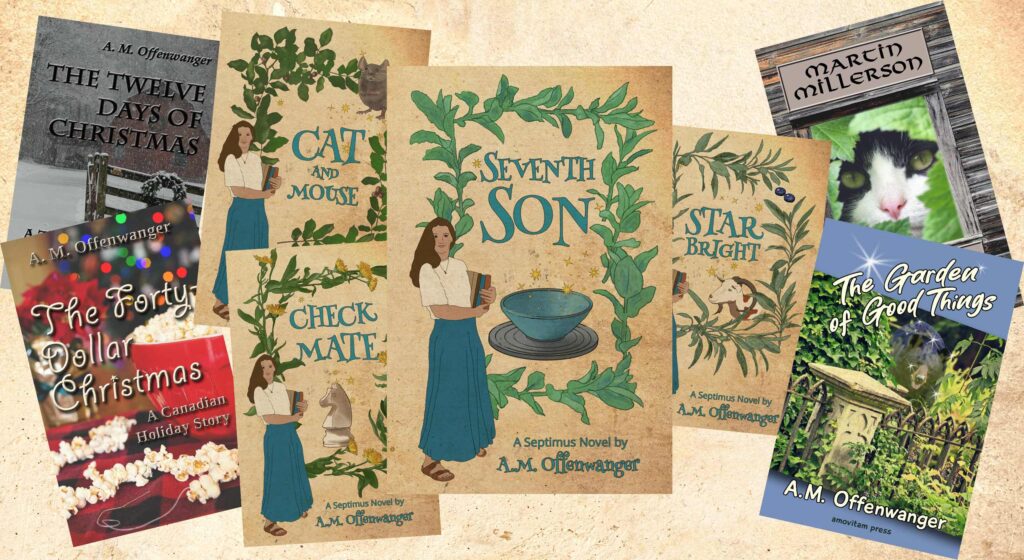
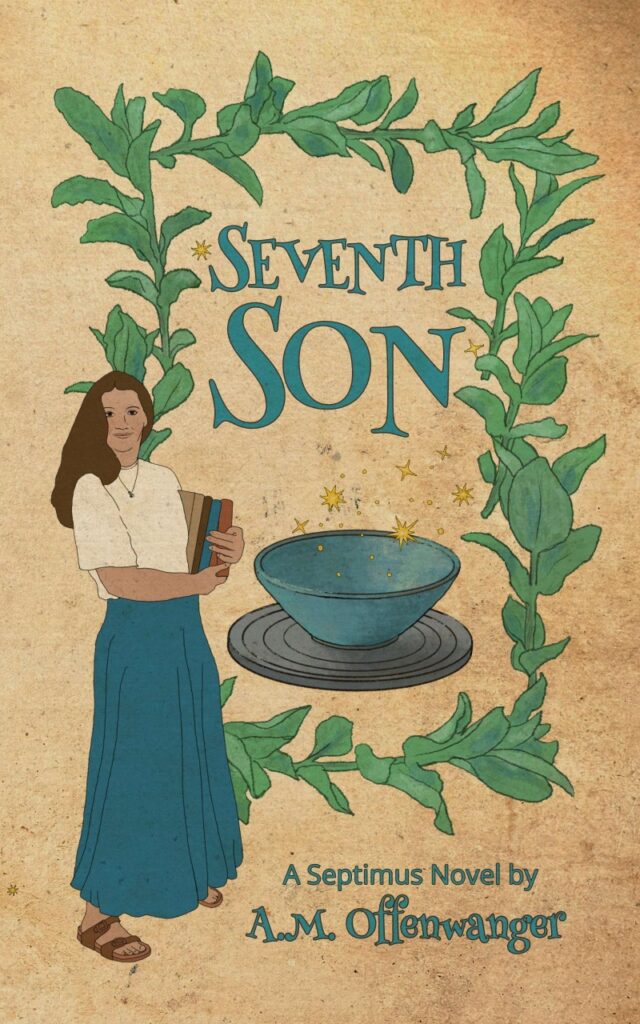
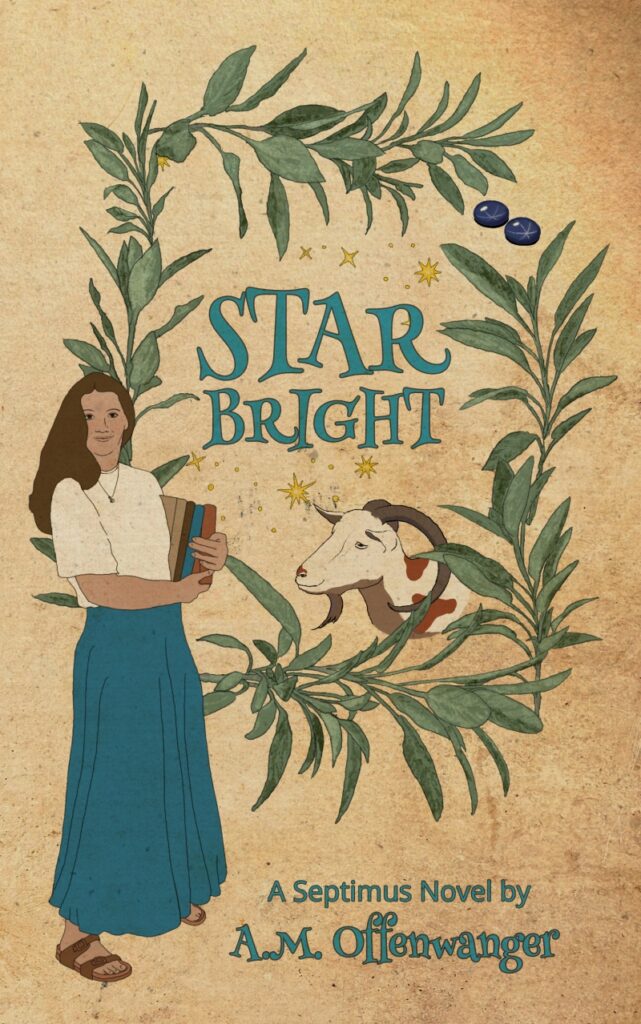
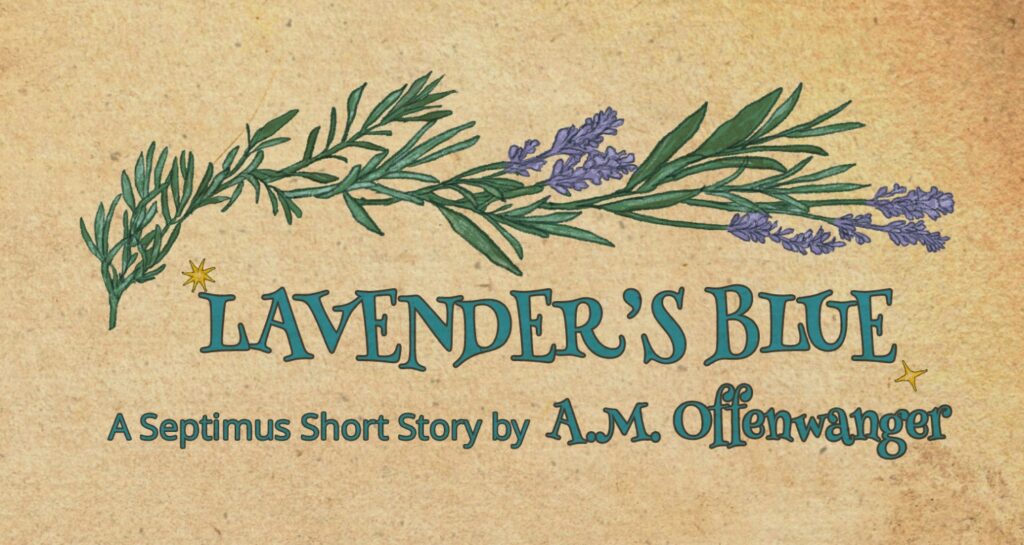
This morning I completed and uploaded the new cover for “Lavender’s Blue”, the Septimus short story 2.1, and with that, the makeover of the Septimus Series is finished!
All the books have nice new covers, and I looked over the contents and fixed what needed fixing. In most cases, that was very little; Seventh Son was the only book that got an actual re-write (same story, better writing). Cat and Mouse got some edits, too, but the others pretty much just had a sentence fixed here or there.
I’ve had people ask why I changed the covers. The reason is that while I love the covers that Steven Novak did for me ten years ago, they don’t reflect the genre of the books as well as I’d like. Just to be clear, that’s nothing against Steven, he does great work and I still highly recommend him. It’s just that graphic designers can’t/don’t want to read every book they work on, so they go with what you tell them. And I didn’t know then what I do now, so the old covers look darker and more edgy than the stories really are; the “cozy” of Cozy Fantasy doesn’t show.
But I want readers to see at a glance what they’re in for! So, after all these years, it was time for an update, and now I have the skills to do it myself. (Yes, those covers are 100% human-made, without the aid of AI. Digital tools, yes, Generative AI, no.)
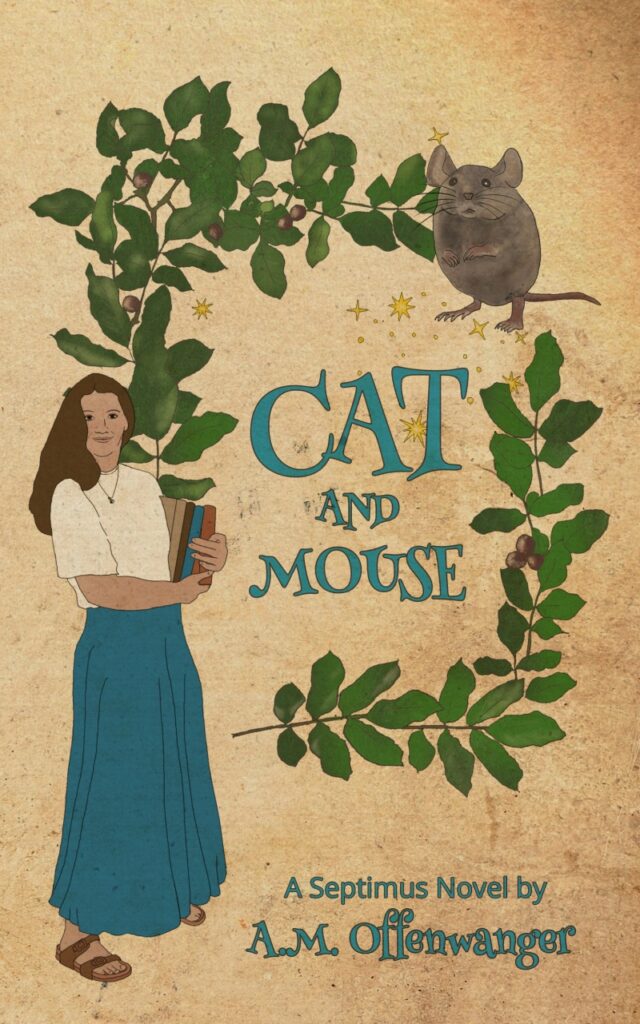
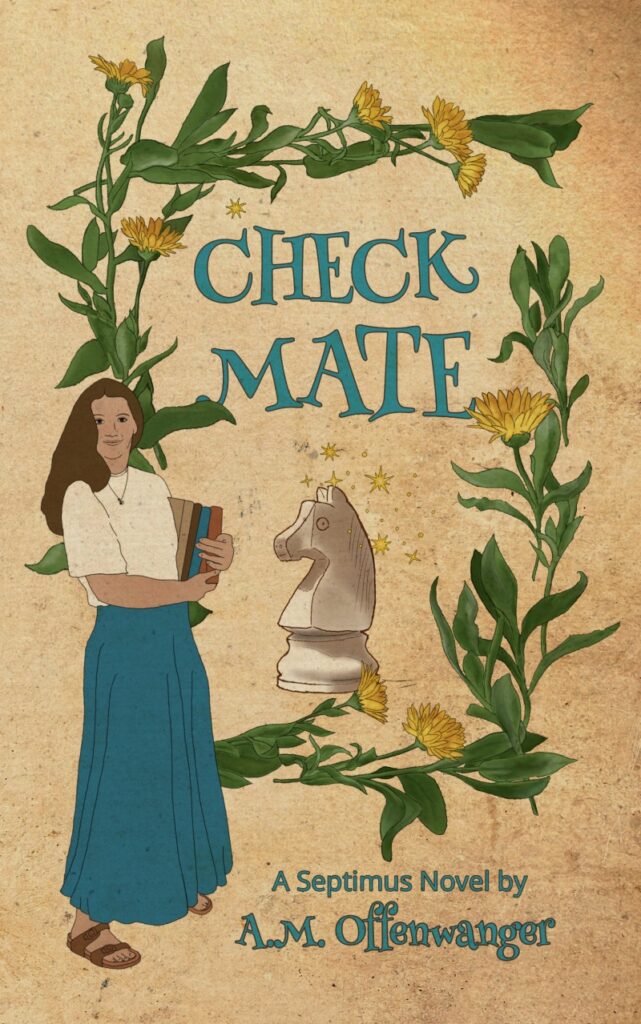
Putting borders of botanicals on your book cover is the trendy thing in Cozy Fantasy, so I thought that for once I’d go with the flow. The herbs that were the models for each book’s border came from my garden. I tried to make them match the story, i.e. have them mentioned in the book or at least fit the season it’s set in, but it wasn’t as easy as you’d think. With Star Bright, I wanted woodruff, which Uncle puts in the drink at the May Day Dance, but I don’t have any in my garden.
So Seventh Son has mint (because of mintbrew, of course), Cat and Mouse black walnut (which Cat and Nikor the librarian make ink from), Checkmate‘s is calendula or pot marigold (which flowers in summer, when the story takes place, and makes a good skin ointment), and Star Bright ended up having sage on it, because, alas, no woodruff (and we know that Cat doses her children with sagebrew when they get a sore throat). As for “Lavender’s Blue”, it was obvious!
So there you have it – one book series makeover. The new versions are all uploaded and live now; I’m waiting for the print copies of books 2-4 in the mail so I can sell you signed copies.
“Lavender’s Blue” is still free to download though! Just click here and get yourself a nice pdf.
And that’s Life, the Universe, and the updated Septimus Series! Books like having makeovers, too.
What is Cozy Fantasy, you ask? (Well, you probably don’t, if you’ve been around here for a while… But I’ll tell you anyway.) I describe it as Gentle Fantasy – nary a sword and no sorcery. In fact, off the top of my head I can’t think of even one sword in any of my books (so far). So, there’s magic, but it’s gentle and subtle. The term “cozy” comes from the Cozy Mystery genre (prime example, Agatha Christie), which is defined by stories that are centred on people and relationships and don’t focus on or describe disturbing blood and gore.
So Cozy Fantasy books tend to be low on scary critters, and there’s generally no battles and evil monsters etc. If there are critters or non-humans, they are often friendly – one of the books that kicked off the popularity of the genre, Travis Baldree’s Legends and Lattes, is about an orc who gets tired of slaying people and goes to open a coffee shop in a nice village. Coffee shops or friendly inns are a popular staple of the genre, as is – my personal favourite – Found Family.
The funny thing about Cozy Fantasy, for me, is that I thought I invented the term myself when I first published Seventh Son. And then a few years ago the genre suddenly took off! Now it’s even a keyword category on Amazon.
So if you like stories that are fun, often funny, gentle, but magical – this is the genre for you. Hie thee to the Cozy the Day Away sale page (you have til midnight tonight) and pick up some lovely reads.
My friend-and-editor, E.L. Bates, is part of the sale as well, with her Whitney and Davies series – the first book is on for 99¢, the others for $1.99. Highly recommend!
However. If May 8th is over (ahem, I might be a bit late on sending out this mail – I’m sorry), here’s some Cozy Fantasy books/authors I enjoyed that you might want to check out (of the library, perhaps). Just some examples off the top of my head, there’s lots of others!
–Victoria Goddard: She’s a Canadian writer whose work I discovered last year, and I burned through her whole collection in the course of a few months. I recommend starting with the Greenwing & Dart series (lighter, more YA style), or else The Lays of the Hearth Fire (very long books, almost epic, but oh-so-satisfying). A lot of the books are interconnected, so you’ll find yourself meeting old friends from one book as side characters in another. Goddard is amazing – gentle, funny, entertaining, but so well written, so profound, and so moving.
–Heather Fawcett’sEmily Wilde series, or her new Agnes Aubert’s Mystical Cat Shelter (haven’t read it yet, but I treated myself to a hardcover copy that’s sitting next to me as I write this). Hmm, another Canadian author – coincidence, I wonder?
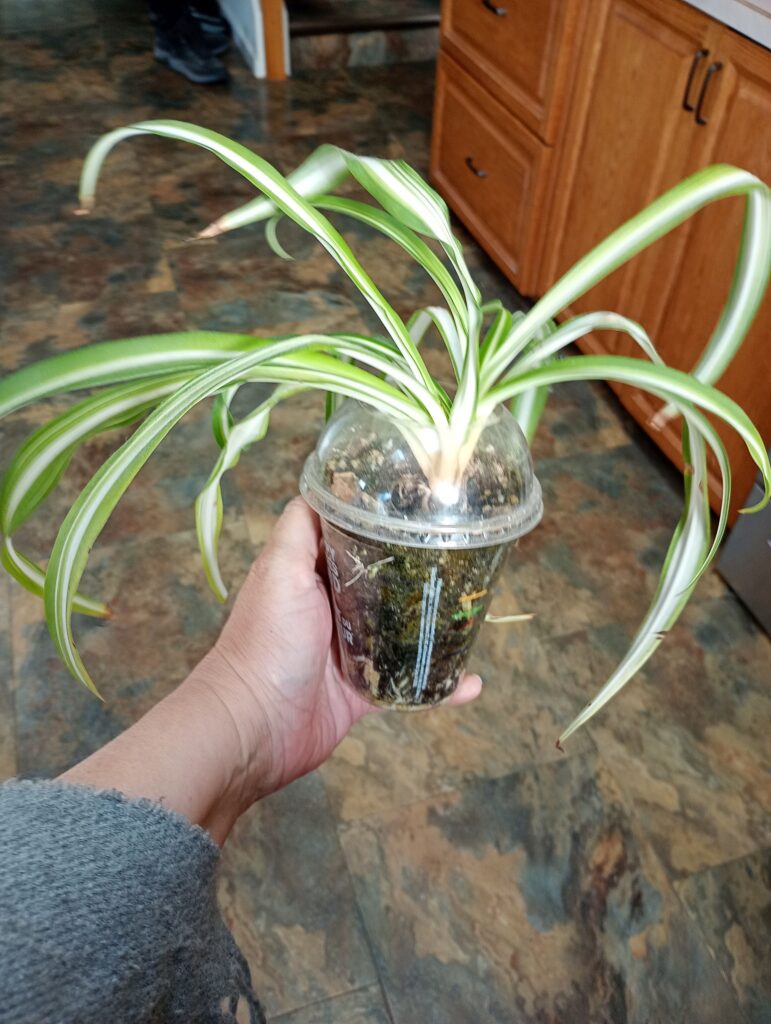
–Sarah Beth Durst, The Spellshop and The Enchanted Greenhouse.The Spellshop features a sentient spider plant named Caz. I mean, sentient spider plant! So I had to have one too. He lives in a takeout cup and I intend to take him camping. (The one in the book is a lot more lush than mine. But then mine fits in a cup holder in the car, so there.)
There are many others, of course, but those are a few to start with. It’s not necessarily high literature (although Goddard comes close – some of her work is more literary fiction than commercial), but they’re all throughly enjoyable.
I was thrilled to find that I’m not the only one who wants stories with gentle magic that are also about people and kindness and family and caring about one another. It’s not that there’s anything wrong with epic battles and what-not, but frankly, I find battles and high adventure really boring. Crash, bang, slash, boom, and so on and so forth – just tell me who wins already and get on with the story! Which, for me, is all about people. The best part of Lord of the Rings is the Shire, as far as I’m concerned. Cozy Fantasy is all Shire, no Mordor.
So if you’re one of those (quiet & weird) people who prefer hobbit feasts to epic battles, come on over to the inn, pull up a chair to the fire, put a tankard of cider or a mug of hot tea at your elbow, and get lost in a cozy fantasy world with me.
That’s Life, the Universe, and Cozy Fantasy. There’s lots to choose from!
I just took a webinar on Book Marketing, too. It was a good webinar; I learned some valuable material. But one of the things the presenter said was that book marketing should start way, way before the release date—like months before. And I thought to myself, well, I missed that boat with The Garden of Good Things.
But then—that was pretty much intentional. The fact of the matter is that I didn’t want to make a big deal of this book release. I have done so in the past; Seventh Son, on its first release, got all the fanfare I could throw at it. I even baked it a cake, and I splashed the book around on all the social media I was on at the time, brought print copies to real life events, etc etc.
You see, Seventh Son was a much, much bigger deal for me. It was the first book I ever wrote, the first book I learned self-publishing on, the first time I had made a real novel.
With Garden of Good Things, I just wrote it for fun one NaNoWriMo; and then after leaving it to languish in a drawer for about ten years I polished it up (with the help of my friend-and-editor Louise Bates, of course), packaged it into a novel, and put it online. And now you can read it and have fun with it, too. Not that big a deal.
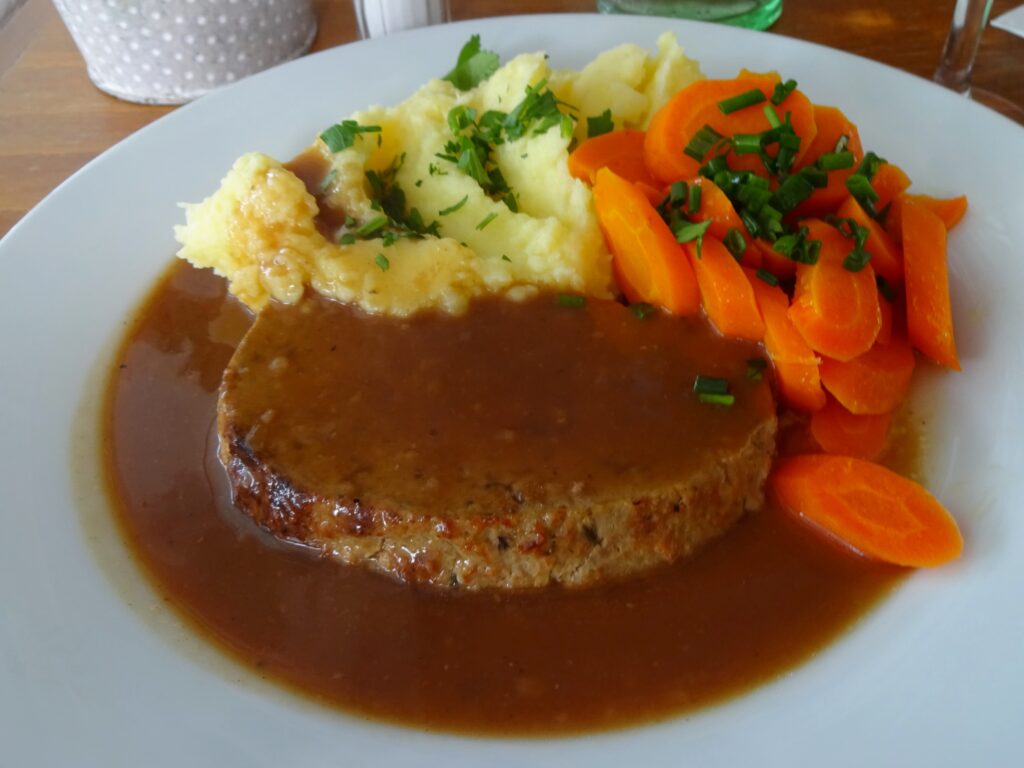
It reminds me of the time an older, very accomplished friend of mine proudly announced on Facebook that he had just made a meatloaf, for the first time ever.
Full disclosure, I did have a small inward chuckle at his announcement. His first meatloaf, ever? I’ve been making meatloaf* for decades. Ditto for loaves of bread, jars of jam or canned peaches, cakes of any description, pots of stew, knitted socks, and so on. Announcing them on Facebook would get rather monotonous – they’re just not a big deal to me anymore.
There are other things that are a big deal to me at the moment—they make me so nervous they keep me up at night for weeks beforehand, even though they probably make you chuckle quietly to yourself and say “What’s the big deal?” Selling my ceramics at markets and in shops is one of them for me right now—eeep, yikes, look what I did!
But as for meatloaves and jams and socks, no big deal.
The thing is that they’re just ordinary, everyday, commonplace meatloaves and jams and socks. We eat them or wear them, and sometimes they’re a little burnt or there’s a missed stitch—last year’s apricot jam has bits of an apricot pit in it that accidentally got beaten up with the pulp. Less than perfect, but perfectly alright for everyday.
That’s all I want for my meatloaves and jams and socks. I don’t intend to sell them, and I don’t want to win prizes with them; they don’t need fanfare, they just need to fulfil their purpose.
In the case of hand-knitted socks, that’s especially pertinent. Because for me, the point of making socks is to make them. I enjoy knitting; having something to wear at the end is a beneficial byproduct.
That’s kind of what happened with The Garden of Good Things, too. I wrote it for the fun of writing it, and then I had a book, so I thought I might as well publish it. But I don’t want to make a big deal of it, because it’s not a big-deal kind of book.
But that’s just me and this particular book (and a few others like it that I have on the back burner). I don’t mean to say that writing a book is not a big deal (good grief, no!). But not every book needs to have a big fanfare blown for it. There’s room for the everyday kind of books, too, just for fun.
My friend’s meatloaf was a big deal because it was his first one. Other people’s meatloaves might be a big deal because they’re gourmet, the pinnacle of meatloafness; or because selling meatloaves is this person’s business. My meatloaves, tasty though they are, are kind of ordinary and, as such, no big deal.
Some books of mine are a big deal for one reason or another, and hopefully there’ll be more of those in the future. Other people’s books are a big deal, for them and for their readers, not least because they might aim to make money on them. And those big-deal books, like some meatloaves, deserve all the fanfares and advertising campaigns. But you don’t have to blow the fanfare for every one of them.
So as for The Garden of Good Things, it’s getting a soft launch. This is me, just quietly saying “I made a book, wanna read it?” You might enjoy it, and just like handknitted socks warm your toes and meatloaves warm your belly, I hope it warms your soul.
And that’s Life, the Universe, a Soft Launch and Meatloaves. Go here or contact me for the The Garden of Good Things, and keep reading for the meatloaf recipe.
PS: So you can make your very own meatloaf to eat while you read the book, here’s my recipe:
*GERMAN MEATLOAF by Angelika
1-2 lbs/500-800g of ground beef (or pork or chicken) 1 stale (day-old) Kaiser bun, or the equivalent amount of sliced bread (I save the heel of loaves and let them dry out in the back of the breadbox especially for this purpose) 1 egg 1 small onion 1 tsp salt (or less, according to taste) 1/4 tsp pepper or a few grinds of the pepper mill 1 tsp dried parsley, or 2 Tbsp chopped fresh 1/2 tsp dried oregano (or chopped fresh) 1/4 tsp ground paprika
-finely mince the onion. Sauté it in a bit of oil until translucent. -soak the dry bread in water, then squeeze it out like a wet dishcloth. -put all ingredients together in a medium-sized bowl. -squish everything together with your hands until well combined. If that’s too icky for you, mix it with a spoon or potato masher, but hands work best. -put it in a 5×9” loaf pan, or form into a round loaf shape and put in a larger pan or cookie sheet with high rim. Poke 3-4 holes in the middle (optional, makes it cook more evenly). –bake at 350° for 1 hr. -let stand for five minutes or so, then slice and serve! We like it with gravy, rice or mashed potatoes, and a salad. Note: If there’s any left over, it’s really good cold, sliced thinly on sandwiches. Also, this mixture makes great hamburgers or meatballs (fry in a pan, or bake or broil for 20 minutes). Guten Appetit!
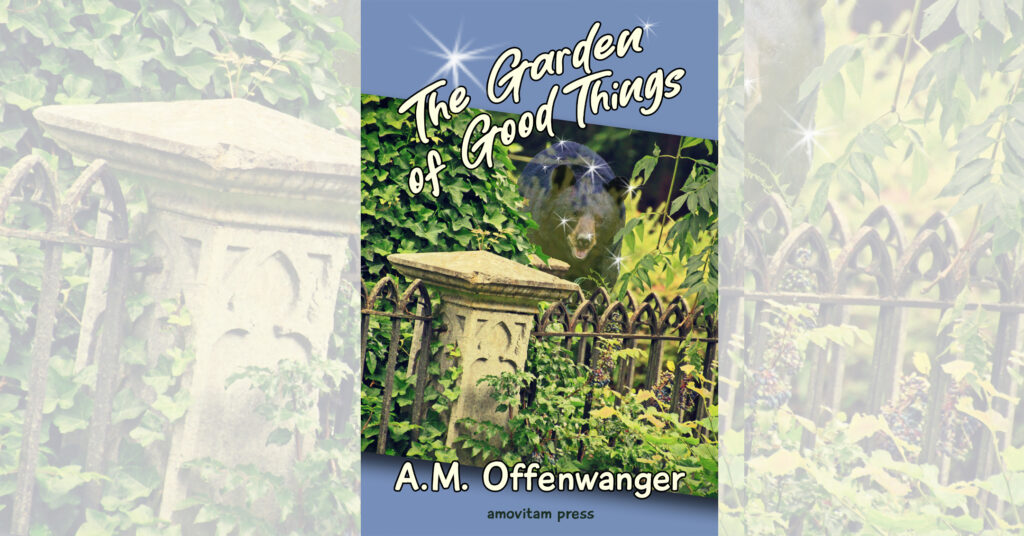
A brand-new book, available on March 18th at an online bookstore near you!
Some people inherit houses. Nina inherited a mystery.
When a stranger leaves her a country cottage, Nina drives out to investigate—and promptly locks herself out of her car, her phone and purse trapped inside. All she has is the cottage key. The place looks abandoned, swallowed by weeds. But inside, the house is strangely spotless, and the garden is full of treasures: strawberries, tomatoes, a handsome man in a lumberjacket… Charlie appears and disappears without warning. And all of Nina’s attempts to get to town are thwarted by a big black bear who won’t let her leave. Nina’s new priorities are simple: avoid the bear, find a cup of coffee, get some answers out of Charlie—and, most of all, don’t lose her heart…
“Hi!” came a cheerful email from our local arts centre. “Would you be interested in being on a discussion panel of potters during Clay Palooza? Bob Kingsmill is going to be on the panel. And we have a few competitions to participate in, too, would you like to do one of those?” Gulp. Me? On a discussion panel? With Bob Kingsmill?
Let me explain. First of all, Clay Palooza: it’s a fun day full of clay events in the context of the local Winter Carnival. I missed it last year, the first time it was held, but I was looking forward to attending it this year. I was just going to go as a visitor, watch other potters – you know, real potters – do fun stuff such as compete in challenges like “blindfolded throwing” or “who can throw the biggest bowl”. Then, Bob Kingsmill. He’s a local master potter. I found out about him a couple of years ago, when a friend gave me a beautiful little ramen bowl of his for my birthday; and then last summer, I saw some of his pieces at the Vancouver Art Gallery. That’s the kind of potter he is. And I was being asked to be on a panel with him.
“Yikes,” I told the organizer, “that’s scary. How many others are going to be on that panel?” Maybe I could hide behind some of them. “Oh,” she said, “we’re aiming to have four or five potters of varying levels.” Varying levels? That was okay then! I could provide the bottom level. Actually, once I thought of it, I realized that it was the perfect opportunity to get on my bandwagon: Pottery is for Everyone! You don’t have to be a master to make perfectly useful, functional, beautiful work! I still use one of the first bowls I handbuilt when I was thirteen as my everyday fruit bowl.
So I said yes, shaking in my boots. And I signed up for one of the challenges, too – “Handbuild a Mug in 15 Minutes”. I practiced, to make sure I could hold my own with all those other amazing ceramicists that would be there strutting their stuff.
Turns out I wasn’t the only one shaking in their boots about having been asked to be on the panel. I didn’t find someone to hide behind, but I found someone for mutual propping up. It was good to have another person to share trepidations with – “Oh no, we’re on! What do we do? Where do we sit?” And it turned out really great.
I brought along some of my pieces – tiny ones, because that’s what I do, and they’re very portable. A couple of Tiny Gnomes, a little vignette with a tiny table and mug and book, a Cheesymouse. I sat them in front of me on the panel table. “My goodness,” Bob Kingsmill said when he saw them, “let me see your hands!” Well, yes, I do make tiny stuff. With my fingers (and some tools, like discarded dental tools). I was flattered to get that kind of attention from the master. Who is a lovely, hilarious, kind person, and I was so glad to meet him.
The panel discussion was so interesting. We answered questions such as “How long have you been working with clay?” (apparently Bob opened his first studio the year I was born. That’s… a long time ago), and “What’s a mistake you still make?” I learned so much from everyone else! And one of the biggest thing I learned is humility. The people who’ve done this for decades still say they “don’t know anything”. Which is, of course, not true – they know and can do so much! – but it was hugely encouraging to hear that even after all that time, they still feel like that.
And then Bob almost made me cry. “What still inspires you to work with clay?” was one of the panel questions. With tears in his eyes, Bob brought up the horrific tragedy of the school shooting that happened in Northern BC last week. And he said (I can’t remember his exact words, but this is the gist of it) that art is one of the ways people can cope. He gestured to my little gnomes, and he said, “This is the sort of thing that counters the awful stuff in the world.” Oh my word. My Tiny Gnomes. Little mice sitting on cheeses. A counterpoint to the big, awful, overwhelmingness of the world. That is so much what I want to do with my art – both clay and words. Set little pinpricks of joy that help us to keep living.
It didn’t matter anymore that I’m not a master, that even the invitation to this panel triggered a roaring case of Imposter Syndrome. I’m not good at throwing straight pots on the wheel. I don’t sell a lot of my pieces. My sculptures are not terribly innovative and artistic. I make tiny gnomes, not high art. But those tiny gnomes are art. They’re the kind of thing that can bring tiny moments of joy in the midst of the world’s darkness. It was such an incredible validation of what I’m trying to do. Small art for small people. Art is for Everyone.
And then I went on to the “Handbuild a Mug in 15 Minutes” challenge, and my mug-on-a-mug missed getting first place by half a point (but I got a prize anyway!). And at the last minute I’d signed up for the “Team-Build a Trophy” challenge, and in that one my team did get first place (also by half a point), and we had so much fun. No strutting was involved, we just all enjoyed ourselves. Because the pottery community is like that.
I’ll probably not ever get rid of Imposter Syndrome where my ceramics and my writing is concerned. But it doesn’t matter. What matters is that my work, even my very small work, can be a part of the light that counteracts the darkness.
Life, the Universe, and Small Art. Even a Tiny Gnome can play a part.
Exciting news: the new edition of Cat and Mouse is here!
I wrote the book in 2012, and first published it in 2015. Much like Seventh Son, it needed a makeover, but in this case, the biggest change is the cover. The text of the story hasn’t changed much—just a few edits at the sentence level, and one or two little scenes added. It’s still the same story with the same characters! Even the mice are still all there.
Cat and Mouse starts immediately after Seventh Son—literally the next morning. How is Cat going to cope with her new life in her new world? And why are there mice everywhere?
A silent young boy, a man like a rat, and a plague of mice—Cat has her work cut out for her. It’s hard enough for Catriona, an ordinary modern woman, to get used to living in a magical medieval world, even without having mice pop up at every turn. Good thing Cat isn’t as squeamish about them as her friend Nicky, who has her own issues to cope with back in the regular world. What does the man with the twitchy nose want with Nicky’s ward Ben? And does the mouse plague back in Ruph have anything to do with the new apprentice Cat’s husband has taken on—the boy who won’t speak?
Sometimes, you get to fulfil a dream you didn’t know you had.
Writing novels was one such dream for me. I always loved books, but I didn’t know that writing them was something that was within my reach. I’ve told you about that before, more than once: I didn’t know that novel-writing was a dream I could have until I did it. (It was the blue bowl that started it all…)
Another such fulfilled dream just showed up in my mailbox yesterday: I got a certificate from Art School. A real, live, honest-to-goodness, serious ART SCHOOL! And in Illustration, no less!
It all started during Covid. No, actually, it started much longer ago, just after I came to Canada (I was young…). I met a 50-something lady who was in the process of getting her Bachelor of Fine Arts.
“So you must be really good at drawing and painting, to be able to go to art school, right?” I said.
“Oh no,” she serenely replied. “That’s what you go to art school for, to learn it!”
WHAT??? You can learn to be an artist???
Being able to paint was a dream of mine. But I always thought that was something one “just knew how to do”, because back in school, there were people who could do it, and others (like me) who, well, not really.
(Tiny little side rant: letter grades in any creative field should be forbidden, abolished, banned, and fed-through-the-shredder. If it hadn’t been for those C’s in art class in high school, I might have become an artist much sooner. Because obviously, if a teacher tells you in writing you’re no better than “adequate”, you might as well give it up. Pfffffft…)
Anyway! After that revelation, when a local artist started offering art classes, I took the chance – and I learned to draw, and to paint watercolours (among other things, because said art teacher, unlike my high school one, had the attitude that anyone can learn to paint, and she was amazingly encouraging. I’m forever grateful to her). It was a wonderful hobby, and I loved it – but it was still just a hobby. I mean, the likes of me wouldn’t be able to go to art school…
But then, I was doing university studies by distance ed. This was back in the days, last century, when – hold onto your hat – distance ed meant doing things BY SNAIL MAIL. My university offered a handful of 100-level Fine Arts courses that were a collaboration between BC Open University and what was then called Emily Carr Academy, the premier art school in Western Canada. And I thought, hey, I can get credits towards my degree by taking art courses? Sure, why not? Among other things, I wanted to see if I could hold my own with real art school students (come to think of it, that desire to see if I could play with the big kids has been a rather significant motivator in my life…). So I signed up for FINA 110, Colour Theory. The supplies came with the course, and, oh my, getting the box in the mail was like Christmas. Oil paints, brushes, palette knives, ginormous sheets of paper… Too much fun.
So I learned colour theory, painting swatches on those big pieces of paper, mailing them back and forth with my instructor in Vancouver (I recall one of the assignments was to replicate the colours of a piece of fruit or vegetable. I’d meant to do an apple or orange, but my kids ate all my models before I got to them, so in the end I had to do a potato. My instructor loved it). I took all the Fine Arts courses on offer at BCOU, applied the credits to my BA, and that was that.
How to Make a Cup of Coffee in Ten Easy Steps. Ink & Watercolour Illustration of a simple set of instructions. Because everyone needs to know how to make a cup of coffee.
So. Fast-forward some twenty years to a world pandemic (bleh). For some reason, I started thinking about those distance ed art courses, and I got to wondering if Emily Carr still offered them; you know, just curious.
Oh my. This was 2021 – the world had learned to Zoom.Not only did Emily Carr (which is now called Emily Carr University of Art + Design) have a few-odd courses, their Continuing Studies department had whole online certificates available.One of those certificates was in Illustration.
Violet the Fairy Punkmother. 9×12″, Watercolour and Ink Illustration of a mythological character. I wanted my Fairy Godmother to be as un-Disney-like as I could make her. And that’s a prince, not a princess. Just sayin’.
Now, illustration, storytelling in pictures, is something I’d admired for a long time – but again, not something I had the chops for, I figured. However, just on spec, and for fun, I signed up for the “Introductory Illustration” course – you know, just seeing if I could hold my own (etc etc). And again, I lucked out with a teacher who was fantastically enthusiastic and encouraging. “Sure you have what it takes!” she told me. Really? I mean, really?
Spot Illustration to go with The Fairy Punkmother.
Still, I wasn’t going to sign up for the certificate – but I’d just, you know, take another course, because it was so interesting. And another one, and… I learned so much. Illustration techniques. Industry standards. Digital illustration. So much fun (yes, stressful, too – deadlines are always pressure – but overall, fun). And then, I’d gone so far, I figured I might as well keep going. I was even able to apply a couple of those from-the-dark-ages undergrad courses to my certificate – no need to paint another potato – and then took the last few required classes on professional practices for creatives, and – and – and… I WAS DONE!
Sweet Porridge (Der süße Brei), Mixed Media Illustration of a fairy tale (Grimms’ KHM 103). Ink, wash, and porridge (yes, actual porridge) on paper.
I got an Illustration Certificate, from Emily Carr University of Art + Design. A credential from a real art school. I have the piece of paper to prove it! I reached a goal I didn’t even know I had, fulfilled a dream that I didn’t know was mine to dream.
I even learned how to make my own book covers. I learned Procreate, Photoshop, a smattering of graphic design and typography… So here we are, the cover for the new edition of Seventh Son, my first own book, made all by me myself: a blend of both those dreams-that-I-didn’t-know-I-had, but fulfilled nonetheless. I became a writer, and I became an illustrator.
Full wrap-around book cover for SEVENTH SON, digital (Procreate, Photoshop)
Now, one more thing: none of this is meant as a brag – I know full well that in all of those skills, I’m still a beginner, the Queen of 101. But that’s okay. What I mean to say by all of this is that sometimes, we have dreams that we don’t even know are ours to dream. Goals that seem so far out of reach it doesn’t even occur to us to aim for them.
But what if they actually are much more attainable than we think?
What do you think – might there be something that you’ve not even thought to dream of that is actually quite within your reach…? I guess you won’t know until you reach out and find it in your grasp – that’s what happened to me.
Life, the Universe, and Dreams Fulfilled That I Didn’t Know I had. Start reaching, I’d say.
Jill of All Trades: a Self-Portrait. Pen and Ink and Watercolour.
If you’ve been around the writing circuit this year, you’ve probably heard about this: NaNoWriMo has imploded. Back in April, NaNoWriMo.org, the worldwide organization that every year encouraged writers to spend the month of November in a mad dash towards completing a 50,000 word novel, was shut down. Gone. Kaputt.
I can’t say I’m not sad. Even just writing this brings up the sadness again. Because, you see, NaNo was such an important part of my life. Without NaNoWriMo, I would not be a writer.On November 1st, 2011, I sat down and typed “It was the blue bowl that started it all,” and on November 30th, I had written fifty thousand words and I had a novel. A novel that I didn’t know I had in me. A novel that became Seventh Son. A novel that made me able to call myself a writer.
I didn’t really engage in any of the NaNo activities that first year, but it was the organization of NaNoWriMo that kept me going, nonetheless. That year, they had little video clips on their website – I can’t remember how often they updated them; it seems that it was every day, or every weekday, although that seems like way too often. Maybe it was just once or twice a week. They started with a snappy tango tune – I can still hear it playing in the back of my head now (unfortunately I can’t find it on Youtube anywhere, or I’d inflict it on you) – and it also involved something with a dinosaur and a tacky plastic viking helmet (the helmet was plastic, not the viking). In my (admittedly somewhat hazy) memory, it seems that every day after I finished my writing, I’d log into the site and let myself get cheered up and cheered on by that bouncy tune. And then there was the hilarious Errol Elumir, a musician and writer from Toronto, who every day posted another instalment of his webcomic, Nanotoons; I think he and some friends even made a NaNoWriMo movie that year that they posted an episode of every week (if you know where to find it to watch it, let me know). So much fun, so much frenzy.
And then towards the very end of the month, I did go out for coffee with some other local Wrimos, and we celebrated our NaNo wins (or almost-wins; I think there were a few days left in the month). The next year, I was back. And I went to more of the coffee meetings, made friends with the local Wrimo crowd, and we wrote and grew together. A few years later, some of that same crowd decided to keep meeting year-round, and we started a writing critique group. It’s almost like the bulk of my writing life is due to NaNoWriMo.
And now that’s over. No more NaNoWriMo.
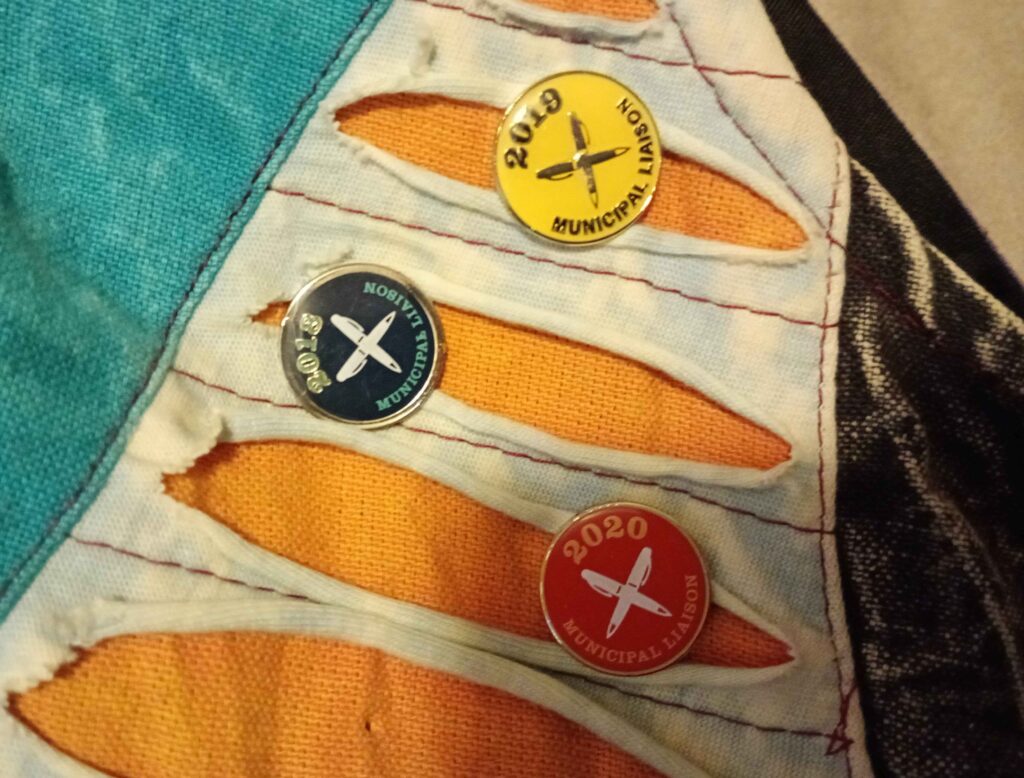
But then, I hadn’t actually written a “proper NaNo” in quite a few years anyway. NaNo had a system of volunteers called MLs, Municipal Liaisons (I never know how to spell that), who ran the local chapters. I was one of those people for a few years, and truth be told, I found it quite exhausting. In the years that I was an active ML, I didn’t get a single novel finished.
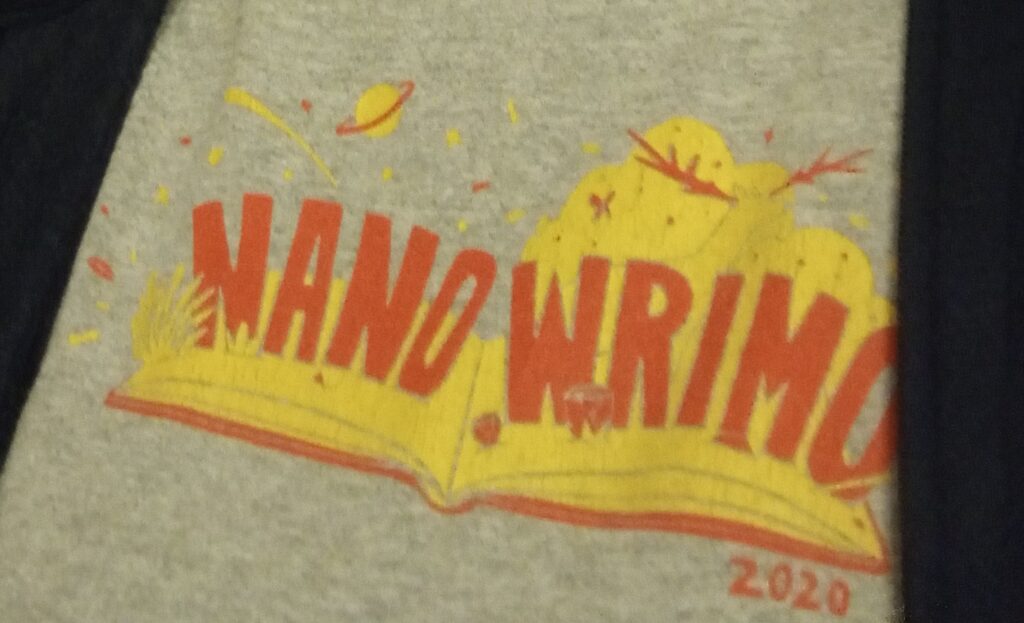
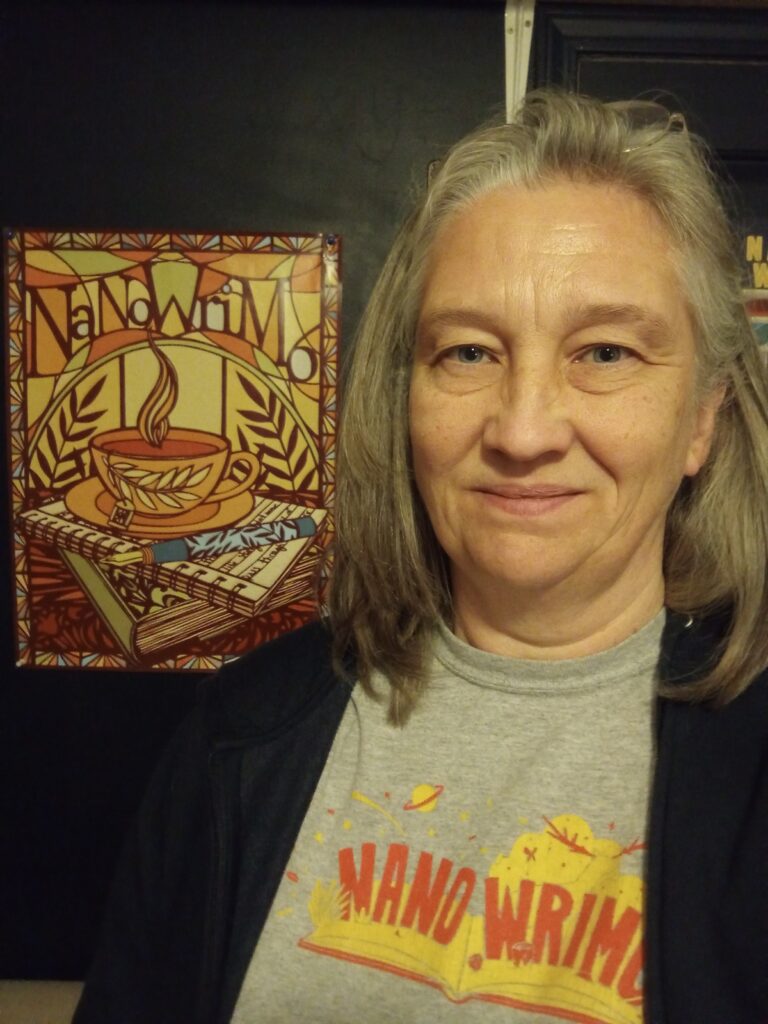
So by the time NaNoWriMo finally crumbled in 2024 (Happy 25th Anniversary…), I had lost steam. My love for NaNo was more nostalgia than anything else. I have half a dozen T-shirts and hoodies with the NaNo name on it and about as many posters lining my study walls, but the print on the T-shirts is flaking, and the NaNoWriMo logo on my favourite travel mug is almost entirely worn off.
I think there is something rather symbolic about that. Yes, NaNoWriMo was fantastic while it lasted. Just like my first NaNo hoodie, the big black one, that I bought myself in 2012 as a reward for finishing my novel. But the paint flaked off, and the cuffs are worn through. It’s time for something new.
And then I got to thinking. NaNoWriMo started in 1999, with a few crazy friends who decided to try to write a novel in one month. Yes, it grew from there, in leaps and bounds – soon there were thousands of participants, then hundreds of thousands; there was a fancy website, and it got fancier with every iteration; there were word count trackers and word sprinting software and forums and pep talks and badges and what-not and so on…
But, hold on, what was it really all about? It was about a few crazy friends who decided to write a novel in one month. That’s it. Chris Baty and his buddies, back in 1999, didn’t have any of that fancy stuff on that fancy website that is now defunct. They didn’t need that website, didn’t need the non-profit. Sure, it was great to have, but it wasn’t required. What mattered was DOING THE THING – writing that novel.
And that, folks, we can still do. Even if NaNoWriMo.org no longer exists, WE CAN STILL WRITE NOVELS. The whole process might even be better for being, well, simpler. More grassroots. More back-to-basics.
And you know what I just discovered, as in, ten minutes ago while I was writing this? I’m not the only one thinking this! I’m not alone in this novelling journey after all – THERE IS A NEW NANOWRIMO!!
It’s different, it’s not the same, it’s not even an actual organization. But it’s spearheaded by Chris Baty himself, with a whole team of veteran NaNo volunteers, and there is a website with resources, and a blog where people post cool stuff, and even a place where you can download web badges to splash around your social media sites. It’s called NaNo 2.0 (https://nano2.org/), and it looks amazing. Exactly what I was wishing for: a place to get back to the spirit of NaNoWriMo, the way it started out. Not one central “organization”, but a grassroots movement of people all over the world doing writerly things, in November, and supporting each other through it.
I’m so excited – I started this post feeling sad, mourning for the loss of NaNoWriMo. But NaNoWriMo isn’t gone, after all! It just looks different now. And, dare I say – maybe even better? NaNoWriMo is dead – long live NaNoWriMo!
I don’t know what I’ll do this November, if I’ll write a novel or not. But whatever it is, I’m looking forward to getting back into the novelling spirit.
Life, the Universe, and a NewNoWriMo. What about you – will you join the fun?
“I cooked a simple breakfast of omelet and toast,” says the main character of a historic novel I recently read, in a throwaway half sentence. A simple breakfast. Of omelet and toast. In a cottage in the backwoods of Ireland, in 1911. Wait, simple?
Let’s break this down, shall we.
In order to make an omelet (or omelette, depending on where you live), you need to, of course, crack eggs, and… Hold on, back up.
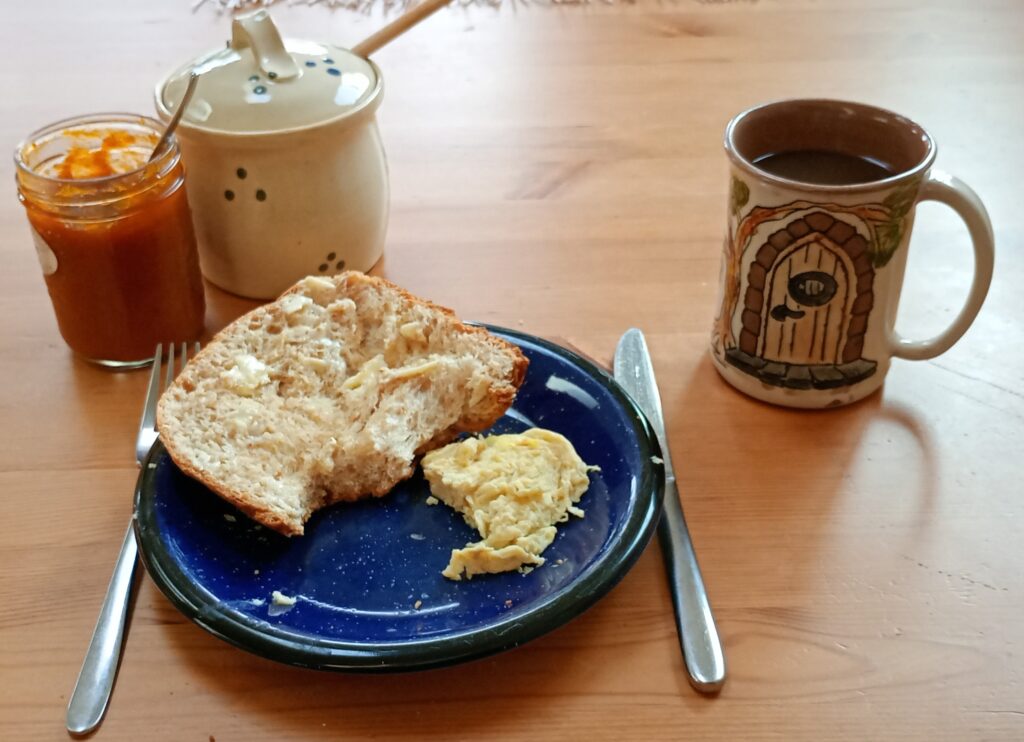
I, too, had a simple breakfast this morning of eggs and fresh-baked bread (yes, I know! Just bear with me). At 8am, my breadmaker beeped, whereupon I dumped the loaf out of the bread pan and set it to cool on a rack. At around 8:30, I cracked an egg into a bowl, bunged a frying pan onto the stove, turned the knob to medium, melted a bit of butter in the pan, poured the egg into the pan, pushed it around with a spatula, then put it on a plate with the buttered end of the warm loaf of bread. I poured myself another cup of coffee from the coffeemaker, and voilà, my simple breakfast!
But with the MC of our story, oh dear me, no.
Yes, she also cracks eggs and slices bread. But before she does any of that, she has to make a fire. Probably on an open hearth, as this is a rural cottage in the woods—but we’ll be charitable and give her a closed stove (more on that in a minute).
So, making a fire. Probably raking out the ashes of last night’s fire, getting some kindling, hauling in (hopefully already chopped) wood, stacking the fire, setting it alight, waiting however long it takes for it to catch, then to sort of die down to something less than an enthusiastic flame… Truth be told, I’ve never actually cooked on a wood or coal stove, let alone an open fire, aside from roasting wieners or marshmallows on a stick (it’s on the things-to-learn list). But I’m pretty sure you can’t cook on a fire when you first set it alight, you have to let it establish itself. Especially when you want a sort of middling flame for your medium-hot pan, which you absolutely need for an omelet (the pan can’t be too hot—you don’t want to know how I know).
Okay, so now she’s waiting for the fire to get to cookable dimensions, which gives her time to work on her omelet. That’s not much different from what we do today—crack the eggs, beat them up with a fork, then… Is it a plain omelet? Or does it have cheese, and chopped onion, and maybe some chopped bell peppers or tomatoes or herbs…? All of which would need dicing, grating, otherwise preparing… Well, we’ll just go with a plain omelet, it’s easiest. So, beaten eggs are in a bowl, the fire is at a cookable state, you heat the pan to medium, melt the butter, pour egg into pan.
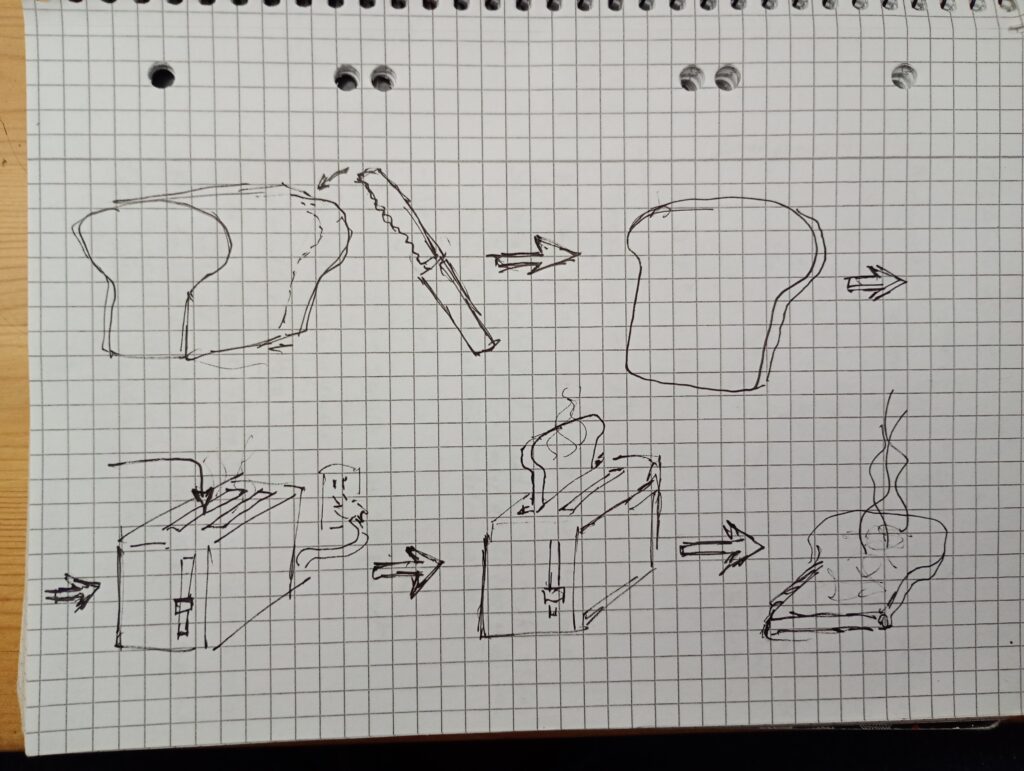
But then we get to the toast. Not just a slice of bread, toast. Which, in case you don’t know, is a slice of bread that’s toasted (you’re welcome). How does one make toast? Hang on, I can show you, I did a drawing (it was for a class):
That’s how you make toast, right? Every one of my classmates drew something almost exactly like this.
But our intrepid MC, she doesn’t have a toaster. No simply sticking your bread slice into an electric machine and pushing down a lever, to have a crispy golden brown slice pop up a few minutes later, steaming, for your delectation. So, again, I haven’t really made toast on an open fire myself, but I’ve burned marshmallows, so I know that they don’t work terribly well for toasting on an open flame. They want glowing coals. Which requires letting the fire burn down. And then you’re sitting there, patiently, with your item-to-be-toasted skewered on your toasting fork, and you carefully hold it to the heat source trying not to burn it (Whoosh! Marshmallow torch! Oops, sorry, that’s your modern Canadian campfire. Back to the topic—toasting bread on a breakfast fire). Which is not something you can do at the same time as carefully cooking an omelet, in an open pan, over that same fire, as you only have two hands.
And then—I did say we’d come back to the “closed stove” topic—our MC, after having consumed her simple breakfast, takes the leftovers and “tucks them in the oven” for her still-sleeping friends. That’s why she has to have a closed stove available to her. But woodfired ovens even in a woodstove are notoriously difficult to handle, from what I’ve read. They aren’t just on with a nice even heat like our electrical thingamagigs, they require fiddling with and knowing exactly what you’re doing, so you’re not burning one side of whatever-is-in-there and having the other side go cold.
Conversely, if our MC’s cottage-in-the-backwoods didn’t have a closed stove but an open fire and a separate oven, which is more likely for that time and place, that oven would be one of those stone or brick recesses in the wall with a door in front, like the one in Hansel and Gretel. That kind of oven you heat by building a big fire inside of it (that’s what the witch had Gretel do, intending to cook her), then when it’s at the right temperature, you rake out all the hot coals and quickly shove your bread (or witch) inside, clapping the door shut, to bake things in the residual heat being held by the thick stonework around it. All extremely time-consuming, not to mention highly skilled work.
In other words, very, very far from simple.
Okay, you’re probably tired of my ranting here. But you get the point: if you’re writing a historic novel, please think through what life “back then” was actually like. What’s “simple” now was actually very complex in times past. It took a huge amount of labour. Labour that, in most cases, was done by servants, or by your wife. And if you didn’t have servants or a wife, as is the case for the MC in this novel, you just didn’t have the things that took work. You made toast for a treat for Sunday afternoon tea, not for a quick, simple breakfast. You didn’t “tuck things in the oven”, you maybe put them “to simmer on the back of the hob” (which I’m not entirely sure of what that means, either, but have read about lots of times), and reserved the oven for baking once a week or so.
Today, I can have fresh-baked or toasted bread, scrambled eggs, and hot coffee for my breakfast, because I have an electric breadmaker, and a toaster, and an electric stove, and a coffee machine. I have electric servants. So for me, that kind of breakfast is simple. But in 1911, the terms “cooked” and “simple breakfast” did not belong in the same sentence.
It annoys me when today’s writers or readers completely disregard the amount of sheer labour that goes into having everyday creature comforts in the absence of the convenience that today’s electric and electronic machinery can give you. We disregard the work that people had to do in the past to get what we totally take for granted. We disregard the value of labour, and that means we disregard the value of the people who did that labour. “Simple” things actually take a lot of work. Let’s honour the people who did that work, shall we?
So next time you give your servantless MC in her historic-cottage-in-the-woods a “simple breakfast”, make it a (cold) slice of bread and hardboiled egg (cooked last night when she made dinner). I promise I won’t jump on you for it.
Life, the Universe, and Cooking a Simple Breakfast. I do like my electric servants.
PPS: I won’t tell you the title or author of the novel that I’m talking about here, because my rant only pertains to that one, tiny half-sentence. In all other respects it’s quite a good book, and I don’t want to spoil anyone’s enjoyment of it.
PPPS: I said I’d stop ranting, but, don’t even get me started on the labour of producing textile work and the authors that sneer at “homespun”… I know, I know, that’s a post for another day.
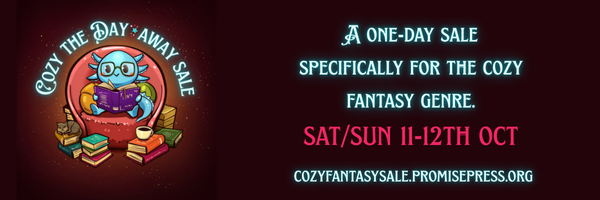
Actually, it’s a two-day sale! And the new Seventh Son is part of it! The ebook version is on for US$0.99 (or its equivalent in your currency) all weekend, Saturday and Sunday. The Cozy the Day Away Sale: Over 150 books, all Cozy Fantasy, all on sale!
It’s a great sale again, with so many different authors and books. To mention just a few of my favourites, of course there’s E.L. Bates with Whitney and Davies; there’s Shanna Swendson (through whose newsletter I found the sale in the first place); there’s Victoria Goddard whom I discovered at the first sale I participated in at the end of December and whose books I have since devoured like they’re going out of style (which, thankfully, they’re not – rather the opposite…) – so many good books, so many amazing deals.
So hie thee over to the Promisepress website and check out the Cozy the Day Away sale! But do so right away, because the sale really is only on for those two days; the listings go away after that.
Life, the Universe, and a Cozy Fantasy Sale! Which books will you pick up on sale?