A Tale of Two Operas

Where has March gone? Wasn’t it just February, like, last week? Apparently not. Well, at least I didn’t just randomly lose the month as I’m wont to do. I know exactly what happened to it: I spent it on a short-notice trip to Europe for family reasons. As I might have mentioned before, having your family a third of the way around the globe is a pain in the you-know-what, but visits have the added perk that you get to do some touristy stuff on the side. “Love where you find yourself,” and all that, you know?

My route home took me via France, where the Paris-dwelling Offspring and I indulged ourselves by pretending to be cultured. It was great fun. So as a small sampling of our jollifications, I present to you …

A TALE OF TWO OPERAS

[The curtain slowly rises, the orchestra strikes up.]

DAY ONE: the Opéra Bastille, with a production of Hamlet (the opera) by Ambroise Thomas.

The Paris Opera, as I’m sure you know (haha—I certainly didn’t before this), has two buildings, the Palais Garnier and the Opéra Bastille. The latter is a modern building, from 1989, all clean, straight (or swooping) lines and cement—now that I look at the photos, from across the auditorium the balconies look rather like the overhead luggage compartments in airplanes while everyone is stowing their carry-ons. The Opera Bastille houses the actual opera, as in, productions where people wander about on stage singing loudly and impressively while waving their arms.

So the Offspring purchased us some rather pricey tickets, and off we went to the show. It was weird. I mean, really weird. Hamlet, the opera, is an adaptation of an adaptation of an adaptation: Someone named Ducis adapted the Shakespeare play into French; Dumas, père, made Ducis’ version better by putting back some of the Shakespeare; Carré and Barbier wrote a libretto of Dumas’ take; then in 1868 Ambroise Thomas wrote music to go with it. Fairly early on in all this adapting they messed with the ending, kind of like Disney did with “The Little Mermaid”: this Hamlet doesn’t die, but gets to live out a natural lifespan, profoundly depressed, as king of Denmark. (Apparently the British audiences at Covent Garden got so ticked off at this sacrilege, the opera was adapted yet again for them and the death scene at the end was restored. To die or not to die, that is the question…)

And of course, a production of an opera is a whole other step again. So here we have a 16th century play, turned into a 19th century opera, put on in a 21st-century style. I think Surrealism is the term that comes closest for this particular performance. A lot of it left us scratching our heads, and not because it’s in French, as they actually had subtitles so you could follow. I kid you not—there was a screen at the top of the stage (so I guess it was really surtitles?) that had the French words with the English translation underneath. So we knew what they were saying (and we know the Shakespeare version fairly well, anyway), but it’s the setting and the actions that went with it that were puzzling. For example, there was one character, a member of the chorus, who periodically came out in a mime face and stood at the side of the stage, knitting. Huh? The best we could come up with was that he might have been meant as a representation of one of the Fates.

However, as I said, we greatly enjoyed ourselves. The music is beautiful, and the singing—wow. And watching that strange surrealist setting and trying to figure out what they were trying to do or say with it made us feel rather clever.

We had so much fun at the Opera that we decided to try it again the next day.

INTERMISSION

DAY TWO: a ballet called Pit at the Palais Garnier.

The Palais Garnier, or Opera Garnier, is the original Paris Opera building, and today is mostly used for ballet performances by the Paris Opera Ballet company.

If you go to the ticket office on the day of a performance, subject to availability you can get cheap “partially obstructed view” seats. So for €12 each, we got to see a ballet! Truth be told, it was weird and surrealistic, too. But again, we had fun. And the best part of that whole experience was not the performance per se, but the building.

The Palais Garnier is the quintessential opera house—in fact, it’s the setting for Phantom of the Opera. Built in the 1860s under Napoleon III, it hits every stereotype you can think of. Gilding, marble, statues, red plush (the red plush! Everywhere!), swooping curtains (of red plush, or painted to resemble red plush), tiers and tiers of boxes (lined with red plush), rows and rows of seats (upholstered in red plush), sparkling chandeliers dripping with crystals (those aren’t red plush), grand sweeping staircases, saloons… It’s mind-boggling.

I had to keep myself from squealing out loud when we got to our box—actually, I might have squealed just the teensiest bit. You step from the sweeping curved hallway through one of the many little doors that are side by side in a round wall, and you’re in a tiny, dimly lit red plush foyer—maybe five feet wide, and eight feet deep. There is a bench on one side to rest your weary slipper-shod feet, coat hooks on the opposite wall for your opera cloak, a little shelf to put down your opera bag while you use the red-plush-framed mirror above it to straighten your elegant opera coiffure. Straight ahead is a looped back red plush curtain, through which you can see six red-plush-and-gilt chairs, arranged in three rows. And beyond them, past the red plush railing, the great red-plush-and-gilt cavern of the auditorium, with its enormous chandelier suspended above from the centre of a rainbow riot of Marc Chagall paintings. The Chagall ceiling is the only piece that is not in keeping with the 19th-century opulence, being of an entirely different style of overwhelming colour, but it’s Chagall—it’s glorious.

The tickets we had were for the two back-row chairs of our box; about a quarter of the stage would have been obscured by the sides of the box, but we could have seen it standing up and leaning over a bit. We got there early enough that nobody else was there yet, which is why I was able to sit in one of the front seats for a few minutes, staring at the Chagall, and just revel in all the red-plushness around me. Eventually I moved back, though, because the box is so narrow that there is just barely enough room between the chairs to get past, and I didn’t want the awkwardness of having to do a seat-swapping tango with our fellow box occupants. (Come to think of it, I wonder how, in the days when the theatre was new, Victorian ladies in their crinolines ever got in and out of those boxes…) But we were lucky: the couple that arrived shortly before the beginning of the performance took the front two seats, and then nobody else came. So we moved up to the middle seats, and with just a bit of neck-craning were able to see most of the stage.

I don’t have too much to say about the performance—as I mentioned, it too was rather strange and very, umm, modern. However, the skill of the dancers was astounding and a delight to watch, and I for one found that surrealistic weirdness is easier to enjoy when it comes through a medium that is already mostly abstract, such as dance and instrumental music. I didn’t quite follow the plot of the story they were telling, but that didn’t bother me much, as the experience of just being in the Palais Garnier is what made it all worthwhile.

And then the performance ended, and we streamed along with the rest of the audience out through the gilt-and-marble foyer into the rainy Paris street and down into the Metro system. And not just the audience, either: just before our train doors closed a well-dressed woman jumped into the car, a violin case strapped to her back—obviously one of the members of the orchestra. Just your ordinary Parisian working woman on her way home from her work shift.

Somehow that seemed to put the final touch to the experience. It was all so “Europe”: gilt and red plush, surrealism and a classical orchestra, high culture and utterly democratic public transit. A tale of two operas, a tale of two worlds that are, really, just one.

Life, the Universe, and a Tale of Two Operas. It was the best of times, it was the… No, not that. It really was wonderful.

FINIS

And Two More Announcements!

And here are two more exciting announcements about this week’s literary releases! (Must be the season…) Neither of them are my own publications, but I had a part in both of them.

#1: The March issue of The Fairy Tale Magazine with a story by Yours Truly

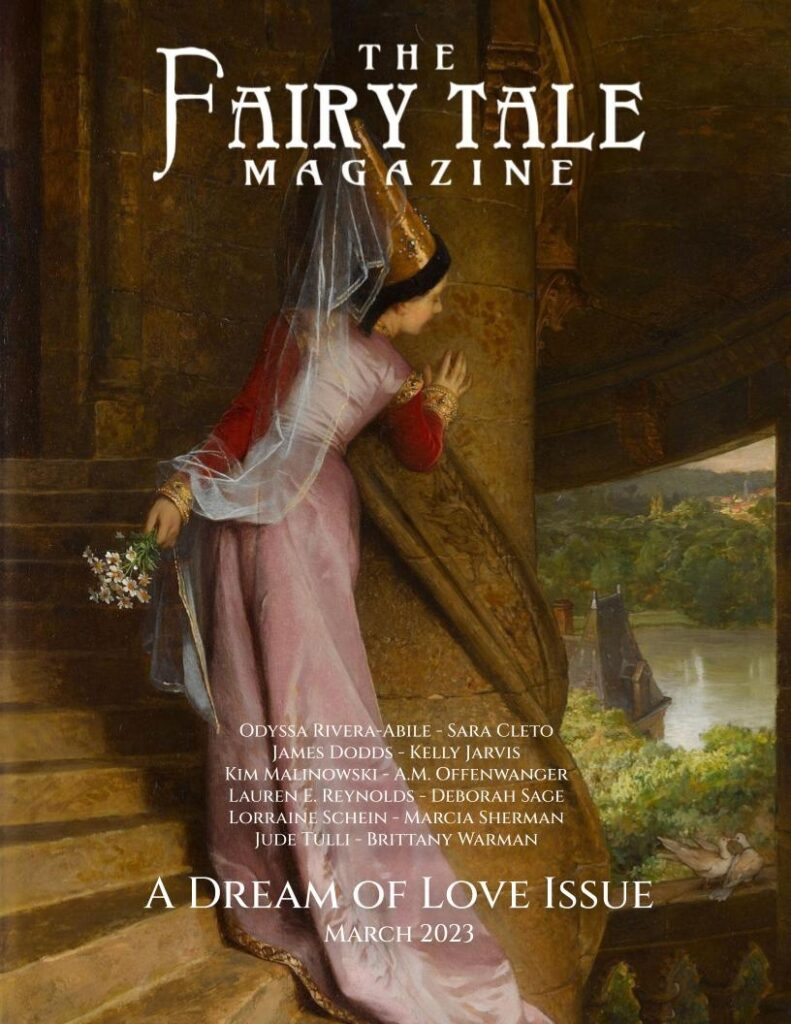
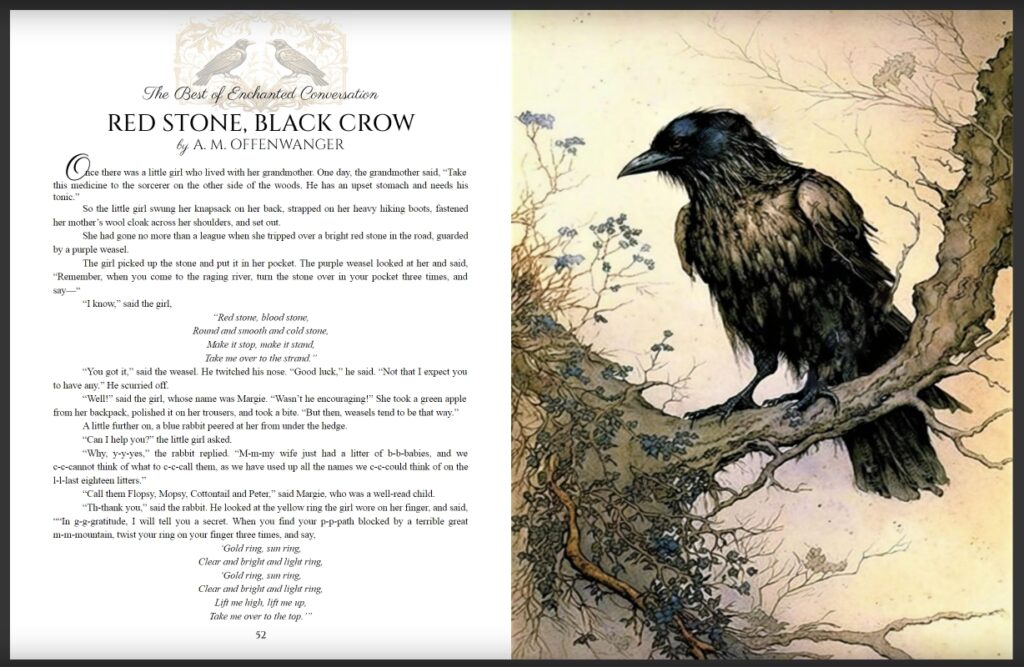
Enchanted Conversation magazine has recently been reborn in a new and utterly gorgeous format as a web magazine under the name The Fairy Tale Magazine. I was honoured by having one of my stories that EC had published in 2018 included in the “Best of Enchanted Conversation” section in the March edition, which is now out. So “Red Stone, Black Crow” is now available to read in the illustrious company of 70(!) pages worth of original fairy tale stories, with stunning illustrations that Amanda Bergloff created from public domain art (mine got an Arthur Rackham image! I mean, Arthur Rackham!). Check it out – it’s well worth the price of US$5.99 for the issue, or even better, $16 for the whole year (4 issues). (Also, the mag features an ad for Martin Millerson – how cool is that, an ad for my book in a real magazine!)

The screenshot of my story. If you want to see the rest, get the magazine!

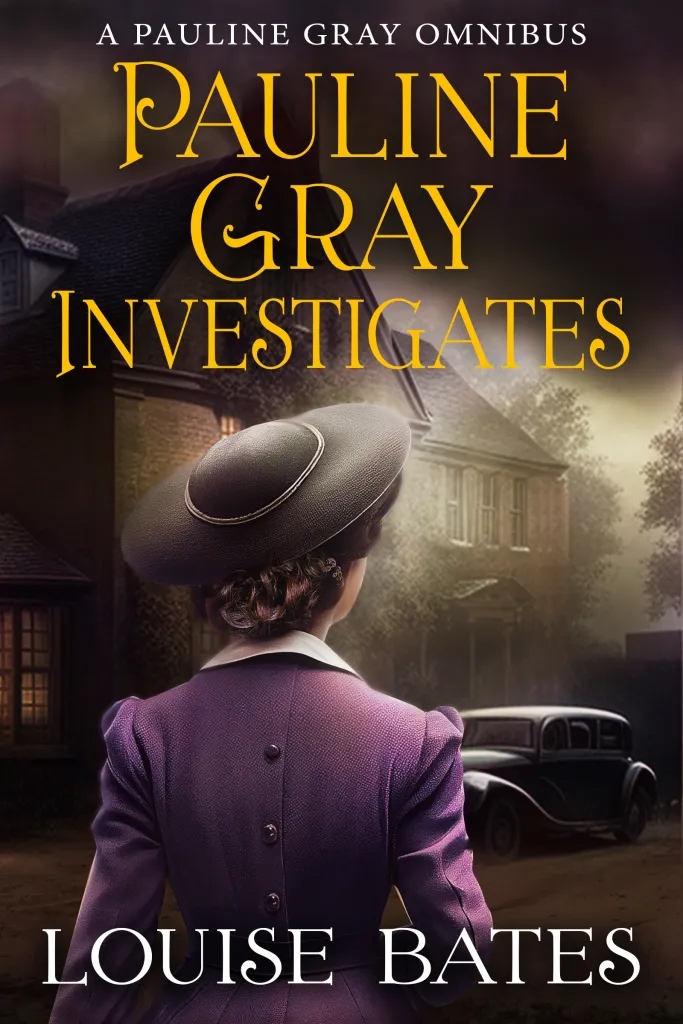
#2: Louise Bates’ Pauline Gray mysteries are now available in a beautiful omnibus edition!

My very good friend Louise, aka E.L. Bates, has just put together her excellent Pauline Gray mystery novellas into an omnibus edition. I got to beta read those stories, and then copyedit them before release, and I can wholeheartedly recommend them.

From the series description:

Welcome to Canton, NY, a small farming town nestled in the northern foothills of the Adirondack mountains. It’s the 1930s, and to an outsider’s eye, this looks like an idyllic village mostly untouched by the Great Depression that is ravaging so much of the nation. But even the most idyllic towns and villages have their dark sides. When trouble comes to Canton, the folk there rely on each other to help out. And that includes one young woman in particular …

Meet Pauline Gray. A graduate of the prestigious St. Lawrence University, she fell in love with the town while in college and has never left. A journalist by day and a secret novelist by night, Pauline’s compassion and drive for justice pull her into mysteries that are too small or too peculiar for the police. She would really prefer a quieter life, but when people need her help, she can’t turn them away.

Canton, NY, is, of course, Louise’s own home town, so the historic and geographic details in this series are absolutely spot-on. But more to the point, Pauline Gray and the people she meets are drawn with a deftness and sensitivity that makes the stories a delight to read. Go get a copy of the books – either the omnibus or the individual novellas – you won’t regret it!

And that’s Life, the Universe, and TWO new releases this week! Get yourself some good new reads!

Introducing (drumroll please!): Martin Millerson!

That’s right – we have a new book out!

I wrote this one quite a number of years ago; it was one of my first NaNoWriMo novels. Just for fun, because “Puss in Boots” is one of my favourite fairy tales. I mean, what’s not to like about a story of a cat who wears boots and bosses around a young miller’s son, and in the end gets him his fortune?

In case you can’t remember the details of the story, I won’t give you any more spoilers than that. But I’ll just say that this book follows the Grimm’s outline rather closely, except that there are a few extra characters added, several of them with four legs, or paws, as it were (and one with three).

Until quite recently, this book lived in my files under the title Something With Cats – because, you know, when someone asked me what I was writing all I knew was that it was Something With Cats.

So, without further ado (but one small added drumroll: drrrrrrrrrummmmmm), here it is. Introducing, for your reading pleasure:

Martin Millerson, or, Something With Cats: a Retelling of “Puss in Boots”!

You never know what will happen when you buy your cat a pair of boots…

Martin Millerson is a dreamer who would rather write verse than work in his family’s mill. Still, he is bitterly disappointed when the only legacy he gets from his father is a cat. But then the cat starts to talk. And ask for a pair of boots. And everything changes.
Can Martin, his friend Walter Shoemaker, Nicolaida the new Town Witch, and Mafalda the King’s Daughter work together to rid the town of the menace beyond its gates? Or will it take the cunning of a cat—

A Cat in Boots?

You can get it at your favourite online bookstores:

-on Amazon for Kindle and in print

-on Kobo or Nook for epub readers

-on iBooks and other vendors

-on Smashwords in most Ebook formats (including Kindle)

So, hie thee to an (electronic) bookshop, and get thyself a copy!

Life, the Universe, and MARTIN MILLERSON! Let me know what you think of it.

Paying Attention

Your attention is one of the most valuable things you possess, which is why everyone wants to steal it from you. First you must protect it, and then you must point it in the right direction.
As they say in the movies, ‘Careful where you point that thing!’
What you choose to pay attention to is the stuff your life and work will be made of.

Austin Kleon, Keep Going

I ran across that quote from Austin Kleon the other day, and it really struck me. The man knows what he’s talking about. (He really does. Go buy his books.)

In our world today, it’s become more and more important to point our attention in the right direction. If we don’t intentionally point it at what we want to pay attention to, it’ll be pointed for us, by an attention economy that is extremely expert at making us look where it wants us to look.

And what we pay attention to will fill our whole vision. If all, or most, of what we pay attention to is what’s bad in the world or in our life, pretty soon that becomes our life. It’ll be all we see. The world is a bad place to be, “they” are out to get people like “us”, everything is awful, and we spend our time wallowing in misery.

It’s not that there’s not plenty of bad stuff out there—there is. Or that there aren’t undesirable things happening in our lives—there are.

But listen to the language: paying attention. Spending time.

Because that’s exactly what it is. I have a finite amount of attention and time available. If I use up that attention and time on negativity, on things I dislike and disagree with, on matters that are bad and I can’t do anything about, that time and attention is gone. Poof. Kaputt. I no longer have it available to spend on the things that really matter.

What do I really want to spend the precious coin of my time on? What do I want to pay attention to?

“Do you want to be happy? Be grateful!” says Brother David Steindl-Rast of grateful.org. He’s not talking about “looking on the bright side”, or “trying to find the silver lining in the cloud”, let alone “shutting our eyes to what is painful and ugly and evil”. No, this is about attention: the attention to the surprise and wonder that surround us, every day, no matter where we are.

And I, for one, want to cultivate that kind of grateful attention. I don’t want to be miserable, thank you very much. Over and over I make the choice (at some times more successfully than at others) to spend my attention on the things that really matter, that matter to me. And once I’ve paid that attention, I find I have none left to spend on those other things, the ones that “they” want me to pay out my attention for and that make me upset and angry and depressed. Those things are still there, but I don’t have time for them; I already spent it all.

And that’s just fine with me.

“What you choose to pay attention to is the stuff your life and work will be made of.”

Life, the Universe, and Paying Attention. I want to choose my spending wisely.

Palentine’s Day

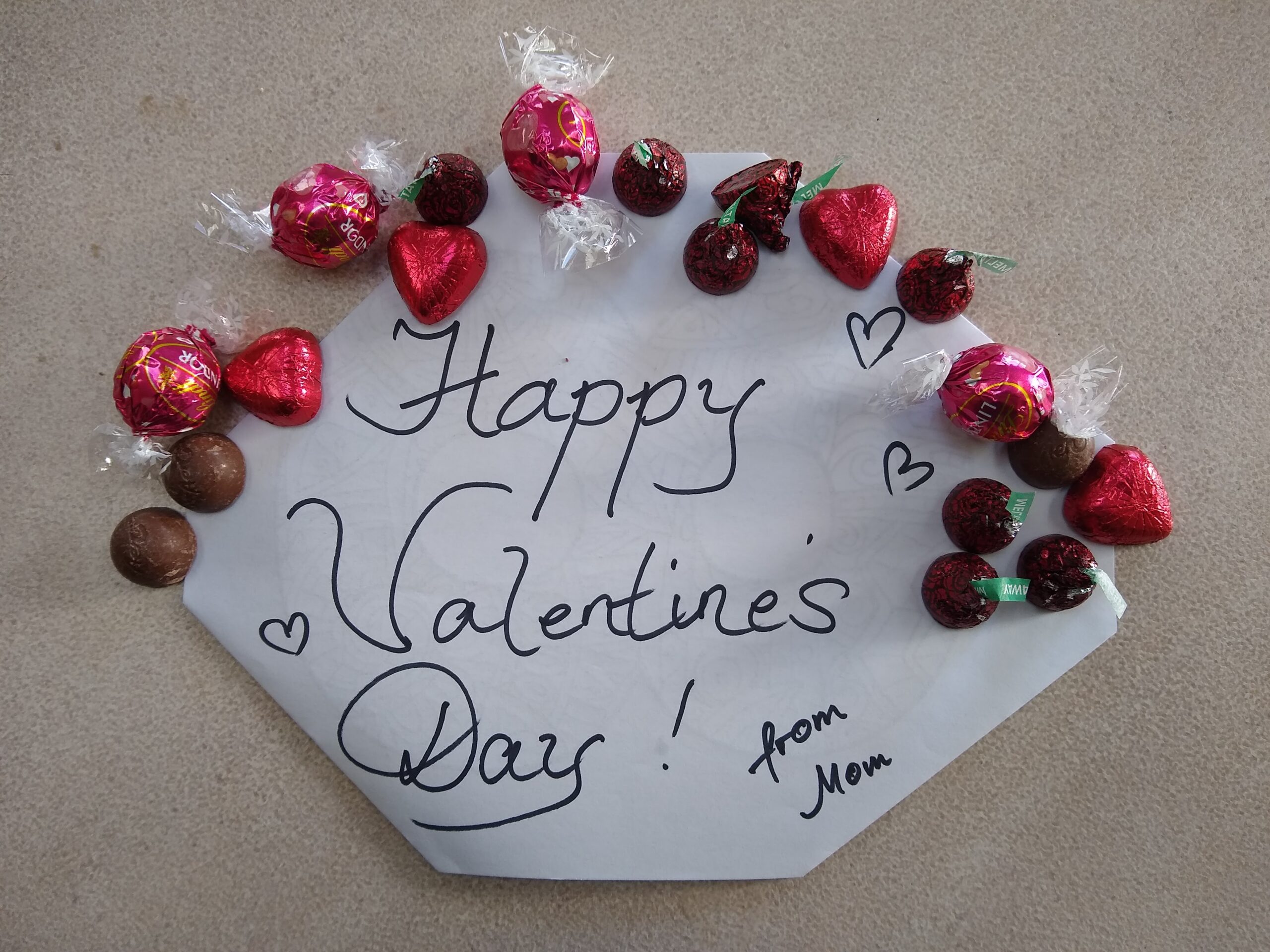
I have to let off a quick rant. It’s Valentine’s Day today. You know, Day of Lurrrrv and Romance and Red Hearts and Pink Flowers. And invariably, there’s going to be a few Bah Humbugs (okay, wrong season – maybe curmudgeons, then?) who call for a boycott of the holiday, and complain about how all this talk of love and romance only makes those of us who don’t have anyone who brings them roses and chocolates feel worse about that fact. So therefore, they say, we should not celebrate it at all. Ban this foolishness! Down with red-foil-wrapped chocolates and cinnamon hearts!

“Bah!” I say to them, “Humbug!” (that does have a nice ring to it, seasonal or not). Yes, all right, I agree that the commercialism of Valentine’s Day is flat-out ridiculous, and that spending money and making empty gestures is not what love is about. (In fact, a few years ago I wrote a blog post about it.) And of course I feel for those for whom the day, like many other holidays, brings up painful memories of lost loved ones, but that’s not what I’m talking about here. The pain of grief is a whole other topic.

The thing is this: just because you don’t have that one romantic partner in your life who neatly conforms to all of society’s extremely limited ideas of what love consists of it doesn’t mean you can’t celebrate a Day of Love, and/or let others celebrate it. Just because I’m not a grandmother doesn’t mean I can’t participate in my friend’s joy at her grandson’s birthday. Being European doesn’t mean I can’t celebrate Chinese New Year’s or enjoy watching the Asian community celebrating it. Not having a romantic-gestures-delivering partner doesn’t mean I can’t embrace Valentine’s Day.

Our world is bleak enough as it is—let’s celebrate all we can. And let’s especially celebrate love in all its manifestations. I just learned the terms “Galentine’s” and “Palentine’s”, celebrating your gal friends and pals—what a great concept. Friends, family, parents, children, uncles, aunts, cousins, second-cousins-by-marriage-once-removed, and yes, husbands, wives, girlfriends, boyfriends, lovers—let’s enjoy each other and the relationships we have. Let’s revel in the joy of love and romance and mushy sentiment, because, let’s face it, it makes us feel good, and it literally makes life happen. How great is that?

So bring on the flowers and chocolates (though perhaps not the promises you don’t intend to keep, but the gift of a giant library full of books would always be welcome). Let’s put a counterpoint of Love and Celebration out into the darkness.

Life, the Universe, and the Day of Love. Happy Valentine’s Day!

Pals

News from the Writing Trenches, January** 2023 Edition

Steve says it’s time I gave y’all an update. (Side note: I like that word, “y’all”. It’s quite fascinating how the dialect of the Southern United States has created a new second person plural, which takes the place of what the word “you” used to mean. Back in the day of The Bard and the King James Bible, “thou” meant “you, the single person”, and “you” meant “you, the several people”. Nowadays, regular English only has “you”, as in, “you one” and “you many”. But Southern US English has re-invented a plural, so there you can say “you one” and “y’all many”. I wonder if it’ll ever make it into formal, written language? End of digression.)

So, yes, update. No, I’m not getting sidetracked, why would I? It’s not like I go on guilt trips about how much I have, or haven’t, written in the last while. In fact, I was going to (but didn’t) write a blog post on that: “The Year I Failed NaNoWriMo”.

Because, that did happen last November. I failed NaNo—dismally so. I only got a few thousand words done. But then, I’d set myself up for it. I wanted to see if I could write a novel and do regular work, as well. So I booked several editing jobs during November, as well as having some volunteer work to do (and never mind starting Christmas preparations), plus a trip to the coast for some family stuff in the middle of it. On top of it I was a NaNo ML (Municipal Liaison, i.e. regional leader or cheering squad), which brings a bunch more work with it. I know, I know, laugh all you want.

In fact, setting myself up for failure was a useful experiment. I once knew someone who set himself up to fail a university course: he signed up to the class with the full intention of failing, just to teach himself the lesson that it’s okay to fail. I wouldn’t quite go that far myself; for one, university courses are blinkin’ expensive—there are a lot of cheaper ways of failing. But I started NaNoWriMo 2022 with the idea that I probably wouldn’t finish my 50,000 words. I’d done it ten times in a row before, pushed myself to the finish line, got it done. So I knew what it takes for me to do it. I’ve seen others win NaNoWriMo “on the side”, though, while holding down full-time jobs or looking after young children, and I wondered if there was any chance of me doing so. Answer: No. I didn’t even get a part of a novel written. Which was no surprise, but still stressful.

I did learn a couple of useful things. I’m not a very fast writer, I’ve known that all along. Word sprints and word wars are useless for me. It’s not that I can’t type fast, but I can’t think fast, can’t craft sentences very quickly, so my word count per minute has never been high. Some of my friends can crank out 2000 words an hour without breaking a sweat, and I’ve always wondered how they do it and why I can’t. This time, during one of our online write-ins, I decided to just write stream-of-consciousness drivel, nothing whatever to do with any story I was writing, just to see how fast I could put words on screen. And what do you know, if all I’m doing is typing without trying to make sense, let alone paint a word picture, I can rack up the word count with the best of them! However, it’s a word count that nobody would ever want to read. There were words, even mostly-spelled-correctly words making somewhat-puncuated sentences, but they were utter dross, not a story. And I didn’t enjoy the process. So, it’s not that I’m a failure at writing, it’s that I have a different writing style from the one that cranks ‘em out fast*. I’m a Slow Writer. Which, given the fact that I’m into Slow Culture as a whole (Slow Food, Slow Textiles, etc.), is kind of a good thing. And like other aspects of Slow Anything, it means you (or rather I) have to take time for it, have to set time aside, or it won’t happen.

So! Now you know that I did not write a new novel last November. However. I do have a whole bunch of novels sitting around on my computer in varying states of completion. A few are finished, critiqued, edited, polished. Some are finished, i.e. completed novels, but need rewriting; one needs a whole different ending. And one is only half done, and I need to write the second half and get ‘er done. Also, there are some short stories kicking around that I’ve been submitting to contests, and/or might turn into a story collection, or expand into a novella or even full novel.

All that to say, Writing? Why yes, Steve, I have been writing, thank you very much. You can stop giving me censorious looks. And something might even come out of it, very soon.

That’s Life, the Universe, and News from the Writing Trenches in January** of 2023. I’ll let y’all know when there’s more to tell.

*Footnote: I’m not saying that people who write novels fast write dross; far from it. Just that their brains work differently from mine. I can only write really fast if I write drivel; if I want to write anything worth reading I have to take my time. And that’s okay.

**Edit after posting: I just noticed that it is, in fact, now February, not January. Which tells you where my brain is at. Ah well…