My coffee tastes like espresso this morning – the first cup of a whole potful that I grabbed to get back upstairs with it so as not to have to talk to anyone quite yet.
The valley is socked in with smoke still, the rising sun a blood-red ball over the hazy hillside. But there is no smell of smoke that I can detect; maybe my nose has become inured to it. The doves are cooing, there is chirping and whistling and shrieking, and the odd chattering noises of what I think is the quails interrupting it all.
It’s a good morning – pleasant, cool, slightly breezy. The orange glow of the smoke-shrouded morning sun is laying diagonal planks of light across the balcony floor like molten copper; the indolent curve of the blue-and-green-striped hammock swaying almost imperceptibly in the breeze.
My tongue is still tasting the acrid flavour of the much-too-strong coffee – I can’t even finish it; a whole mug of espresso is far too much.
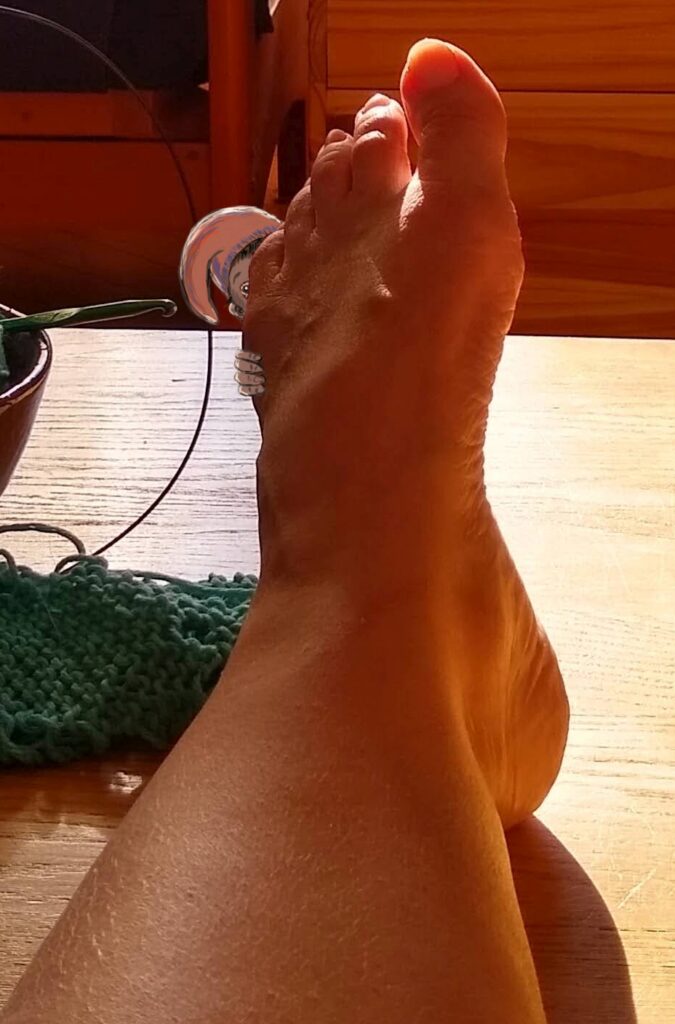
I looked at my toes, propped up on the coffee table in front of me. And looked again.
There was a small gnome hiding behind my foot.
I froze.
He peered around my big toe, then darted back to the other side. I could feel his tiny hand as he steadied himself against the side of my little toe, then his pointy cap slowly appeared, followed by his small, round face.
And here are two more exciting announcements about this week’s literary releases! (Must be the season…) Neither of them are my own publications, but I had a part in both of them.
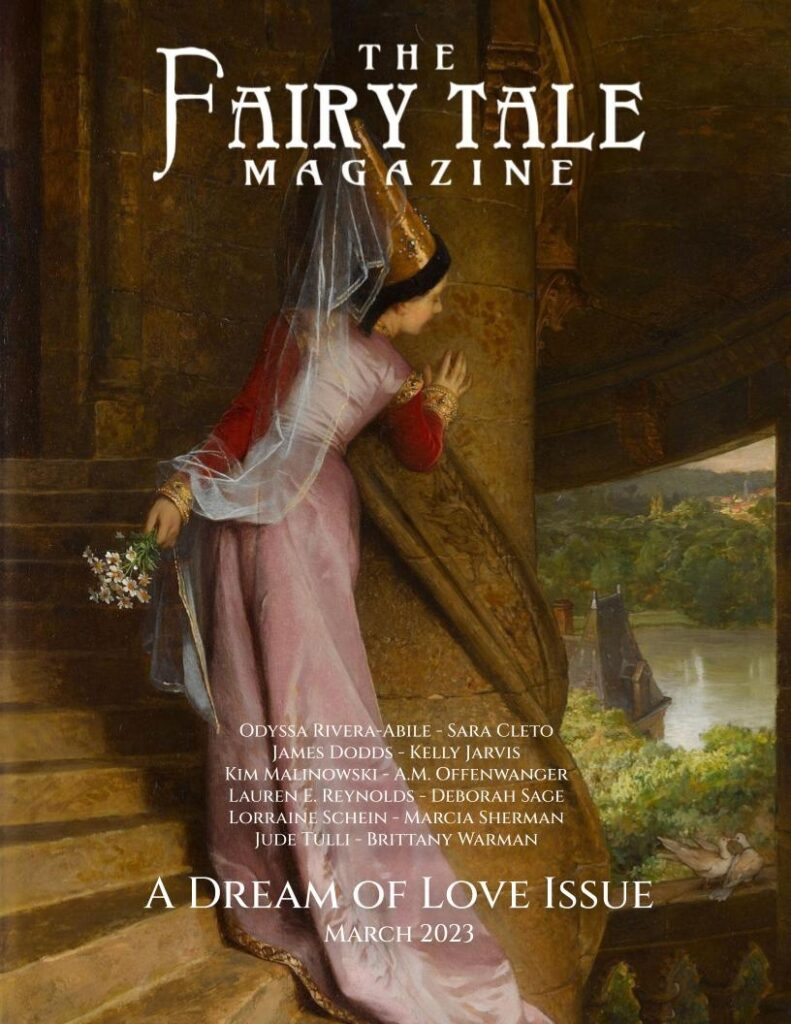
#1: The March issue of The Fairy Tale Magazine with a story by Yours Truly
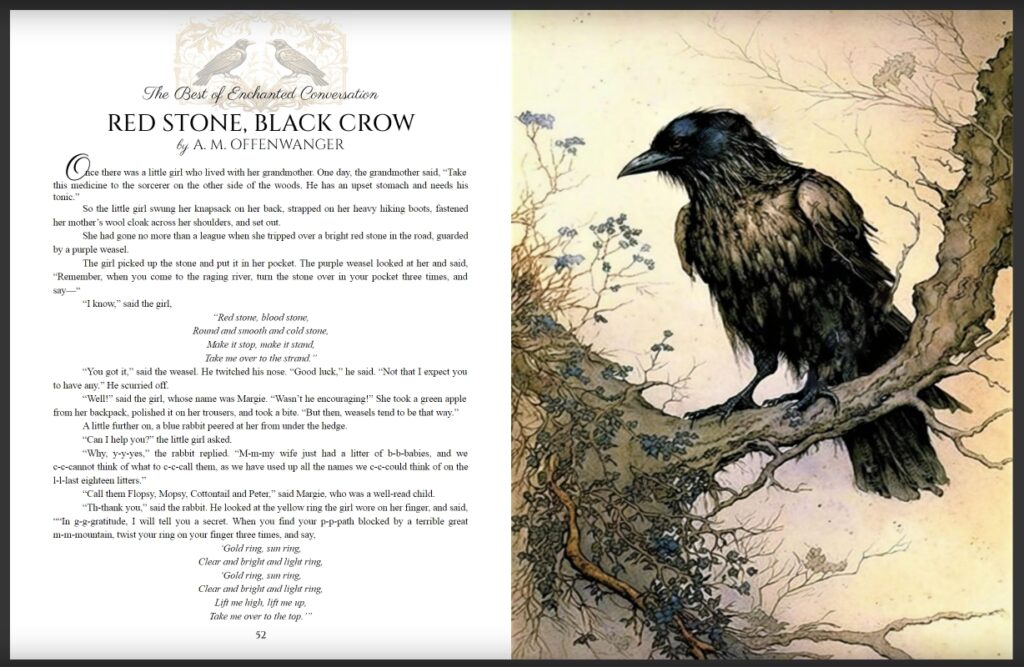
Enchanted Conversation magazine has recently been reborn in a new and utterly gorgeous format as a web magazine under the nameThe Fairy Tale Magazine. I was honoured by having one of my stories that EC had published in 2018 included in the “Best of Enchanted Conversation” section in the March edition, which is now out. So “Red Stone, Black Crow” is now available to read in the illustrious company of 70(!) pages worth of original fairy tale stories, with stunning illustrations that Amanda Bergloff created from public domain art (mine got an Arthur Rackham image! I mean, Arthur Rackham!). Check it out – it’s well worth the price of US$5.99 for the issue, or even better, $16 for the whole year (4 issues). (Also, the mag features an ad for Martin Millerson – how cool is that, an ad for my book in a real magazine!)
The screenshot of my story. If you want to see the rest, get the magazine!
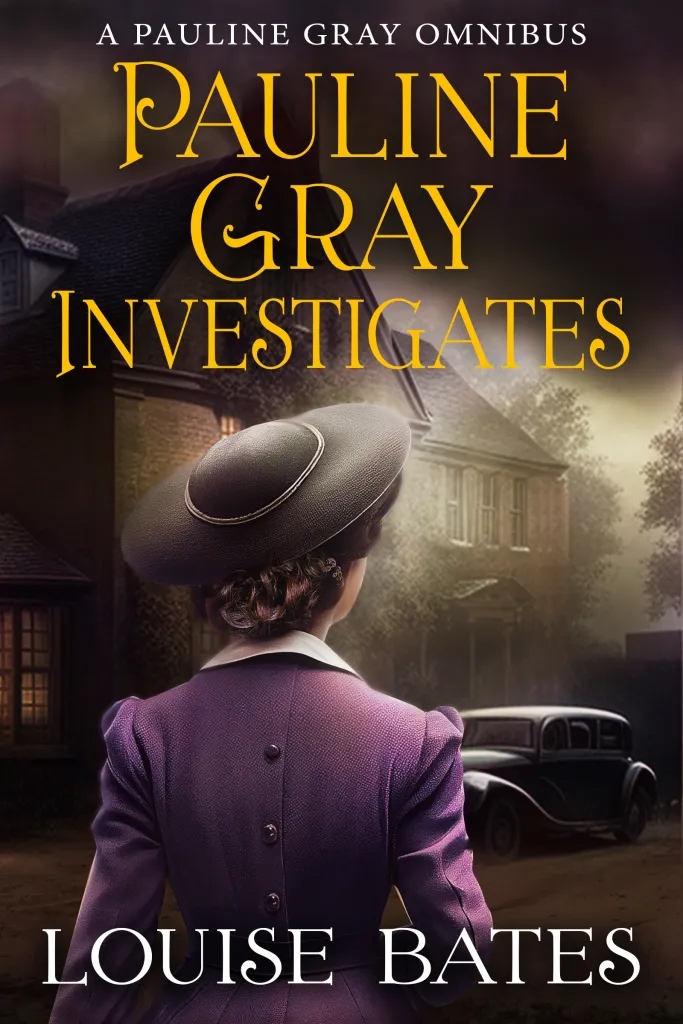
Welcome to Canton, NY, a small farming town nestled in the northern foothills of the Adirondack mountains. It’s the 1930s, and to an outsider’s eye, this looks like an idyllic village mostly untouched by the Great Depression that is ravaging so much of the nation. But even the most idyllic towns and villages have their dark sides. When trouble comes to Canton, the folk there rely on each other to help out. And that includes one young woman in particular …
Meet Pauline Gray. A graduate of the prestigious St. Lawrence University, she fell in love with the town while in college and has never left. A journalist by day and a secret novelist by night, Pauline’s compassion and drive for justice pull her into mysteries that are too small or too peculiar for the police. She would really prefer a quieter life, but when people need her help, she can’t turn them away.
Canton, NY, is, of course, Louise’s own home town, so the historic and geographic details in this series are absolutely spot-on. But more to the point, Pauline Gray and the people she meets are drawn with a deftness and sensitivity that makes the stories a delight to read. Go get a copy of the books – either the omnibus or the individual novellas – you won’t regret it!
And that’s Life, the Universe, and TWO new releases this week! Get yourself some good new reads!
I wrote this one quite a number of years ago; it was one of my first NaNoWriMo novels. Just for fun, because “Puss in Boots” is one of my favourite fairy tales. I mean, what’s not to like about a story of a cat who wears boots and bosses around a young miller’s son, and in the end gets him his fortune?
In case you can’t remember the details of the story, I won’t give you any more spoilers than that. But I’ll just say that this book follows the Grimm’s outline rather closely, except that there are a few extra characters added, several of them with four legs, or paws, as it were (and one with three).
Cleo and Johnny, to whose memory the book is dedicated. They were the live models for some of the extras in the story.
Until quite recently, this book lived in my files under the title Something With Cats – because, you know, when someone asked me what I was writing all I knew was that it was Something With Cats.
So, without further ado (but one small added drumroll: drrrrrrrrrummmmmm), here it is. Introducing, for your reading pleasure:
Martin Millerson, or, Something With Cats: a Retelling of “Puss in Boots”!
You never know what will happen when you buy your cat a pair of boots…
Martin Millerson is a dreamer who would rather write verse than work in his family’s mill. Still, he is bitterly disappointed when the only legacy he gets from his father is a cat. But then the cat starts to talk. And ask for a pair of boots. And everything changes. Can Martin, his friend Walter Shoemaker, Nicolaida the new Town Witch, and Mafalda the King’s Daughter work together to rid the town of the menace beyond its gates? Or will it take the cunning of a cat—
A Cat in Boots?
You can get it at your favourite online bookstores:
Steve says it’s time I gave y’all an update. (Side note: I like that word, “y’all”. It’s quite fascinating how the dialect of the Southern United States has created a new second person plural, which takes the place of what the word “you” used to mean. Back in the day of The Bard and the King James Bible, “thou” meant “you, the single person”, and “you” meant “you, the several people”. Nowadays, regular English only has “you”, as in, “you one” and “you many”. But Southern US English has re-invented a plural, so there you can say “you one” and “y’all many”. I wonder if it’ll ever make it into formal, written language? End of digression.)
So, yes, update. No, I’m not getting sidetracked, why would I? It’s not like I go on guilt trips about how much I have, or haven’t, written in the last while. In fact, I was going to (but didn’t) write a blog post on that: “The Year I Failed NaNoWriMo”.
Because, that did happen last November. I failed NaNo—dismally so. I only got a few thousand words done. But then, I’d set myself up for it. I wanted to see if I could write a novel and do regular work, as well. So I booked several editing jobs during November, as well as having some volunteer work to do (and never mind starting Christmas preparations), plus a trip to the coast for some family stuff in the middle of it. On top of it I was a NaNo ML (Municipal Liaison, i.e. regional leader or cheering squad), which brings a bunch more work with it. I know, I know, laugh all you want.
In fact, setting myself up for failure was a useful experiment. I once knew someone who set himself up to fail a university course: he signed up to the class with the full intention of failing, just to teach himself the lesson that it’s okay to fail. I wouldn’t quite go that far myself; for one, university courses are blinkin’ expensive—there are a lot of cheaper ways of failing. But I started NaNoWriMo 2022 with the idea that I probably wouldn’t finish my 50,000 words. I’d done it ten times in a row before, pushed myself to the finish line, got it done. So I knew what it takes for me to do it. I’ve seen others win NaNoWriMo “on the side”, though, while holding down full-time jobs or looking after young children, and I wondered if there was any chance of me doing so. Answer: No. I didn’t even get a part of a novel written. Which was no surprise, but still stressful.
I did learn a couple of useful things. I’m not a very fast writer, I’ve known that all along. Word sprints and word wars are useless for me. It’s not that I can’t type fast, but I can’t think fast, can’t craft sentences very quickly, so my word count per minute has never been high. Some of my friends can crank out 2000 words an hour without breaking a sweat, and I’ve always wondered how they do it and why I can’t. This time, during one of our online write-ins, I decided to just write stream-of-consciousness drivel, nothing whatever to do with any story I was writing, just to see how fast I could put words on screen. And what do you know, if all I’m doing is typing without trying to make sense, let alone paint a word picture, I can rack up the word count with the best of them! However, it’s a word count that nobody would ever want to read. There were words, even mostly-spelled-correctly words making somewhat-puncuated sentences, but they were utter dross, not a story. And I didn’t enjoy the process. So, it’s not that I’m a failure at writing, it’s that I have a different writing style from the one that cranks ‘em out fast*. I’m a Slow Writer. Which, given the fact that I’m into Slow Culture as a whole (Slow Food, Slow Textiles, etc.), is kind of a good thing. And like other aspects of Slow Anything, it means you (or rather I) have to take time for it, have to set time aside, or it won’t happen.
So! Now you know that I did not write a new novel last November. However. I do have a whole bunch of novels sitting around on my computer in varying states of completion. A few are finished, critiqued, edited, polished. Some are finished, i.e. completed novels, but need rewriting; one needs a whole different ending. And one is only half done, and I need to write the second half and get ‘er done. Also, there are some short stories kicking around that I’ve been submitting to contests, and/or might turn into a story collection, or expand into a novella or even full novel.
All that to say, Writing? Why yes, Steve, I have been writing, thank you very much. You can stop giving me censorious looks. And something might even come out of it, very soon.
That’s Life, the Universe, and News from the Writing Trenches in January** of 2023. I’ll let y’all know when there’s more to tell.
*Footnote: I’m not saying that people who write novels fast write dross; far from it. Just that their brains work differently from mine. I can only write really fast if I write drivel; if I want to write anything worth reading I have to take my time. And that’s okay.
**Edit after posting: I just noticed that it is, in fact, now February, not January. Which tells you where my brain is at. Ah well…
Anyone who says that online friendships aren’t real friendships has obviously never had one.
Louise Bates and I met a lot of years ago. If I remember rightly it was via the blog of another writer (Lee Strauss, to be precise, who had just published her first book). Both Louise and I were in our early days as bloggers and writers, and had yet to publish our first pieces. Her comment on Lee’s blog post caught my interest—who was this E.L. Bates person? She sounded like we might have a few things in common.
So I toddled over to her blog and checked it out. Would anyone be interested in beta reading a couple of short stories she’d written, she asked on the blog; umm, sure? I said. Not that I had much experience, I gave her to understand, but I could read the stories and tell her my opinion. Which I did. And then I sent her my fairly recently completed first novel to read (“I just want to know if it’s any good…”), and she gave me her opinion in return.
And that was the beginning of a beautiful friendship.
We found that we loved each other’s work, and had very much the same approach and attitudes to writing and to literature. And then we started talking about everything under the sun. Homeschooling, life, religion, parenting, society, food, books, knitting—and always, always writing. The emails flew back and forth. Big changes happened in our lives, all of which we shared with each other as they happened. I went to grad school and got my Master’s degree; Louise and her family moved to England for her husband to study for his PhD at Cambridge, and then moved back to the States to take up their life there again. On the way, we published our first books. And then the second, and third, and fourth. We kept blogs, and changed blogs, and got our very own websites. And both of us went into business as professional editors.
Our friendship is as real as they come, even though we’ve always been separated by at least the width of a continent and for a while even an ocean as well. We always talked about how much we’d love to meet in real life, by preference in England where so many of our favourite stories are set. Just for fun, we’d sign our emails with “Some Day In Great Britain!”
And then one day that wish became reality. Planning a trip to Germany to visit family, I realized that it was cheaper to fly via London than to go to Germany directly. Well—it was the sensible thing to do then, wasn’t it? And while I was on English soil, I might as well make it a longer layover, and take in the sights. It was practically a duty. A day or two in London, and then—Cambridge!
A short 45-minute train ride from King’s Cross Station, I made my way to the Royal Cambridge Hotel, and Louise and her family came to meet me. I still remember going down to the lobby, and there she was, just as she looked in her photos. “There you are,” I said, “it’s you!” (or something equally profound and erudite), and about five minutes later it felt like we had known each other in person for years.
Mathematical Bridge, Cambridge
We proceeded to spend the most marvellous day and a half together. They took me to King’s College Chapel for Matins and to Jesus College for Evensong; we walked through the ancient streets of Cambridge and watched punts getting snarled on the River Cam by the Mathematical Bridge; we had a proper British cream tea in a café and supper in the pub where some famous scientists used to have a pint after making their famous discoveries (I can’t remember now what they were, but they were famous, yup).
Being in Cambridge with Louise was an experience I will never forget.
Not the most flattering picture of either of us, but we were so busy having a great time together we neglected to take any others.
And now (drumroll please!) she’s written a book about the place!
I got to read the very first version of this story. But that was before February of 2019, before I had seen Cambridge. It was a good story (all her stories are), but it didn’t resonate as much with me then. She put the manuscript aside for quite some time. But then not long ago she took it back out, and completely re-wrote the story. Now, it’s suffused with Cambridge. It’s her homage to the place, and it’s a wonderful, fun, profound story.
Death by Disguise came out today! It’s Book 3 in Louise’s “Whitney and Davies” 1920’s Magical Mystery series—like Agatha Christie or Dorothy Sayers with magic. “The walls of Saint Dorothea’s College in Cambridge hide more secrets than simply the existence of magic …” Are you intrigued? Of course you are. So I’ll stop talking at you. Go get a copy of the book, and dive into the world of E.L. Bates’ Cambridge—it’s magical all in its own right.
Life, the Universe, Friendship and Cambridge and Books. You’re in for a treat.
She had never been quite sure what to make of it. There it sat, on her kitchen table, sparkling up at her in its silent fashion.
“It sure is ugly,” she remarked to the cat, who went on cleaning his back end as if he didn’t care one bit. Which he didn’t.
“I mean, where is it coming from?” she continued. “Every fifth of the month, there it is. On the kitchen table. Shining and sparkling and glittering and, and—just sitting there. I mean, what is it?”
Finally, after three years of absence (one due to holidays, two to You-Know-What), this past weekend Steve and I got to go to a real-life, in-person Writers Conference again. People! Writers! Books! Workshops and conversations about plot and character and publishing and writing software and essays and food writing and the difficulties of switching genre and getting things done and how weird it is to be, well, as weird as we are… It was glorious.
What did I learn, you wonder? Well, aside from all the stuff I really can’t summarize in a little blog post—you had to have been there, that’s what we take those workshops for—there are two thoughts I came away with. Neither one of which should have been news, but they kind of were.
Thought #1: Writers don’t look like their publicity photos. Well, okay, some do; they’re just naturally handsome and photogenic and we all hate them for it. But several times that weekend, when a writer was introduced and walked up on stage, I had a little “Oh!” moment. As in, “Oh, they actually look like a normal person! They’re older/larger/less perfectly groomed/more grey-haired/whatever than I thought!” With some of them the “Oh!” moment happened when they started reading from their work: in their writing, they’re so eloquent, so polished, so poised—but on stage, there might have been a slight stammer or a lisp, or they read their work with less expression than it deserved, or their hands were shaking just a bit.
Writers, I realized, are just normal people. Even those “big names” with multiple published works and bestsellers to their credit, whom I look up to with a tinge of envy. Reading the eloquence of their writing, and looking at their attractive and polished photos, I got intimidated; then I saw them in the flesh, and they turned out to be—well, real. Actual human beings. I haven’t lost one iota of my admiration for them, I’m just not intimidated by them personally anymore (well, not as much). I can be inspired instead.
Thought #2: There is more than one way of doing things. “Thou shalt outline!”—“I can’t outline my novels, I have to write several discovery drafts and throw out the first three until I figure out what happens.”—“Write a synopsis first and work from that!”—“I don’t know what the book is about until I’ve written it.” All of those statements came from successful authors with several published books to their credit. Directly contradicting what the last successful author with several published books to their credit had said.
That there is more than one way of doing things is a revelation that I had about more than one creative field in the last couple of years. I wrote about it with regards to knitting (and life) two years ago, and just a few months back, I realized it about pottery: I was taught one particular way to throw on the wheel, and I was getting frustrated because I wasn’t doing very well with it. I concluded that it’s because I didn’t know the right way to do it. I started watching online videos, and several of the instructors were quite dogmatic about how it’s supposed to be done: Never, never use a sponge to pull up—no, always use a sponge to pull up! Wedge every piece you throw and make sure you put it on the wheel the right way around—no, just smack it into a ball, it doesn’t matter which way it lands on the wheel! This is the only right way to do it—no, this is the only right way to do it! The more online videos I watched and books I read, the more different ways of doing it I saw. And all of these people produce beautiful work.
It seems that that also holds true for writing (which, in case you missed the point, is my revelation du jour). Plotting, pantsing, structured, unstructured, according to a map, discovering as you go—what it comes down to is that you need to do what works. What matters is that you get the thing written. It’s irrelevant if you’ve outlined or inlined (I just made that up), as long as you get a piece of writing out of it. There is not just one way of doing things, and the really exciting thing about that is that because there are so many ways of doing things, you always have another option—if this doesn’t work for you, try that instead.
That’s what’s so wonderful about events like Writers Festivals: so many opportunities to learn different ways of doing things! And as exciting as it was to get back to an in-person conference, the Pandemic [ugh!] has actually had a good effect here. If you can’t make it to a real-life festival (either because you can’t afford it, or you live too far away, or, which is a perfectly legitimate reason, you’re not comfortable being physically close to so many germ-breathing strangers yet), the number of online options have proliferated in the last couple of years. You can attend festivals and learn from those amazing pros from the comfort of your own personal computer chair, finding out all about novel structure or how to plot a mystery, or, for that matter, how to sculpt a ceramic camel using newspaper as armature.
And I can tell you that the learning experience in an online conference can be just as intense; you need just as much time to recover from it as from a real-life convention (i.e., you spend the day afterwards collapsed on the couch, trying to let your poor brain recover from all the input). Speaking of which, I think Steve still hasn’t got over this one; he’s gone missing. I know he came home with me—here he is in the kitchen perched on the stack of books we brought home—but I haven’t been able to find him anywhere since. Well, I’m sure he’ll resurface once he’s had a long nap and revitalized his woolly brain.
Life, the Universe, and a Writers Conference. Writers are normal people, and there is more than one way of doing things.
She took the lid off the sugar bowl and absentmindedly reached in for a sugar cube. She’d really have to get herself some sugar tongs.
“Oy!” cried an indignant little voice from the bowl. “Do you mind?”
She gave a startled glance into the sugar bowl. A tiny man stared up at her from under a pointy blue hat, clutching a sugar cube in front of him which was unsuccessful at hiding the fact that he was butt naked.
“I beg your pardon!” she said politely. “I didn’t realize you were using my sugar bowl for… for… What are you using it for?”