




life, the universe, and a few-odd other things

It’s been a long, full, busy, and tiring year. I scrolled through my photos, and pulled out the most representative ones – just a few, you know – and ended up with nearly 80 of them. Yeah, like that.
That’s too many to put in a blog post, so I put them together into a video, just in case you’d like to see (if you can’t see the video above, click on the post title so you can look at it in your browser). It’s mostly about art and travelling, because that’s what I have photos of; the ordinary everyday things, like cooking and spending time with family and friends and sorting and cleaning cupboards and all that – you know, the stuff that makes up the bulk of one’s life – doesn’t show up in photos as readily (and if it does, it’s not that interesting).

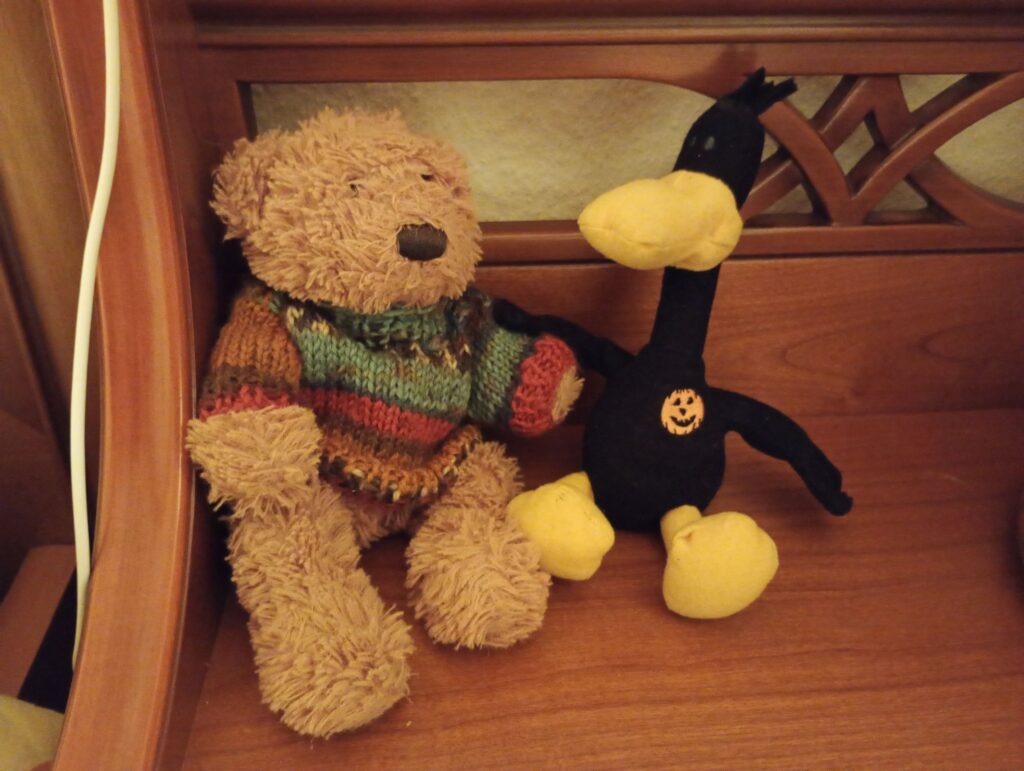
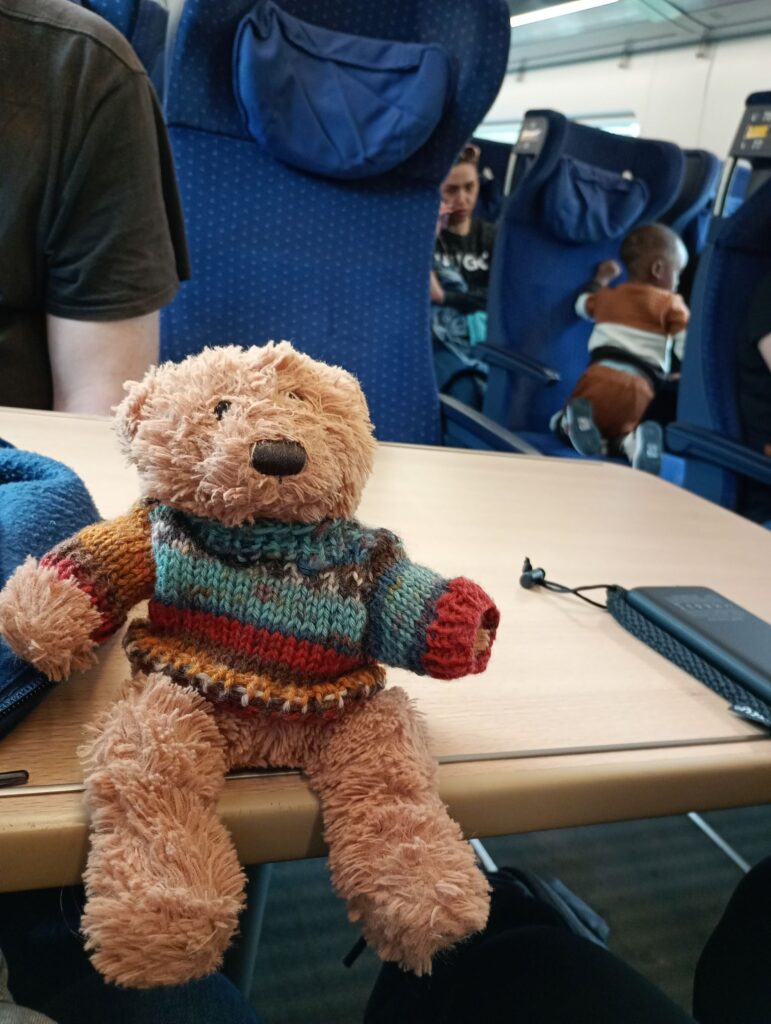
The other thing is that it is, once again, the midnight of the year. Did I mention I’m tired? So I think I’ll draw the curtains, turn down the lights, grab my bear, and snuggle under the covers.
I’ll see you when it gets light again – say, around Candlemas?
Life, the Universe, and Time for a Break. Happy New Year to all, and to all a good night!


And thus it begins – the first trip of the year. A short-notice-planned jaunt to Germany on family business, which on even shorter notice got rebooked for a few days early.
Steve and I got as far as the local airport, twenty minutes from home, where we found the first flight delayed by an hour, and then by another two. It’s fine as we originally had a seven-hour layover to the next leg of the flight, so now it’s four – still plenty of time. However, it also gave me time to have my anxiety spin in circles wondering if I should get one of the Offspring to come down to the airport and bring me my walking shoes instead of the half-boots I’ve got on now that I’m worried will be too warm for Europe, where it’s usually much more spring-like at this time of year then here. Fortunately, I smartened up in time, and thankfully the Offspring has plenty of patience with maternal fussings. Or, as he said, “What are children for if not to have compassion on your poor nerves?” (I pride myself on having raised them on a steady diet of Jane Austen movies, from which I now reap the benefits.)
Anyway. The three-hour delay resulted in us getting a $15 meal voucher from the airline. It was enough for a rice & chicken bowl at Tim Horton’s:

It was tasty, and unexpectedly spicy. I skipped eating the beans that were in it, for reasons we won’t go into here. (You’re welcome.)
So now we’ve progressed through security; Steve says the X-ray machine makes his head buzz. I forgot to take out my little bag of liquids, but they never even asked about it. Maybe they got confused by my question of whether I needed to take out the e-reader.
Another hour to the flight – provided they don’t delay it again. Ah well, the delay was for “unscheduled maintenance”, which I hope means they fixed whatever was wrong so that, for example, the wing doesn’t fall off in mid-flight and we have to make an emergency landing in the Rockies. However, if we do, at least I’m still wearing my boots and not flimsy walking shoes, which would be definitely be unsuited to mountaintop weather.
And that, for now, is Life, the Universe, and The First Trip of the Year. See you on the other side!


I just spent almost six weeks away from home. Six weeks, eight different places. Vancouver Island, Munich, Hesse, Stuttgart, London, Toronto… Visiting family, spending time with friends, going on errands and sightseeing trips and appointments with said family and friends, talking about their affairs and my affairs and the world’s affairs, experiences piled on impressions and filtered through yet more experiences. It was a wonderful time, a strenuous time, a time to be remembered.
And through it all, over and over, I was struck by just how pervasive Uppercross Syndrome is.
In case you don’t know about Uppercross, in Jane Austen’s Persuasion her heroine, Anne Elliot, has to watch her family move out of their mansion, Kellynch Hall, in a huge upheaval that is necessitated by her father’s imprudent spending habits. Once her father and sister are gone to Bath, where they intend to settle into a new life while Kellynch is rented out to pay their debts, Anne goes to her other sister’s home in the village of Uppercross and for a time becomes completely absorbed in the affairs of the Musgrove family.
“Anne had not wanted this visit to Uppercross, to learn that a removal from one set of people to another, though at a distance of only three miles, will often include a total change of conversation, opinion, and idea. She had never been staying there before, without being struck by … how unknown, or unconsidered there, were the affairs which at Kellynch Hall were treated as of such general publicity and pervading interest… [C]oming as she did, with a heart full of the subject which had been completely occupying both houses in Kellynch for many weeks, she had expected rather more curiosity and sympathy than she found in the separate but very similar remark of Mr and Mrs Musgrove: ‘So, Miss Anne, Sir Walter and your sister are gone; and what part of Bath do you think they will settle in?’ and this, without much waiting for an answer; or in the young ladies’ addition of, ‘I hope we shall be in Bath in the winter; but remember, papa, if we do go, we must be in a good situation: none of your Queen Squares for us!’ or in the anxious supplement from Mary, of—‘Upon my word, I shall be pretty well off, when you are all gone away to be happy at Bath!’”
(Jane Austen, Persuasion, Chapter 6)
In Uppercross and the neighbouring Lyme Regis, Anne and the Musgroves go through lifechanging events, but when it is time for Anne to join her father and sister in Bath, once again she experiences the total disconnect in mental states that a change in location and environment will bring about. Just as the Musgroves were more or less uninterested in the Elliots’ burning concern about their move, now the Elliots in Bath neither know nor care that the Musgroves nearly lost one of their daughters in a freak accident and that Anne was deeply involved in the matter. All they think of is showing off the size of their drawing room and discussing the arrival of a handsome cousin, and it is left to Anne to once again switch tracks from one of her deep concerns to the other.
But it doesn’t take a pair of self-absorbed aristocrats like Sir Walter and Elizabeth Elliot for Uppercross Syndrome to kick in. Like the kind and caring Musgroves, most of us are focused on the here and now, on the circle of friends and surroundings we find ourselves in today. What completely took up my attention in Vancouver faded into the background once we touched down in Germany; what mattered in Munich was left behind on the way to Frankfurt; in Stuttgart, I was so mentally occupied with what was happening there that I barely managed to send the few texts I needed to plan our time in Toronto. Now that I’m home, after I told everyone a bit about Niagara Falls and the family matters in Germany, we talked about the antics the cats got up to in my absence; and now thoughts of the garden and household and pottery and all the other work waiting for me here are swiftly taking over most of my available mental channels.
Uppercross Syndrome: the phenomenon that “a removal from one set of people to another … will often include a total change of conversation, opinion, and idea.”
There is nothing particularly wrong with it. Austen neatly contrasts the self-centred Elliots who care only about their position and appearance with the kindly Musgroves whose life is focused on their home and their children, but neither of them have much thought to spare for the other. I think it’s a human reality that our present environment takes most of our attention, with not much left for what is out of sight and hearing. Perhaps that’s just as well. It’s good to focus on how we live that here-and-now life—far better to be a Mrs Musgrove, concerned about her children, than a Sir Walter Elliot, obsessed with his looks.
But then, like Anne, we can learn “the art of knowing our own nothingness beyond our own circle”. We can live in the humble awareness that what is all-absorbing to us today, in this place, is of little concern or interest to most of the rest of the world—and that even for us, perhaps it’s not such a big deal after all. We can enjoy the joys, but need not hang on to the pain. It puts things in perspective.
Life, the Universe, and Uppercross Syndrome. Another place, another view.


Anyone who says that online friendships aren’t real friendships has obviously never had one.
Louise Bates and I met a lot of years ago. If I remember rightly it was via the blog of another writer (Lee Strauss, to be precise, who had just published her first book). Both Louise and I were in our early days as bloggers and writers, and had yet to publish our first pieces. Her comment on Lee’s blog post caught my interest—who was this E.L. Bates person? She sounded like we might have a few things in common.
So I toddled over to her blog and checked it out. Would anyone be interested in beta reading a couple of short stories she’d written, she asked on the blog; umm, sure? I said. Not that I had much experience, I gave her to understand, but I could read the stories and tell her my opinion. Which I did. And then I sent her my fairly recently completed first novel to read (“I just want to know if it’s any good…”), and she gave me her opinion in return.
And that was the beginning of a beautiful friendship.
We found that we loved each other’s work, and had very much the same approach and attitudes to writing and to literature. And then we started talking about everything under the sun. Homeschooling, life, religion, parenting, society, food, books, knitting—and always, always writing. The emails flew back and forth. Big changes happened in our lives, all of which we shared with each other as they happened. I went to grad school and got my Master’s degree; Louise and her family moved to England for her husband to study for his PhD at Cambridge, and then moved back to the States to take up their life there again. On the way, we published our first books. And then the second, and third, and fourth. We kept blogs, and changed blogs, and got our very own websites. And both of us went into business as professional editors.
Our friendship is as real as they come, even though we’ve always been separated by at least the width of a continent and for a while even an ocean as well. We always talked about how much we’d love to meet in real life, by preference in England where so many of our favourite stories are set. Just for fun, we’d sign our emails with “Some Day In Great Britain!”
And then one day that wish became reality. Planning a trip to Germany to visit family, I realized that it was cheaper to fly via London than to go to Germany directly. Well—it was the sensible thing to do then, wasn’t it? And while I was on English soil, I might as well make it a longer layover, and take in the sights. It was practically a duty. A day or two in London, and then—Cambridge!
A short 45-minute train ride from King’s Cross Station, I made my way to the Royal Cambridge Hotel, and Louise and her family came to meet me. I still remember going down to the lobby, and there she was, just as she looked in her photos. “There you are,” I said, “it’s you!” (or something equally profound and erudite), and about five minutes later it felt like we had known each other in person for years.

We proceeded to spend the most marvellous day and a half together. They took me to King’s College Chapel for Matins and to Jesus College for Evensong; we walked through the ancient streets of Cambridge and watched punts getting snarled on the River Cam by the Mathematical Bridge; we had a proper British cream tea in a café and supper in the pub where some famous scientists used to have a pint after making their famous discoveries (I can’t remember now what they were, but they were famous, yup).
Being in Cambridge with Louise was an experience I will never forget.

And now (drumroll please!) she’s written a book about the place!
I got to read the very first version of this story. But that was before February of 2019, before I had seen Cambridge. It was a good story (all her stories are), but it didn’t resonate as much with me then. She put the manuscript aside for quite some time. But then not long ago she took it back out, and completely re-wrote the story. Now, it’s suffused with Cambridge. It’s her homage to the place, and it’s a wonderful, fun, profound story.
Death by Disguise came out today! It’s Book 3 in Louise’s “Whitney and Davies” 1920’s Magical Mystery series—like Agatha Christie or Dorothy Sayers with magic.
“The walls of Saint Dorothea’s College in Cambridge hide more secrets than simply the existence of magic …” Are you intrigued? Of course you are. So I’ll stop talking at you. Go get a copy of the book, and dive into the world of E.L. Bates’ Cambridge—it’s magical all in its own right.
Life, the Universe, Friendship and Cambridge and Books. You’re in for a treat.

It’s been a week since Steve and I have been back from Europe. 888 photos later, we’ve seen Paris and Berlin, and we… Hah, no, we haven’t. We’ve seen a very, very small part of those amazing world cities. There’s not too much you can do in three days each; the main purpose of the trip was, as always, to visit family, so the bulk of our time was taken up with that. But we got in some great sightseeing regardless!
So here, in a nutshell (you can decide what kind of nut) are some of the most basic impressions. One dozen photos, two countries, three cities.
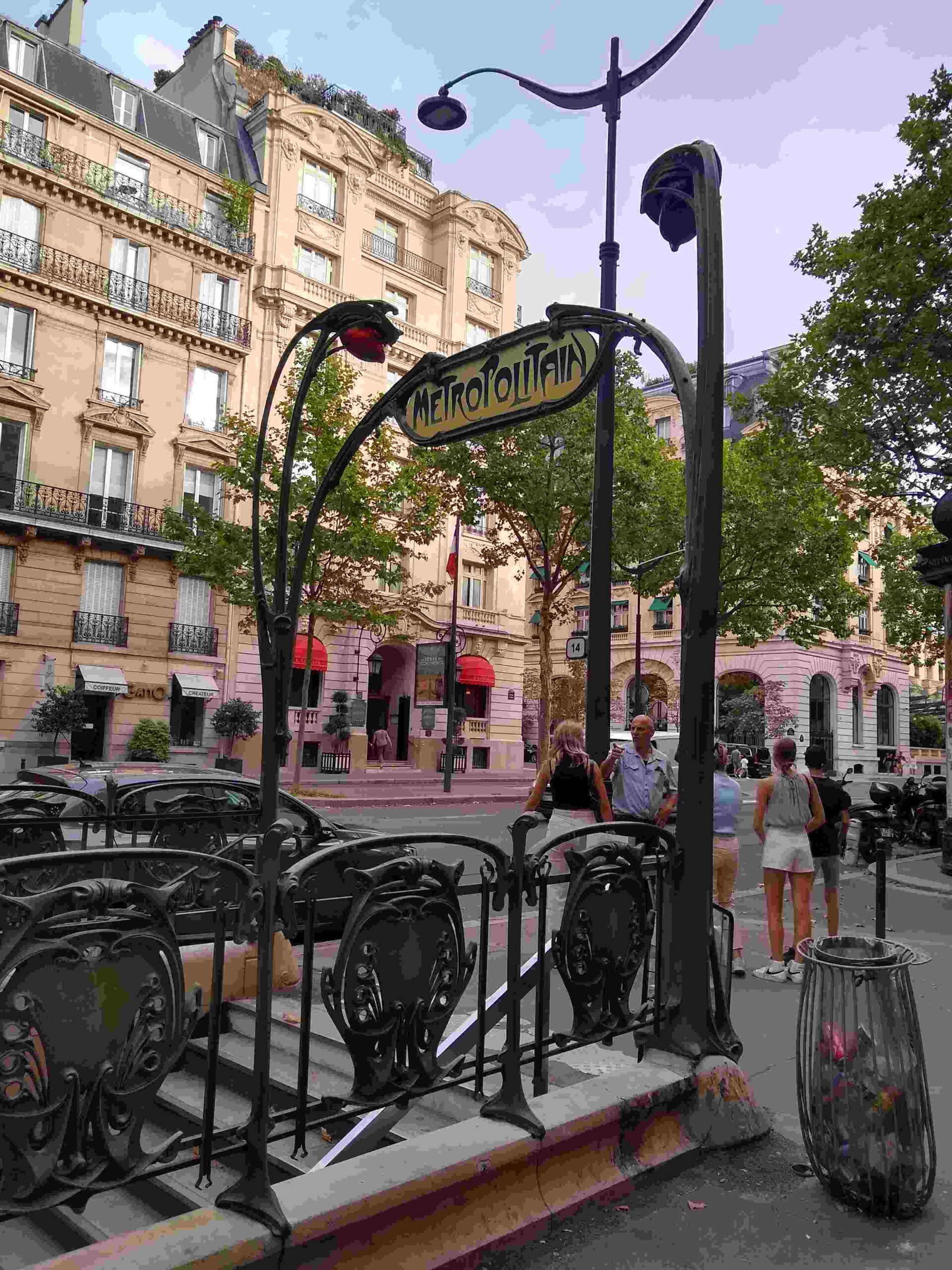
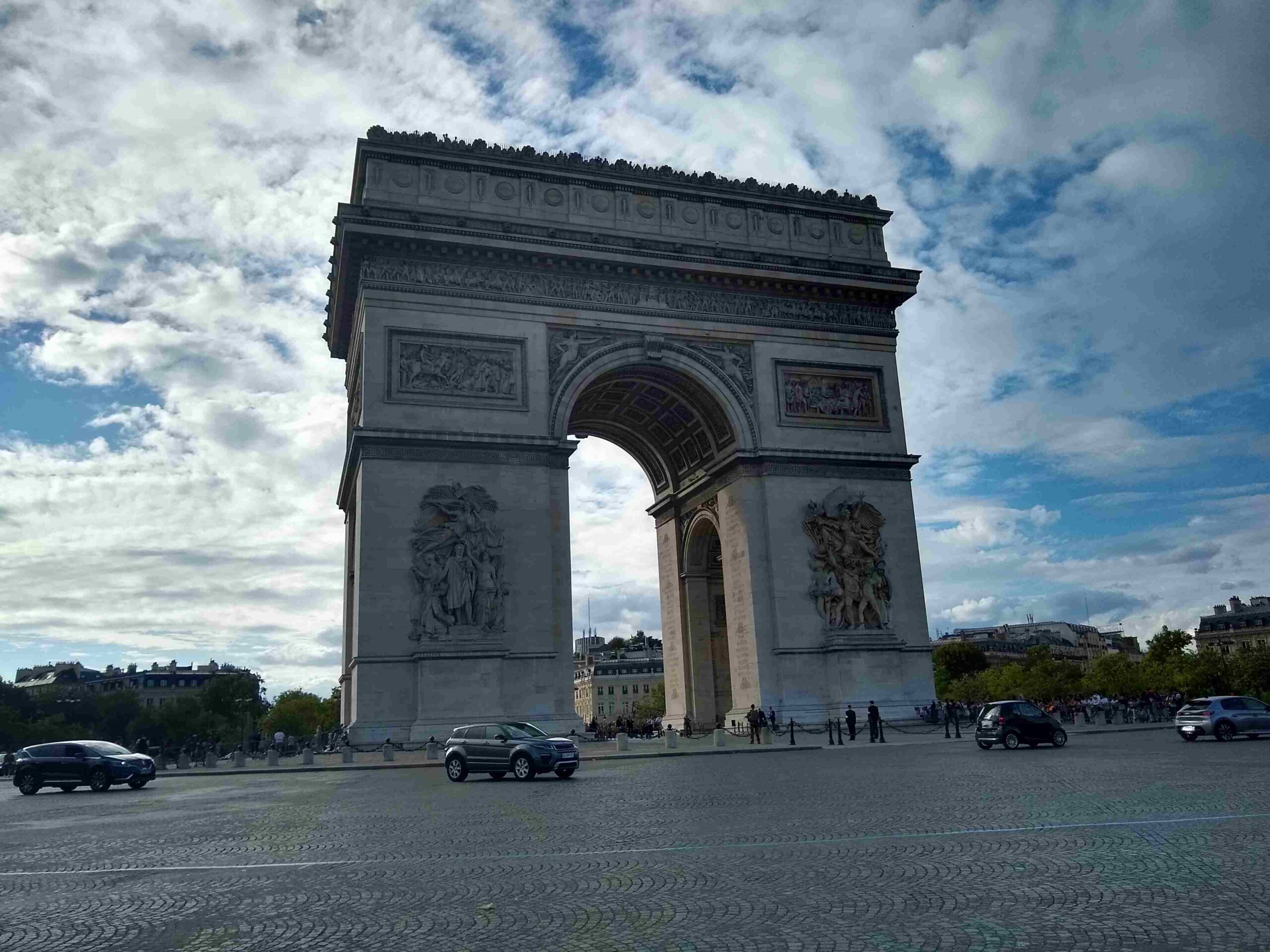
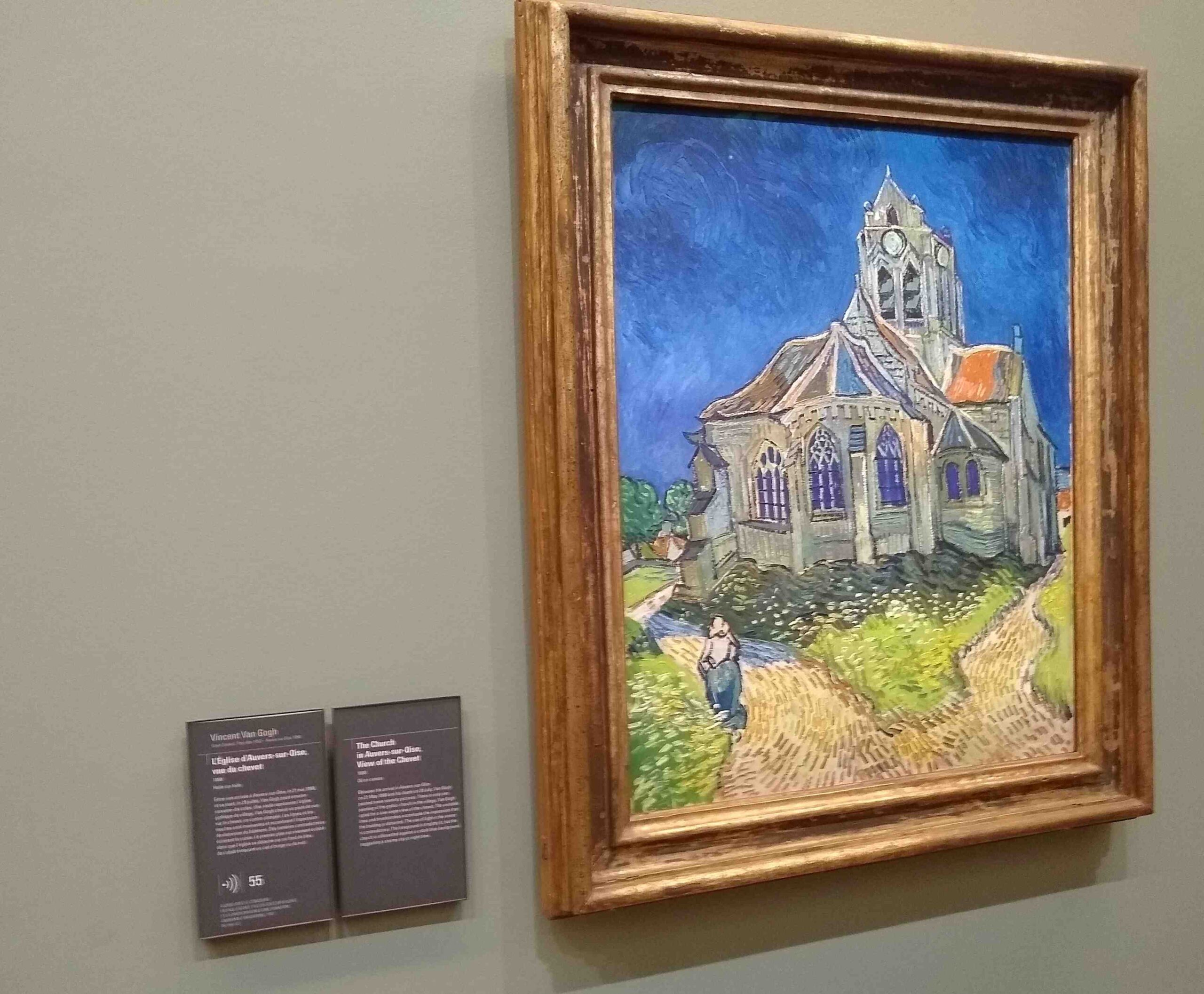

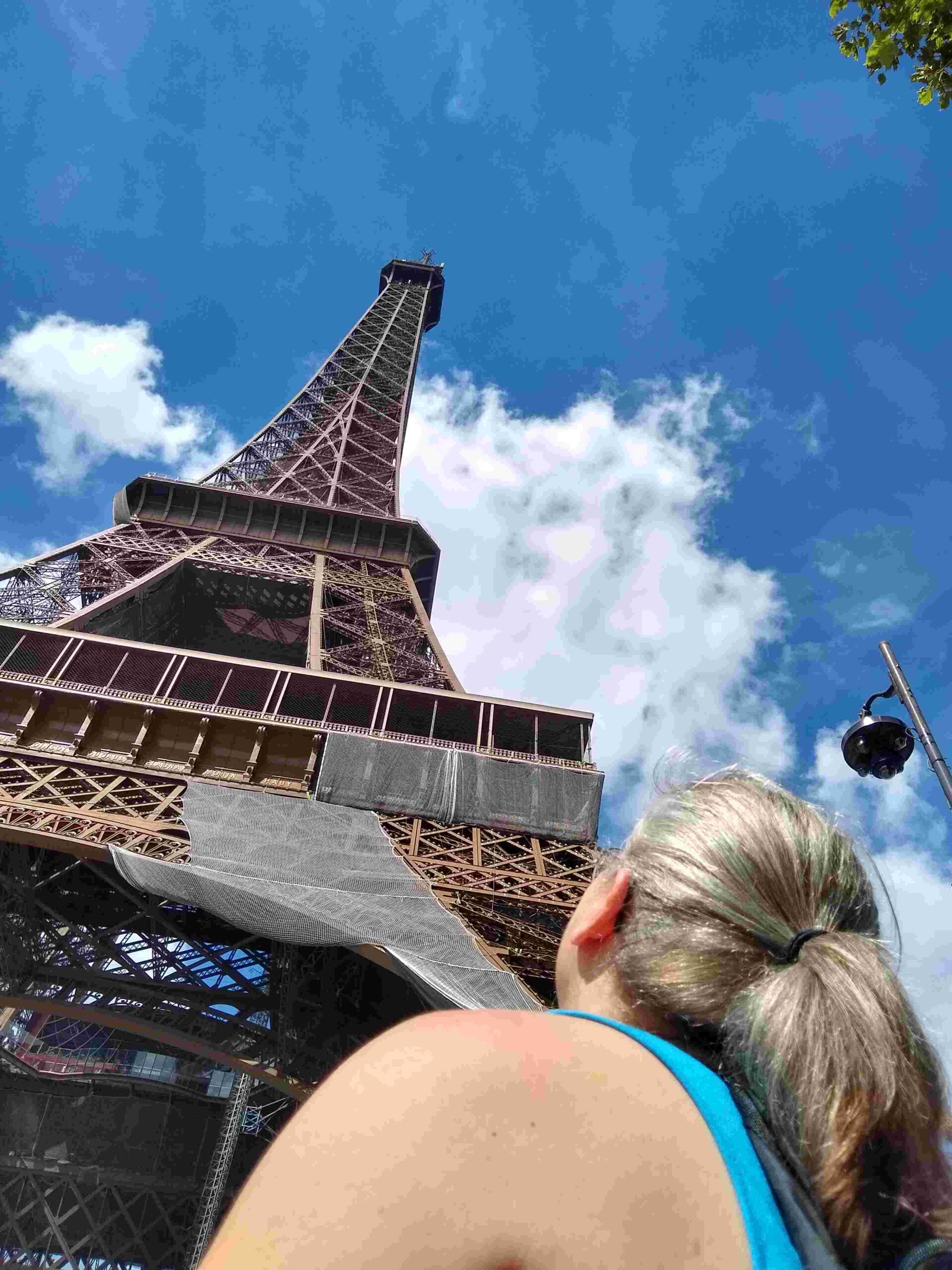


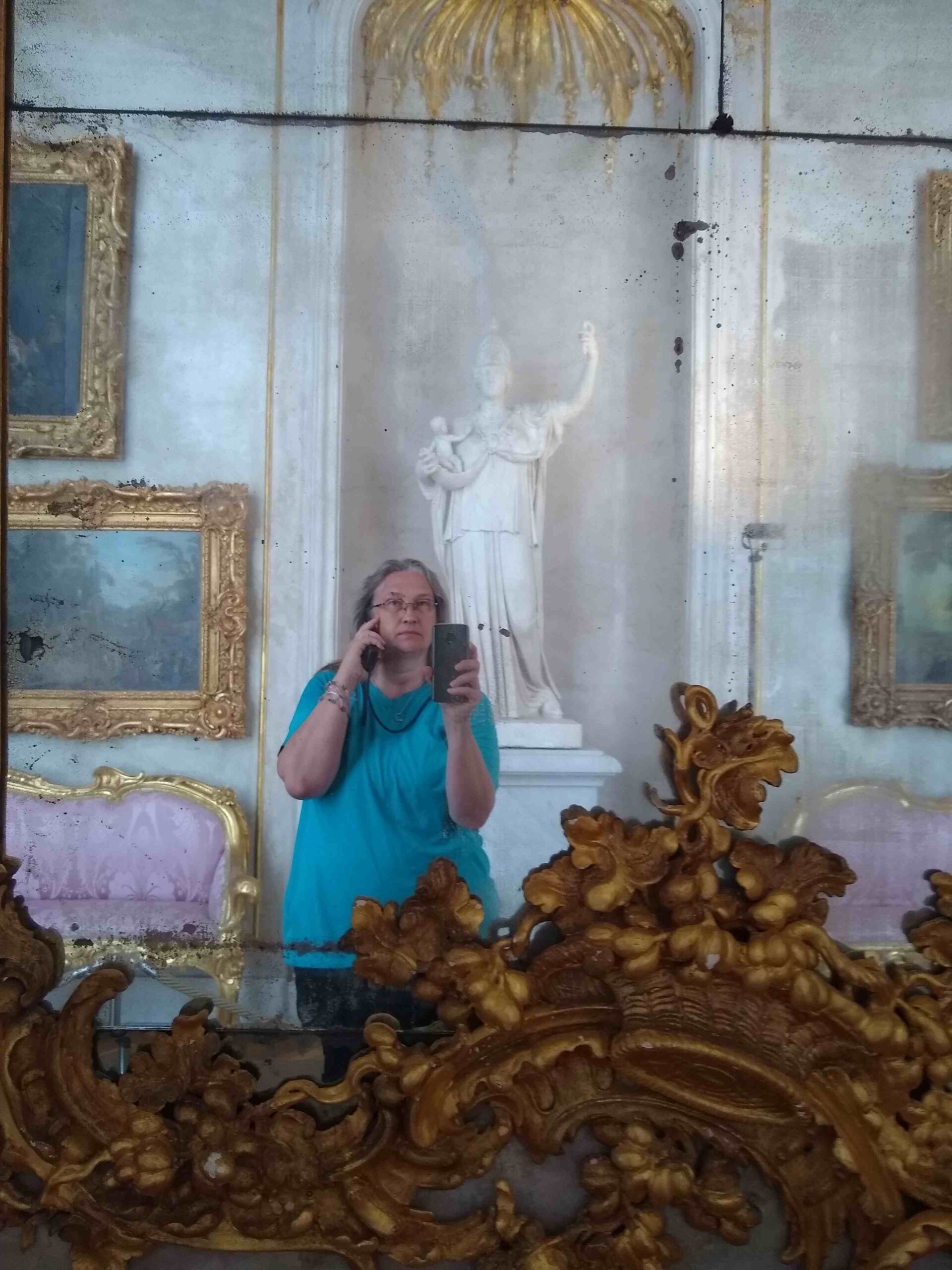

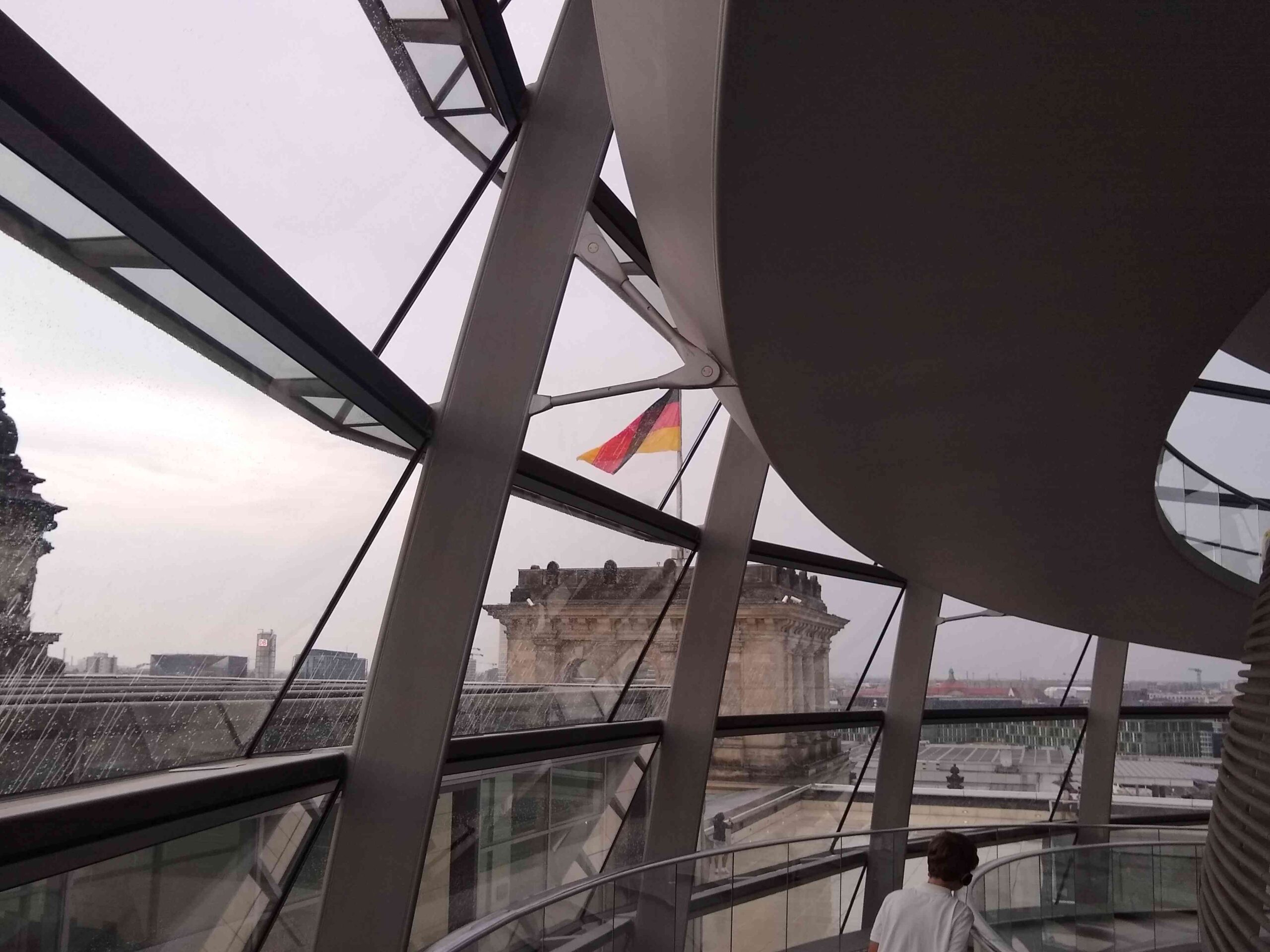
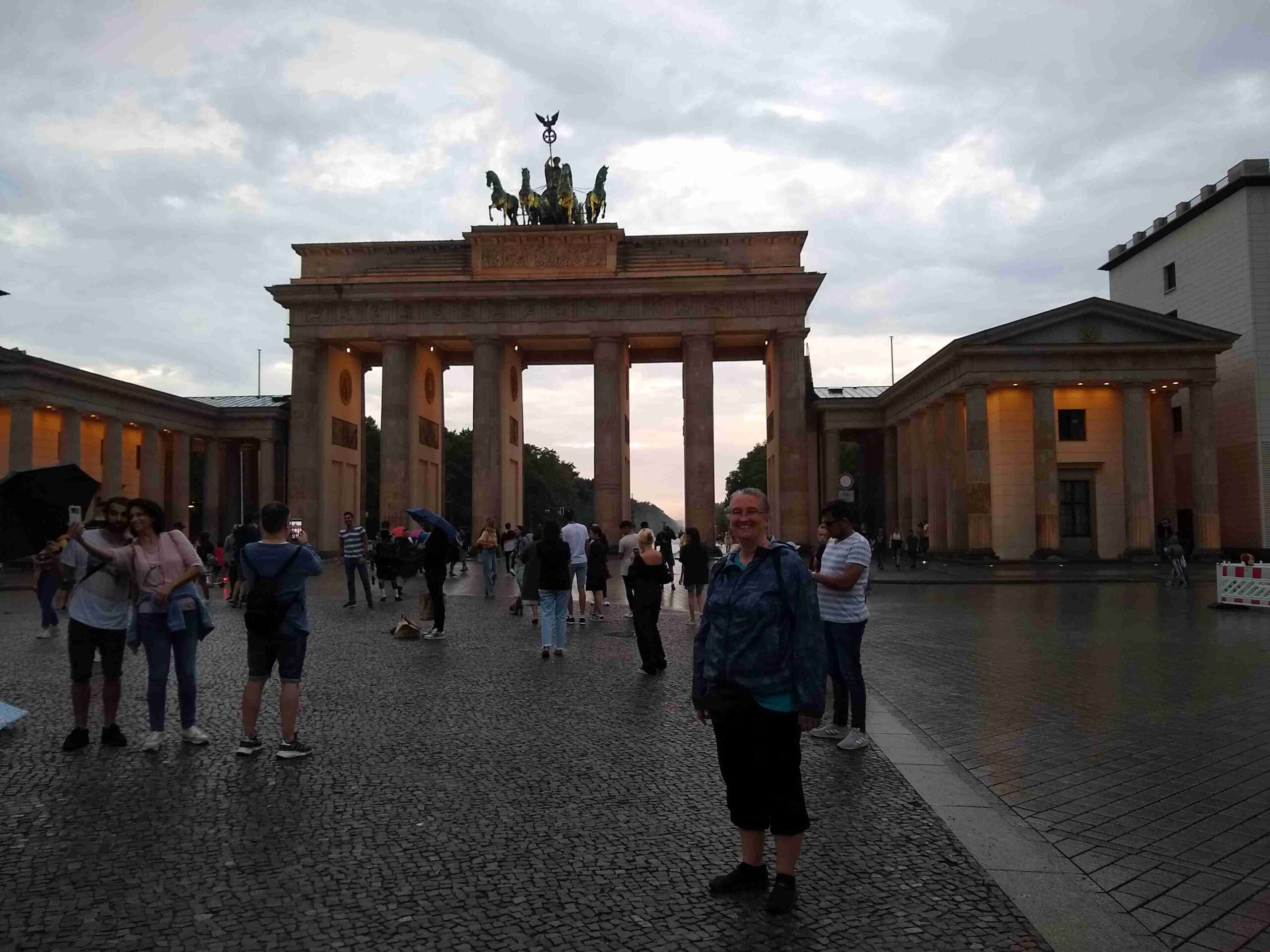
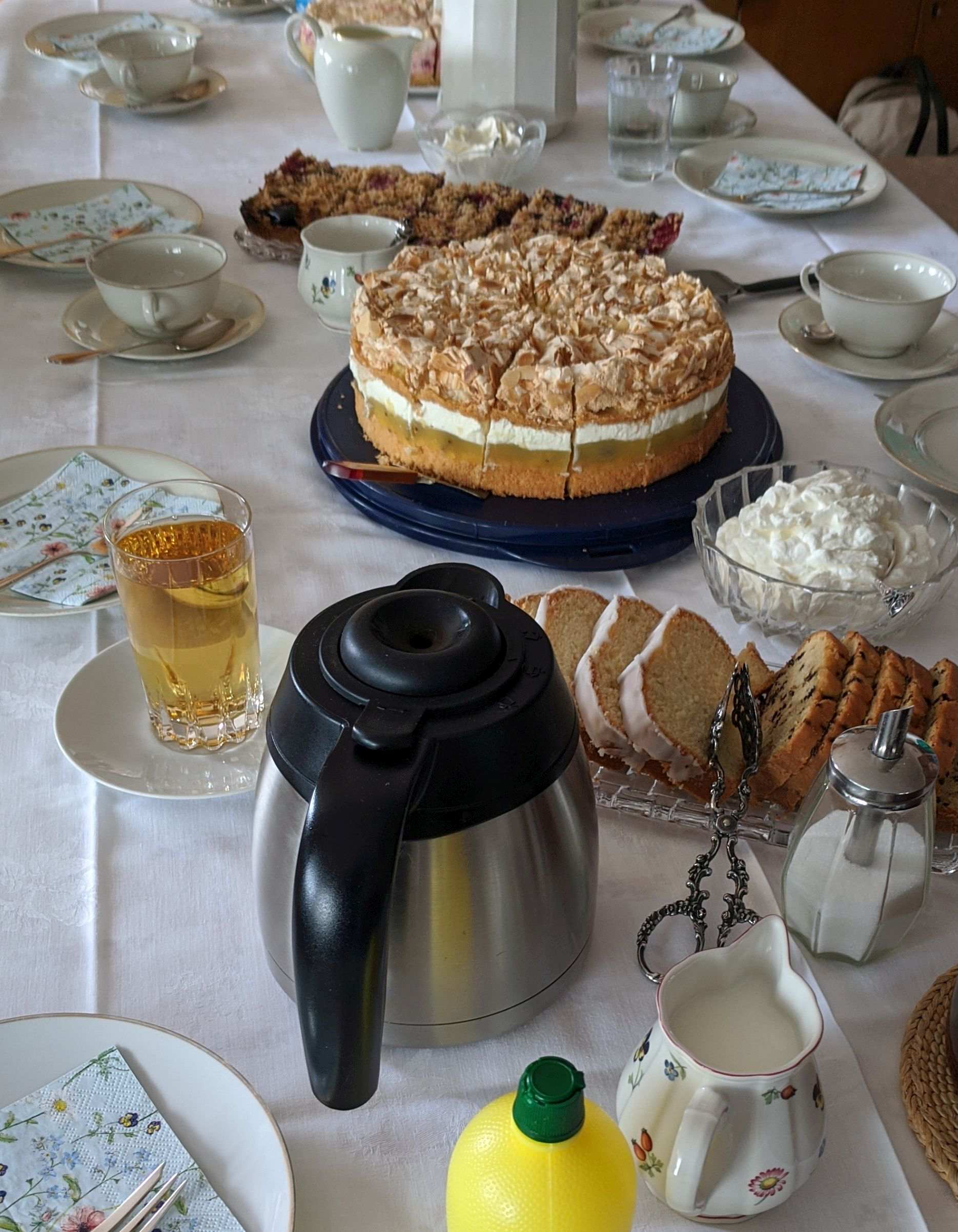
Life, the Universe, and a Trip to Europe, in One Dozen Shots.

At long last, Steve and I are packing our bags again for a jaunt to the Old Country on a family visit! And you’re seeing that right: this time, we’re going to Germany via Paris – which is also a family visit, as one of the Offspring is going to uni there at the moment. I’ve never been there (neither has Steve, for that matter), so we’re bringing a guide book to tell us where the best spots are. Paris will be just a three-day stint, so we’ll have to make the most of it.
I thought that maybe I’d give you a little glimpse into the packing process, the way I’ve done it for the last, oh, four or five years or so, and pass on a few tips I’ve collected on the way.
As you can tell by the guide book, I’m a big fan of Rick Steves, the travel writer/presenter. I have no affiliation with him or his organization whatsoever, I just like his travel philosophy, his TV shows, and his swag. (Although, Rick, if you’re reading this and want to hire me or give me a discount on one of your guided tours, my contact info is at the top…)
A few years ago I stopped in at the Rick Steves flagship store outside of Seattle and treated myself to one of his carry-on backpacks. They’re specially designed to fit the maximum dimensions of airline carry-on luggage while still being perfectly portable – genius. The other genius design is the Packing Cubes: zippered stretchy mesh cubes to hold your stuff. Of course, they’re sized to perfectly fit the inside of the backpack.
Having packing cubes in my luggage is like having portable dresser drawers: one for my T-shirts, one for my PJ’s and night things, the big one for pants and sweaters, and another medium-sized one for toiletries and bits and bobs. I always know exactly where to lay hands on what piece of clothing, which, in a soft bag, isn’t necessarily a given. And here’s a trick: always roll your clothes, don’t fold them. A nice tight sausage of a T-shirt packs more neatly and takes up less room than a flat-folded one. (I got that tip from Lee Strauss, my friend/editing client/fellow writer, who is a veteran traveller.)
The other packing trick that’s been really helpful is to vacuum-pack small items of clothing such as socks and underwear. I put them (rolled up tightly, of course) into a big ziplock freezer bag, squeeze all the air out, and zip it shut. That way it takes about half the amount of space it would take un-compressed.


So, T-shirts, a sweater or two, spare pants, maybe a piece or two of something dressy, underwear and socks, toiletries, a second pair of shoes – what else? A notebook and pen and my trusty Kobo ereader (do you think the 600 books I’ve got on there will last me the three weeks I’m gone?). This time I’m bringing my little netbook, so I can still get on the internet in case my phone packs it in or gets stolen (the latter of which is apparently a distinct possibility in Paris). A couple of collapsible extra bags – a small, lightweight backpack for a daypack, and a foldable duffle bag to haul back all the balls of self-patterning sock yarn I intend to stock up on in Germany (yes, I’ve got checked luggage booked for the return trip).
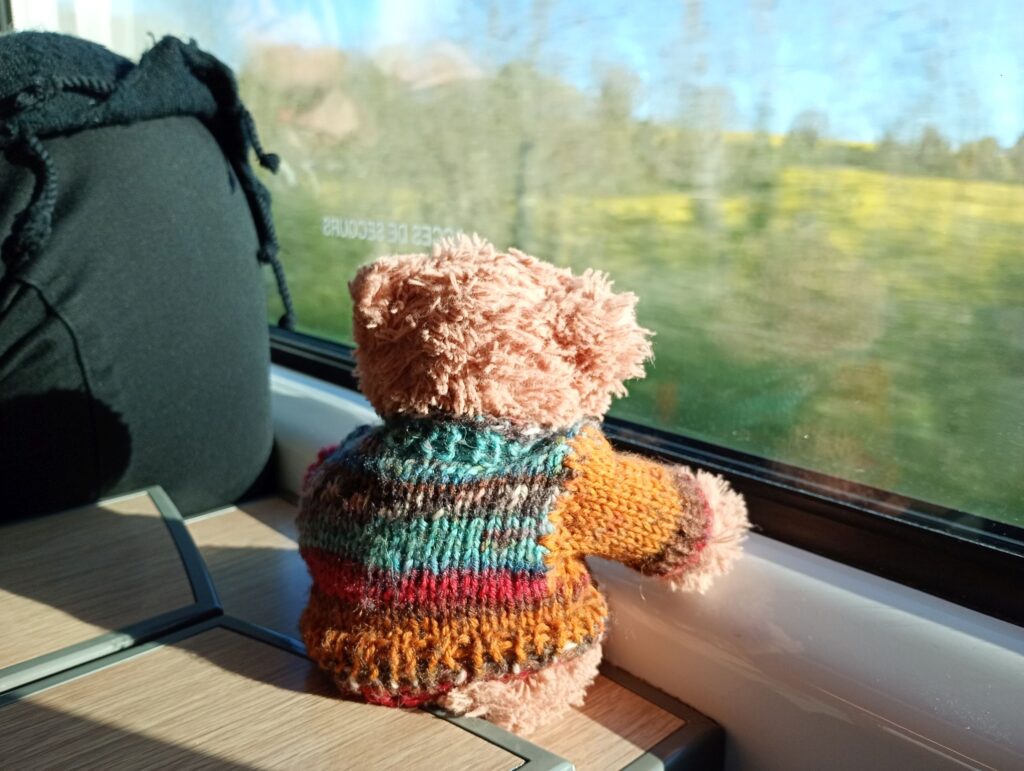
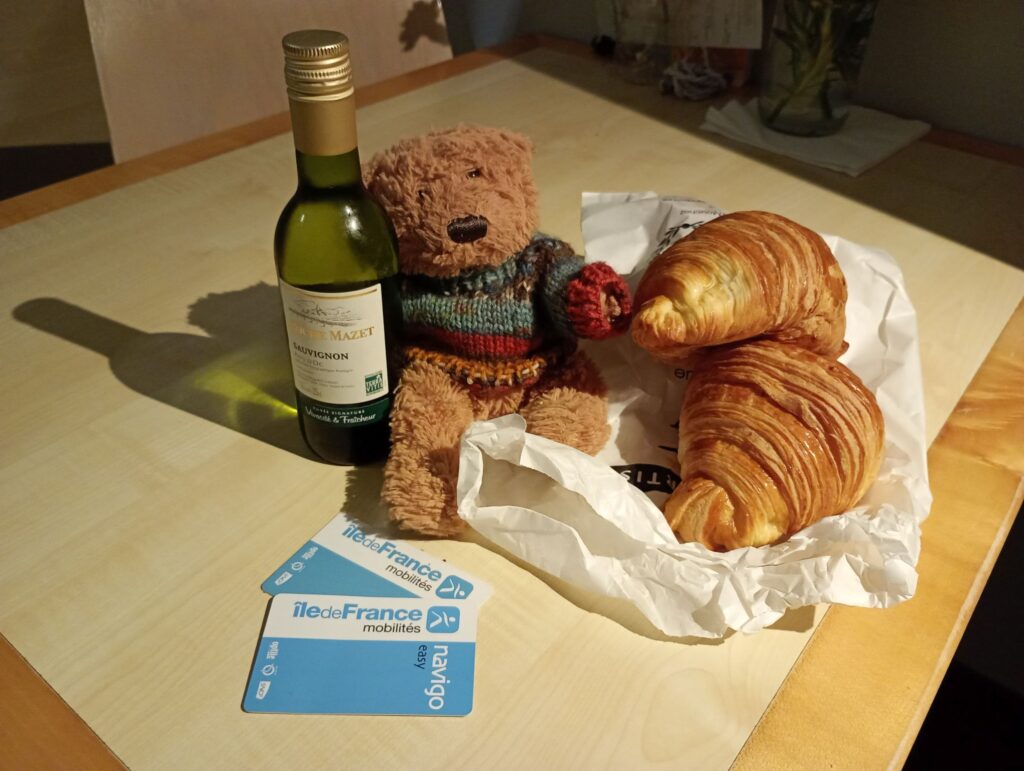
The backpack is full – very full. But everything fits. All that’s left to do is stick in my small pillow (without which I can’t sleep), put Steve on top, and tighten the straps across (he gets strapped in solidly – a bear’s gotta have his seatbelt on).
And now I’d better get to bed, as I won’t be getting a whole lot of sleep for the next couple of days.
This is Life, the Universe, and At Long Last Another Trip. I’ll try to keep you posted on our adventures!
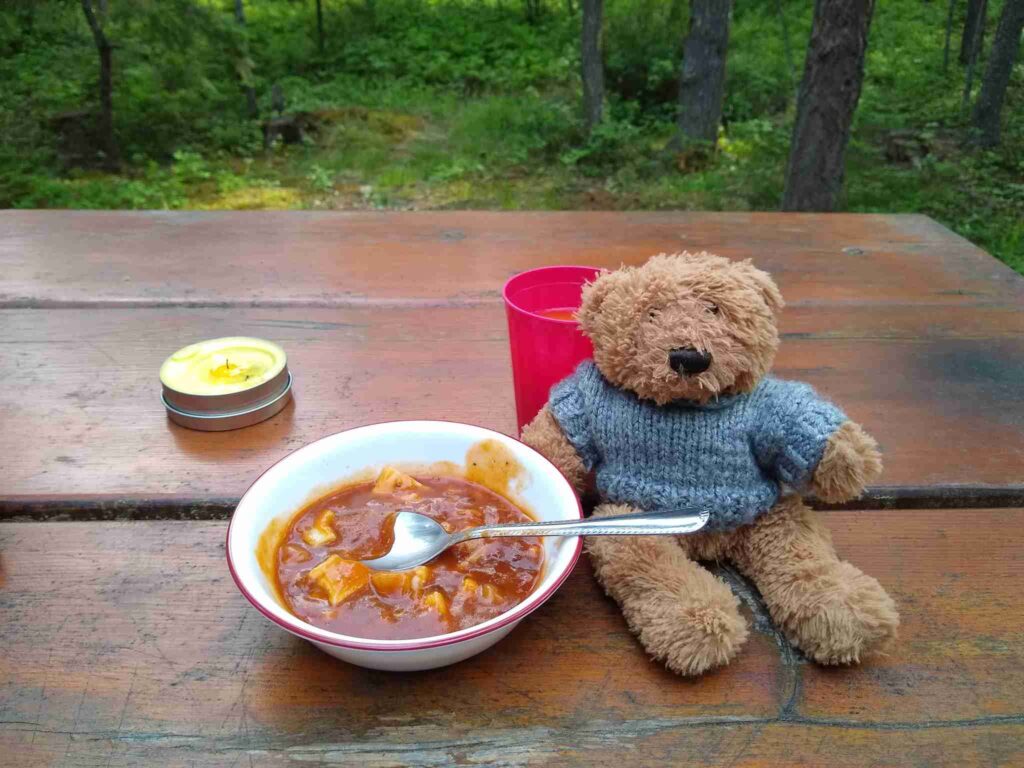
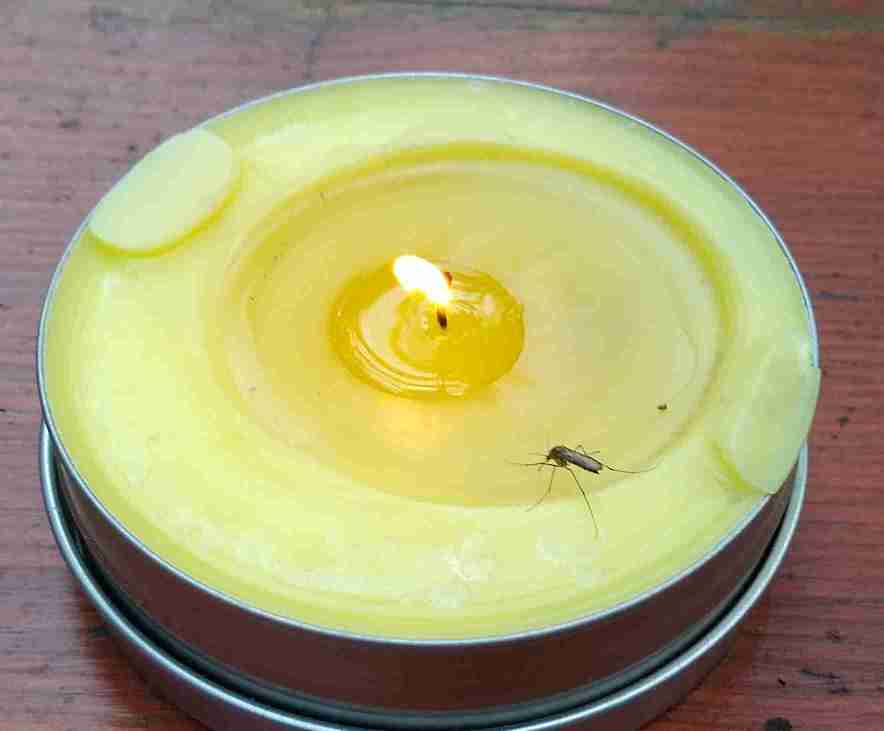
Last week I got to fulfil an almost-lifelong dream of mine: try out camping in a campervan. The Man and I being of the tall and rather large persuasion, we rented the biggest thing that still called itself a van – it was rather more luxurious than the Westie of my dreams – and went north, to Wells Gray and Mount Robson Provincial Parks.
It was awesome, in the truest sense of the word.










In a manner of speaking, this is a #ThrowbackThursday post. Not that it’s been posted before, but I started writing it exactly two years ago, on our last trip out of the country. Somehow, with the lockdown and everything, I never had the heart to finish it, but now, on the second anniversary of the trip, it seemed like a good time to dust it off and put it up. Now that things are opening up again, maybe it’ll be possible to go back there soon?
I was just on another jaunt to the Old Country. As I’ve said before, while living halfway across the globe from your family can be a pain in the neck (literally – those long flights are uncomfortable), a visit also makes for good opportunities to get in some sightseeing.
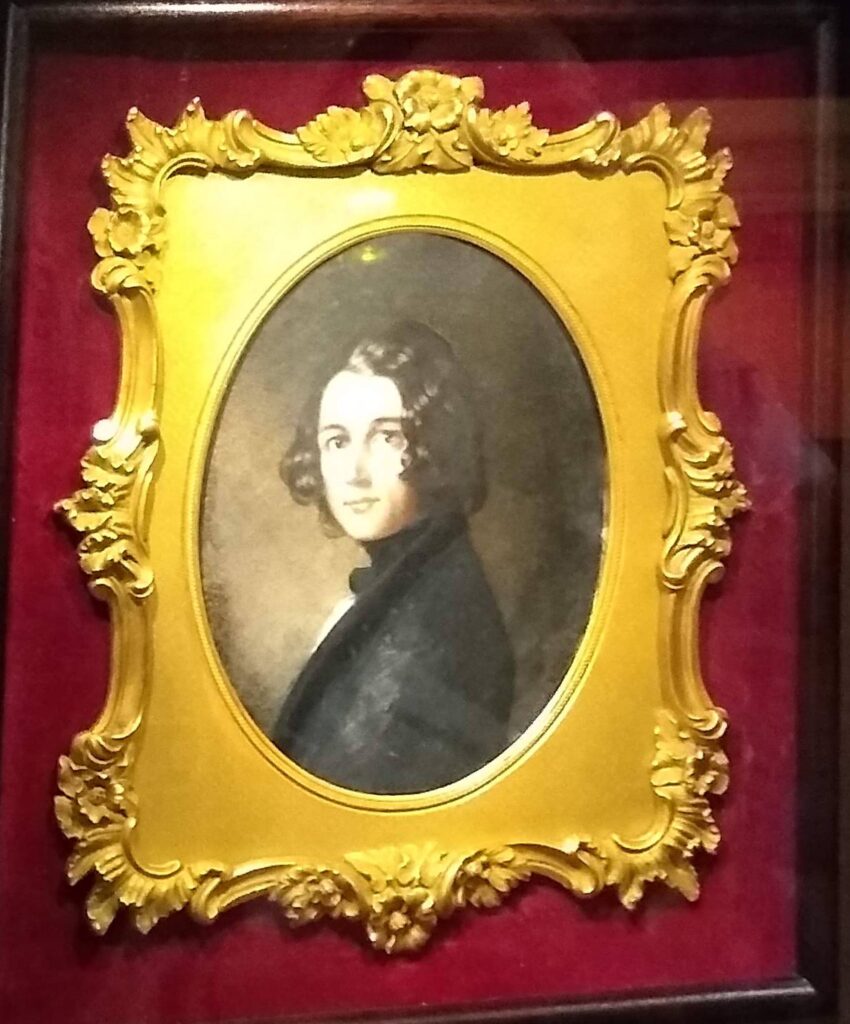
This time, I got to see the Dickens Museum at 48 Doughty Street in London*. Charles Dickens (whom, courtesy of Roald Dahl and his BFG, I am now always thinking of as Dahl’s Chickens) lived in this house in Bloomsbury from 1837 – 1839, at the very beginning of his writing career. He moved in as an unknown 25-year-old with a wife and one baby, and moved out two years later as a popular writer with two more children and an established name.
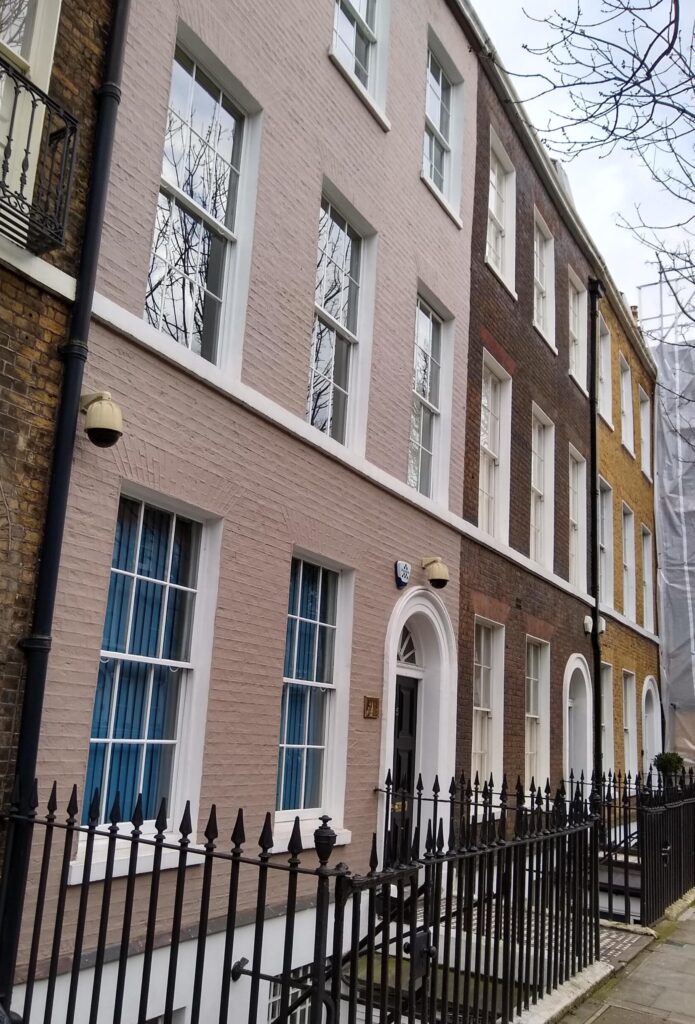
Now, I’m not a die-hard Dickens fan – truth be told, I’ve only read about half a dozen of his books so far. But this museum was fascinating in a way that wasn’t even directly about him. The house is a testament to the life of a middle-class family in the very earliest years of Victoria’s reign.
The Dickens family consisted of one young man (Twenty-five! He was just twenty-five!), his wife, her sister, and one-two-three babies. They had: on the ground floor, a dining room and morning room (basically Mrs Dickens’ office or place to hang out); on the first floor a drawing room and Dickens’ study; on the second floor two bedrooms (one for the Dickenses and one for sister-in-law); on the third floor, the nursery and servants’ bedroom; in the basement, the kitchen, scullery, and wash house (laundry room). That’s it.
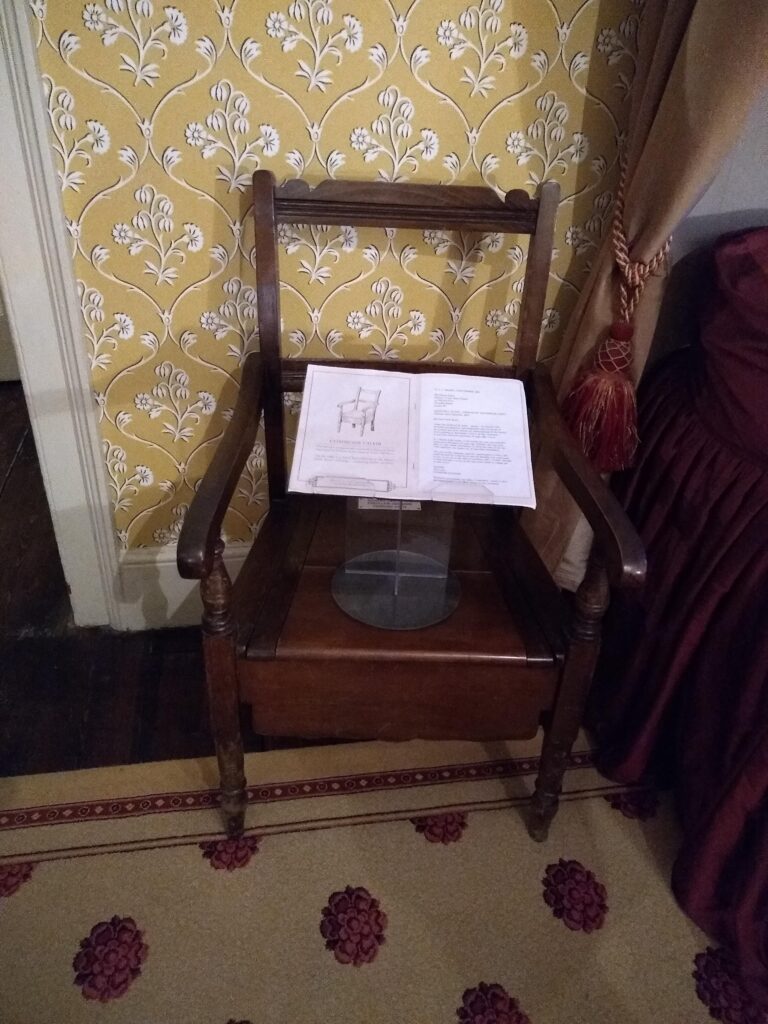
“Oh, but of course the bathrooms, too,” you say? No. No bathrooms. No toilets**. No sinks, no places to wash hands, except for one stone sink in the basement scullery. So where did they do their, you know, business?
On chamberpots (ceramic bowls large enough to sit on) and commodes, which are basically chairs with a hole in the seat and a potty under it. And you guessed it: somebody had to empty them out. Somebody had to carry porcelain bowls full of smelly, stinky, gross you-know-what down three flights of stairs and dump them.
And that same somebody also got to lug pots full of hot water up the stairs every morning so the family could have a wash. In fact, if Mrs Dickens wanted a bath, she had it in front of the fire in her bedroom. The tub on display at the museum is a little hip bath – small enough that it can be carried while full. Let me repeat that: a tub full of water—let’s say, at a minimum five to ten gallons, or twenty to forty litres/kilos—carried down three flights of stairs. With how small people were in those days, that’s probably half the body weight of the person who had to do the carrying.
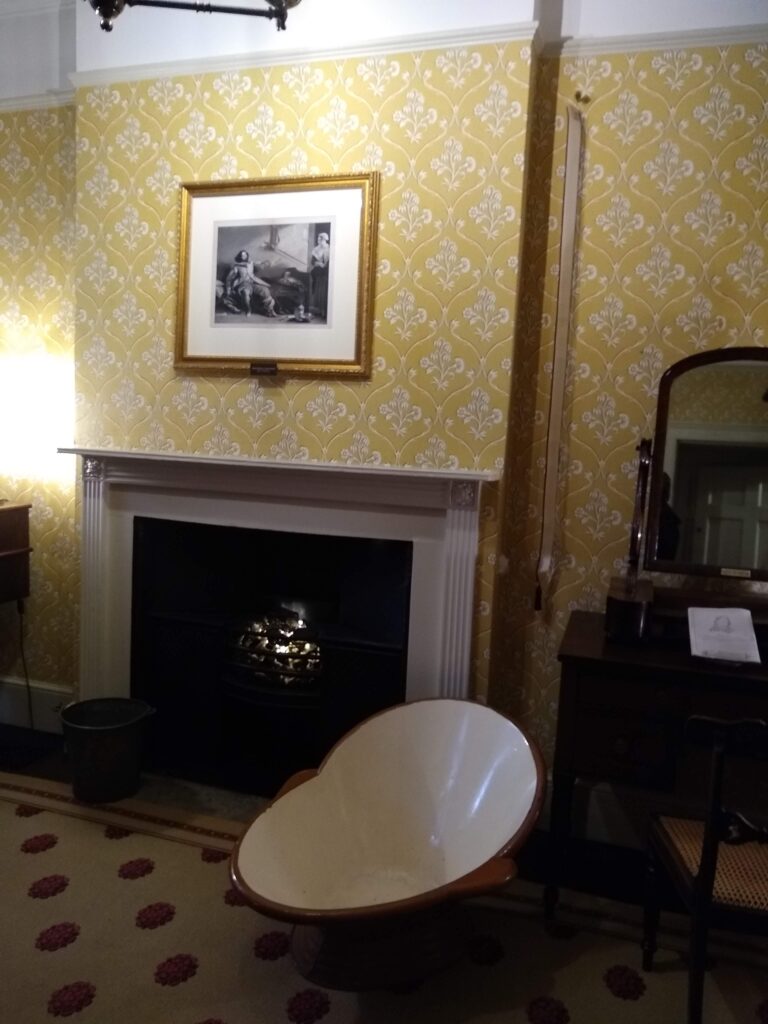
The maid who had to do the carrying. Because it sure wasn’t Mr Dickens himself, or his wife, or his sister-in-law.
Hence the servants’ bedroom on the third floor. The young Dickens family in that Doughty Street house, an ordinary middle class family whose sole wage earner was at the beginning of his career, consisted not only of Mr, Mrs, Miss, and Babies, but also a cook, a house/parlour maid, and a nanny. And they needed those servants, because without them, things would have been pretty darn uncomfortable. Servants’ wages and room and board were a normal part of the expenses of any middle class household; not having servants, i.e. having to do the work yourself, was the very definition of “working class.”
I had never really thought about that before. Indoor plumbing with hot and cold water at the push of a button is something we take for granted today; central heating and electric stoves and washing machines and vacuum cleaners are something we don’t even think about.
But in Dickens’ time, indoor plumbing was provided by the servants carrying jugs and buckets and tubs full of water and sewage up and down stairs. Heat to keep you warm and to cook with (Every. Single. Cup of tea!) and hot water to wash or bathe in were supplied by the servants lighting and stoking and cleaning out and re-lighting fireplaces. The scrubbing action and spin cycle of the washing machine came from the servants rubbing and plungering and wringing laundry in the cold stone-flagged wash house in the basement, and the vacuuming of carpets was accomplished by the servants lugging them out back and beating the dirt out of them with a carpet beater.
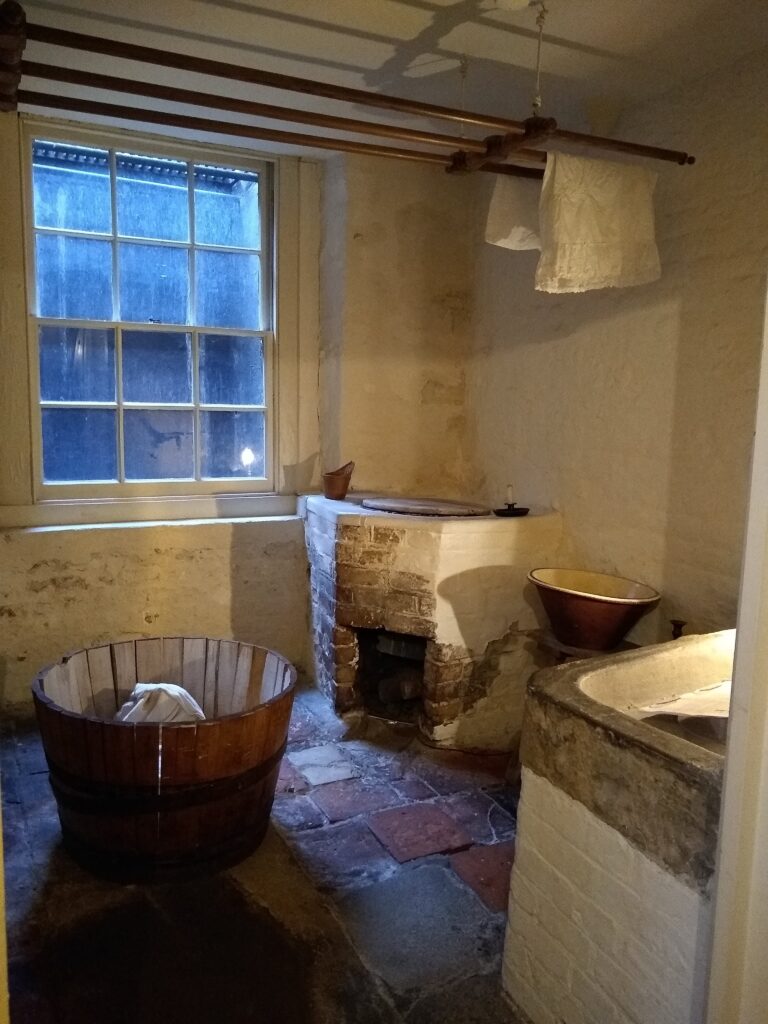
A lot of us (myself included) have this nostalgia for the days of the past, would like to spend our imaginary lives back in the days “when life was simple,” want to hang out with Elizabeth Bennet and Mr Darcy and Ebenezer Scrooge (once he got his head screwed on straight). But life “in those days” actually wasn’t simple—it was quite complex. And it was almost entirely human-powered. We measure a car’s engine in horsepower—maybe we should measure indoor plumbing and electric washing machines in human-power (“This latest model of Maytag has a 5hu-p/day capacity and is able to draw 8hu-p of hot water in less than two minutes…”).
I’m not going to give up mentally living in the past, but visiting the Dickens Museum has given me a whole new appreciation for just how privileged we are today. Next time you flush the toilet in your second-floor bathroom or crank the handle in the tub to instantly have hot water raining on your head, give a thought to that unnamed woman who, 185 years ago, carried enormous buckets full of water and slop up and down the steep stairs of a small London house, so that a gifted young man could sit in his study and write wonderful stories about Oliver Twist and Nicholas Nickleby that are still with us today.
Life, the Universe, and Indoor Plumbing. Charles Dickens would have been nothing without his servants.
*I can highly recommend the website of the Dickens Museum at https://dickensmuseum.com. Lots of interesting information, and you can take a whole virtual tour of the museum, including admiring the hip bath by the bedroom fire!
**2022 addition: Apparently, as I just found out, there was actually one “water closet” (toilet) on the ground floor and one in the basement, but firstly, that was a new and unusual thing for the day, and secondly, the servants still had to carry all the wash water and chamberpot waste up and down the stairs to the upper floors.