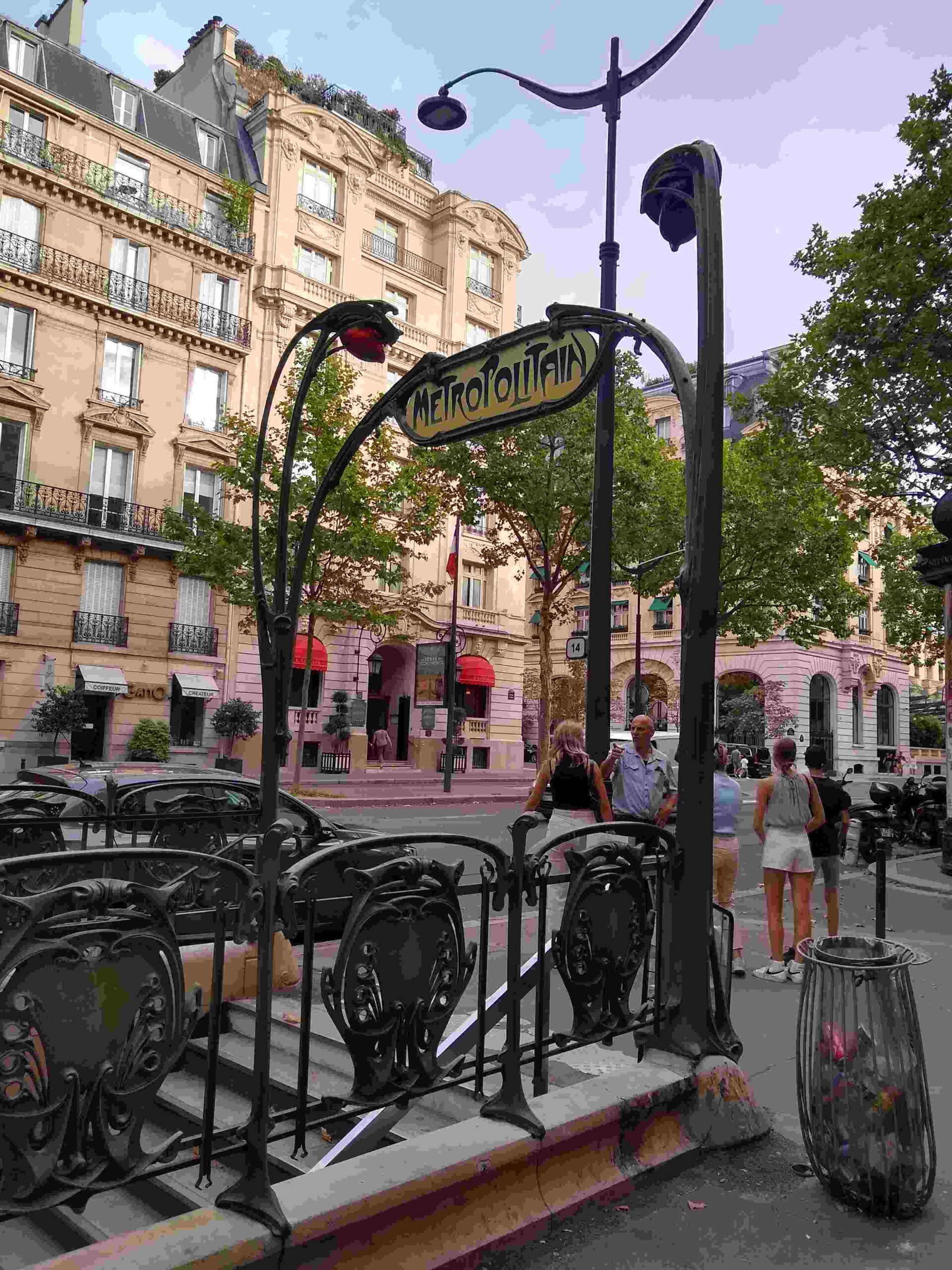
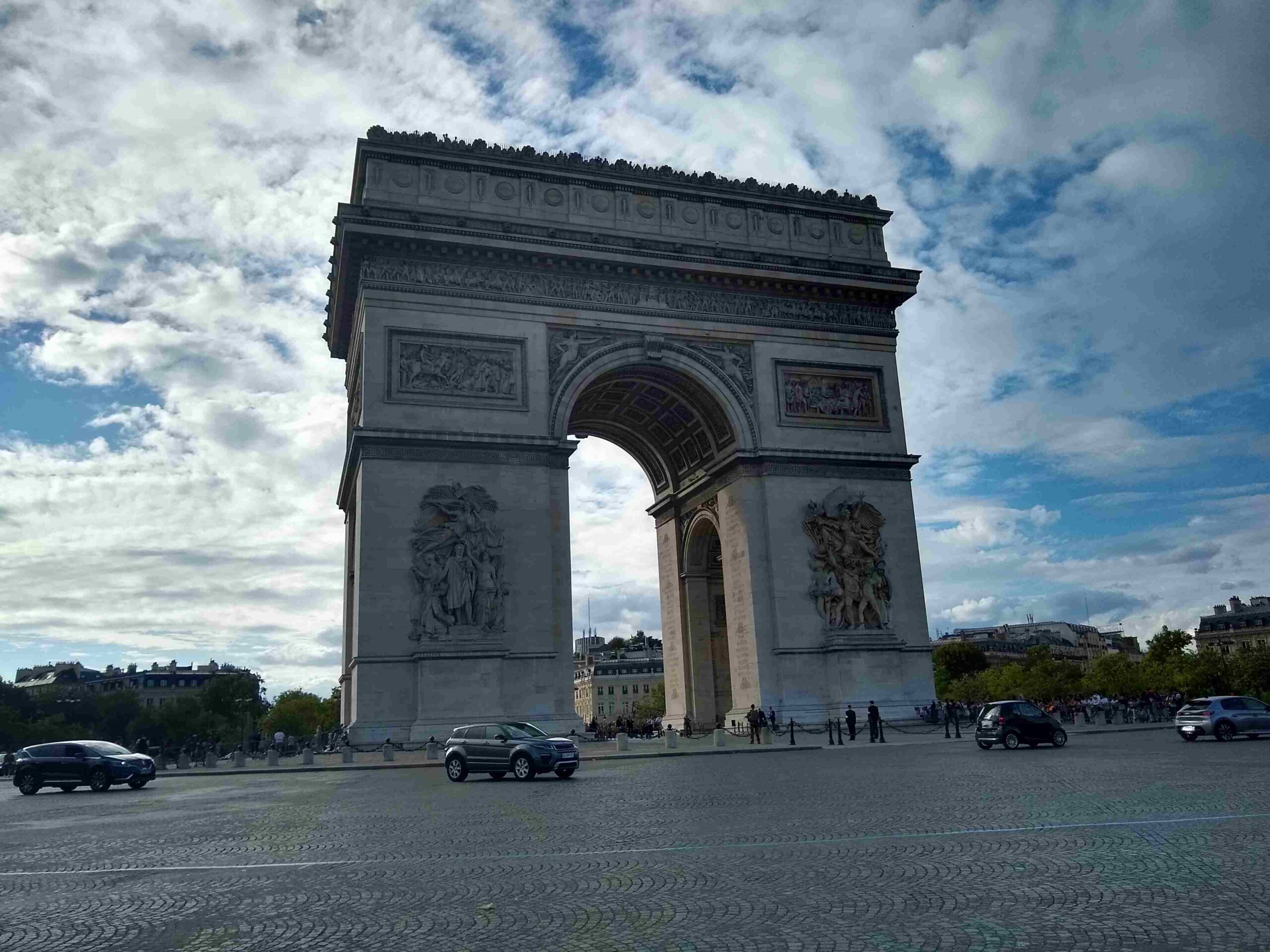
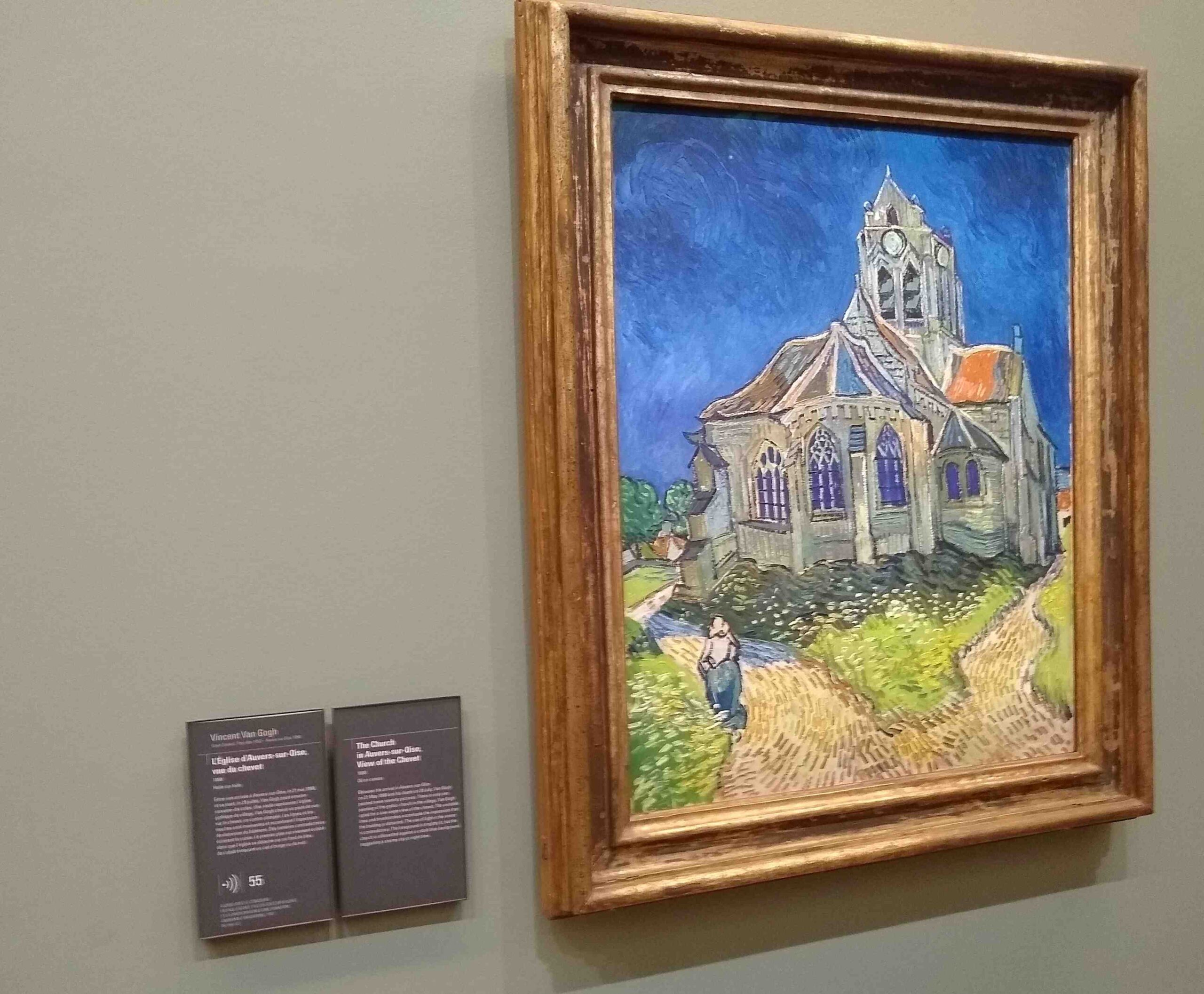
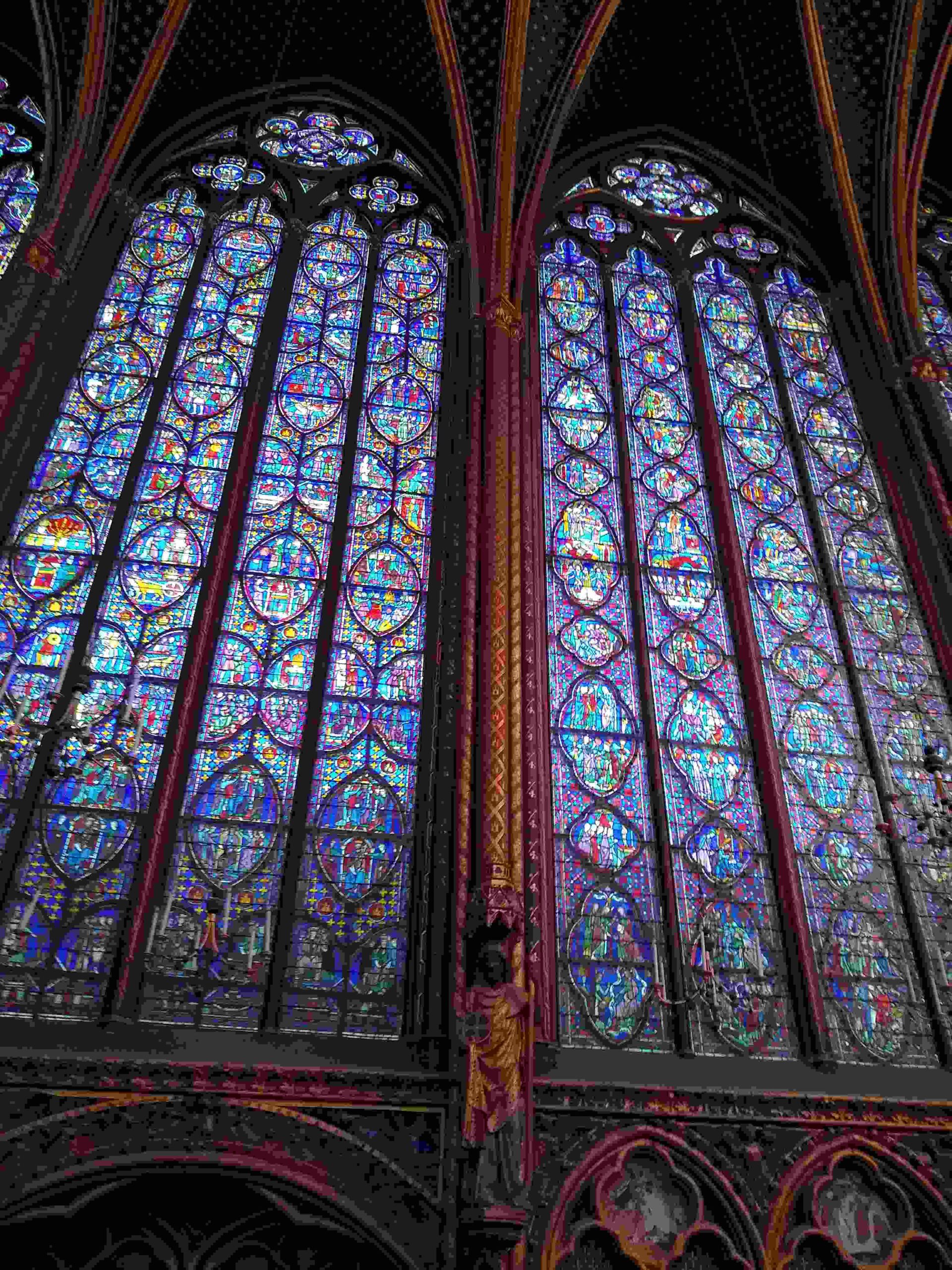
It’s been a week since Steve and I have been back from Europe. 888 photos later, we’ve seen Paris and Berlin, and we… Hah, no, we haven’t. We’ve seen a very, very small part of those amazing world cities. There’s not too much you can do in three days each; the main purpose of the trip was, as always, to visit family, so the bulk of our time was taken up with that. But we got in some great sightseeing regardless!
So here, in a nutshell (you can decide what kind of nut) are some of the most basic impressions. One dozen photos, two countries, three cities.
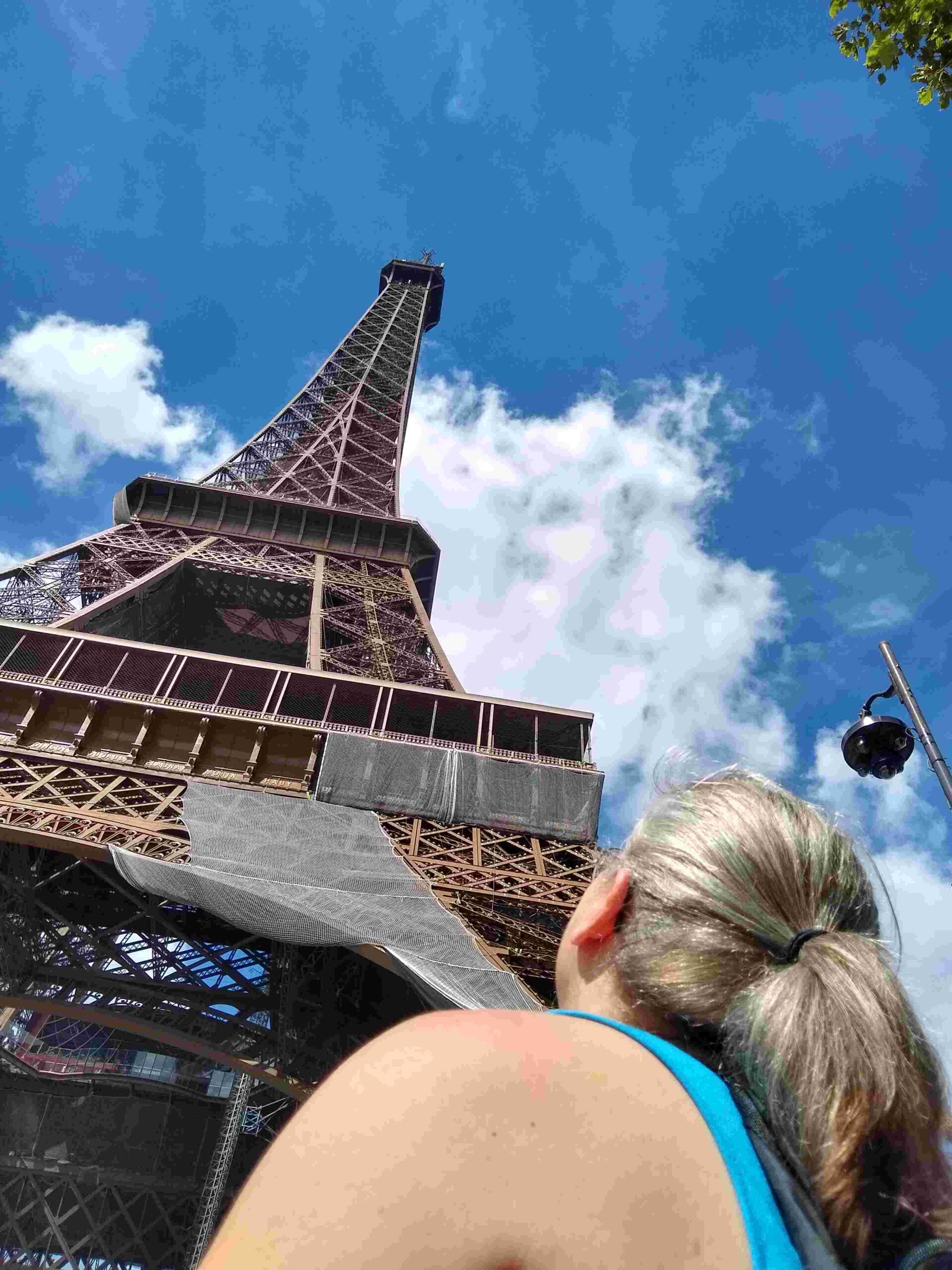
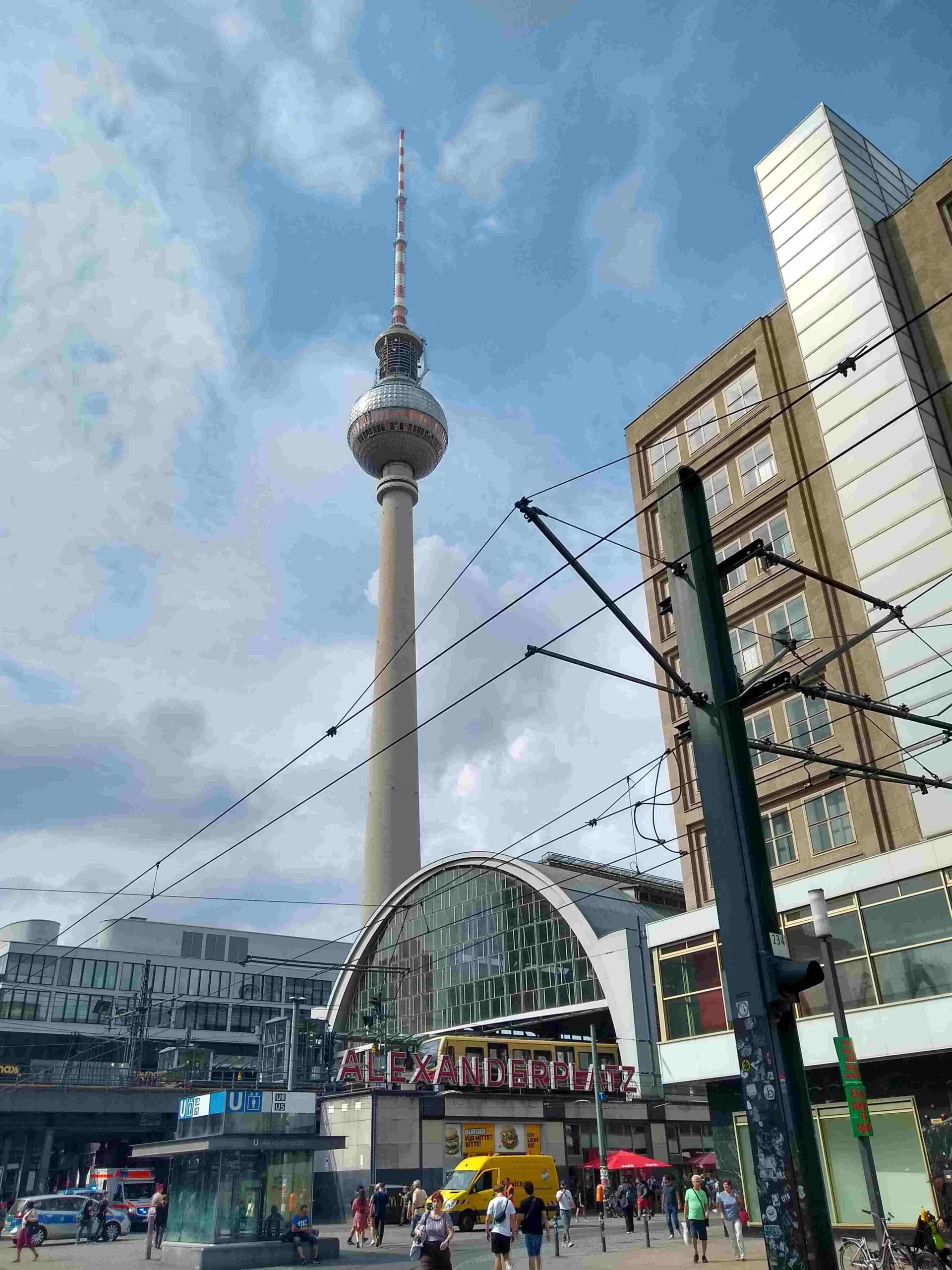
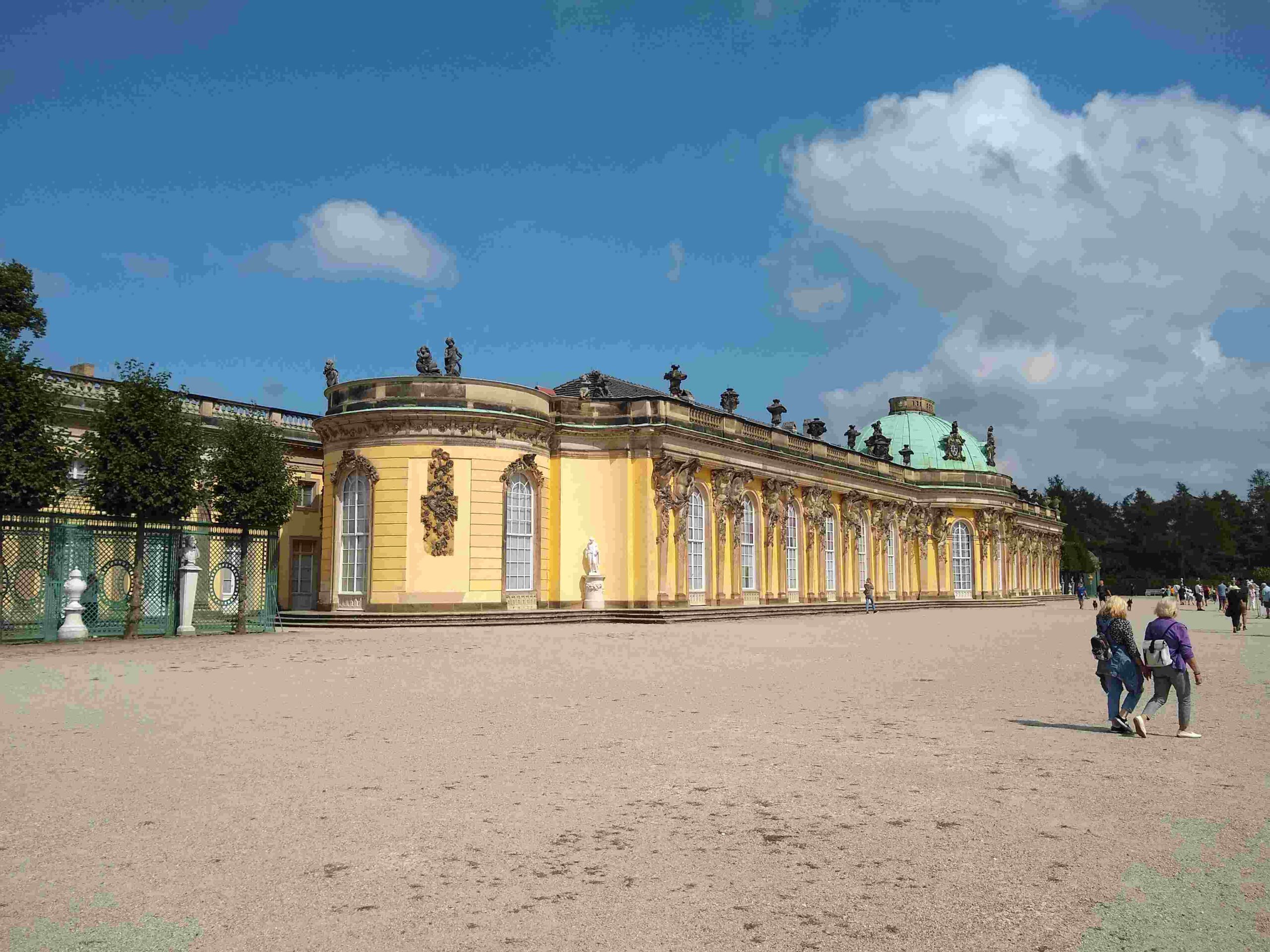
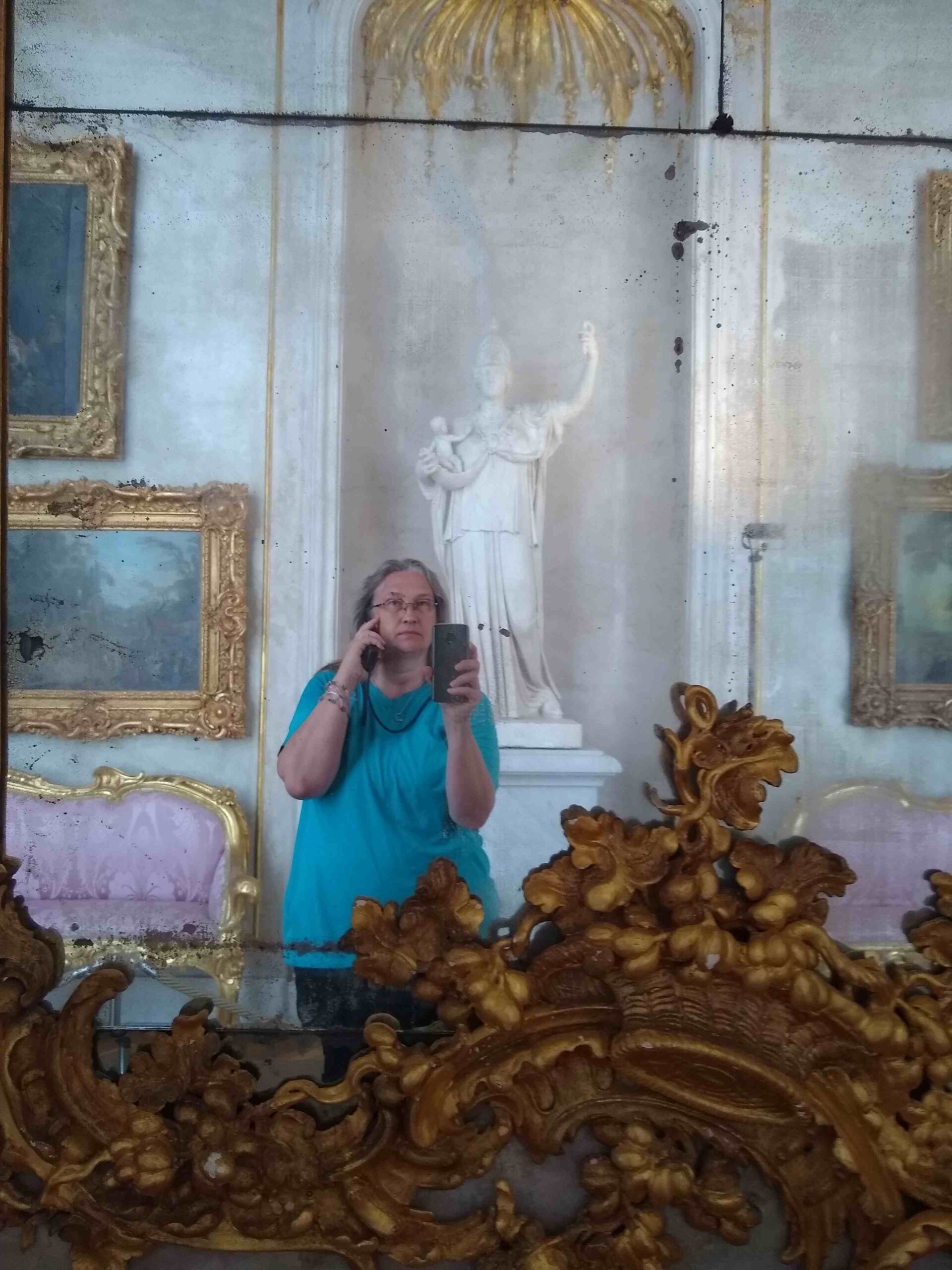
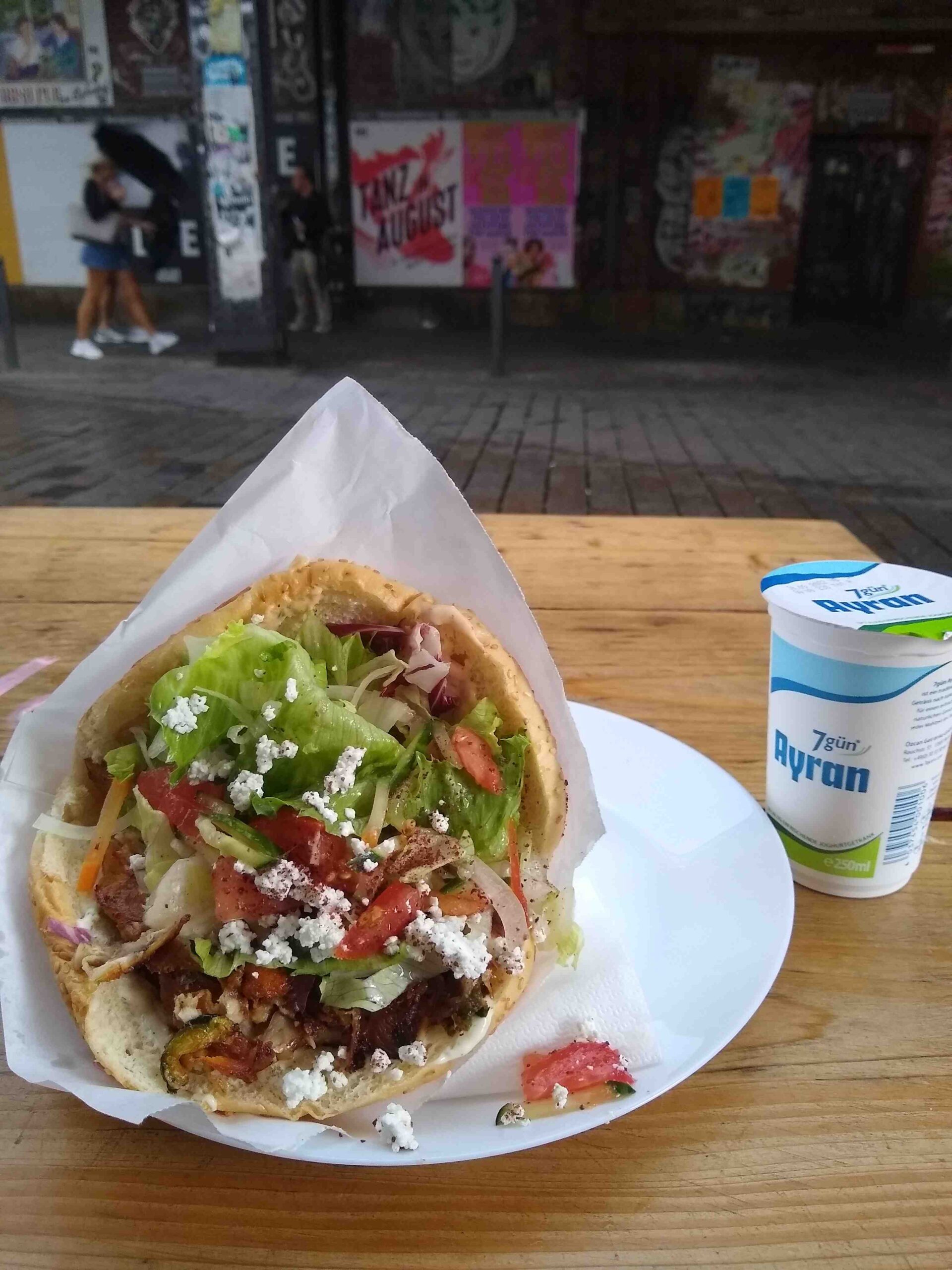
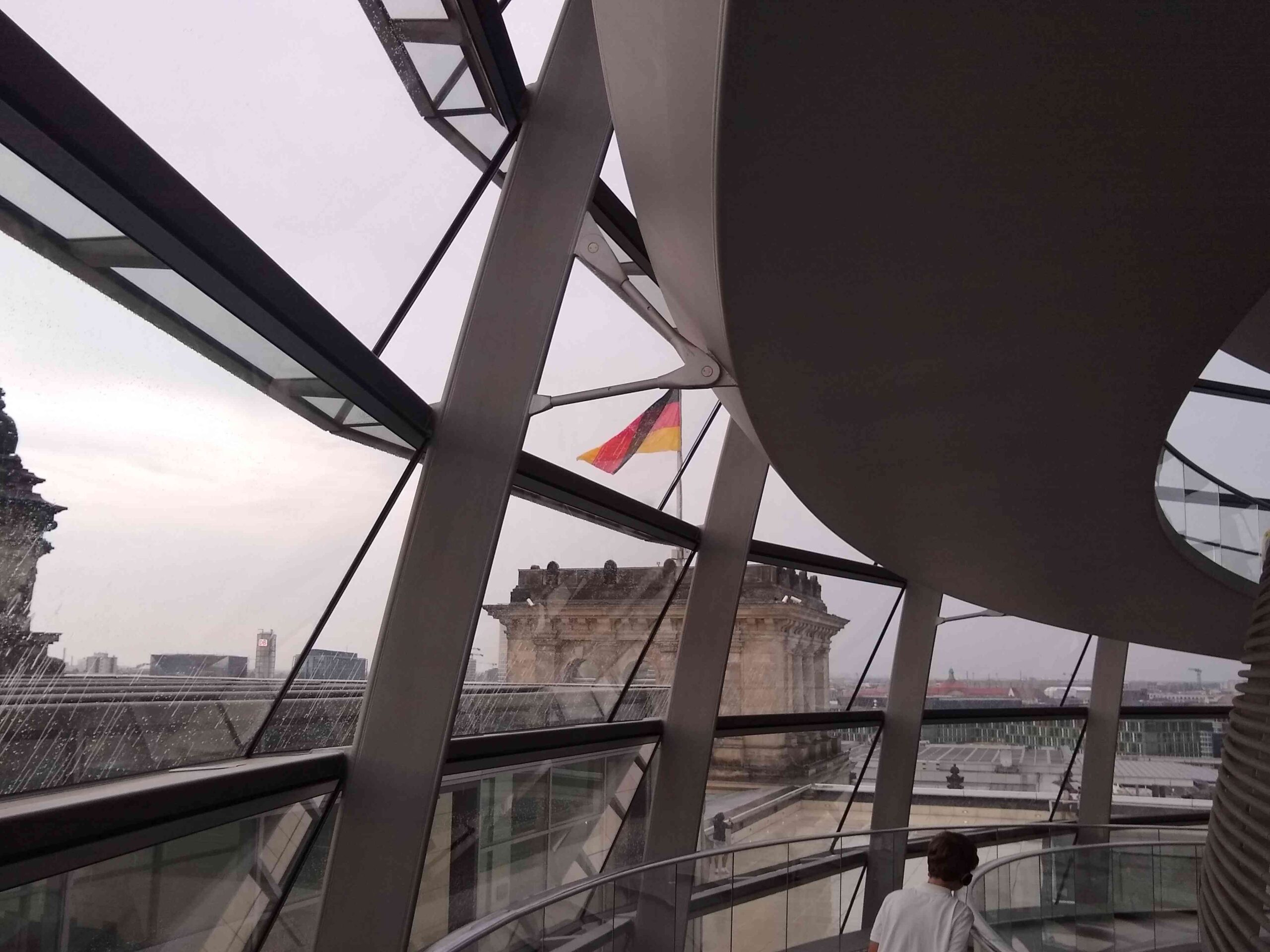
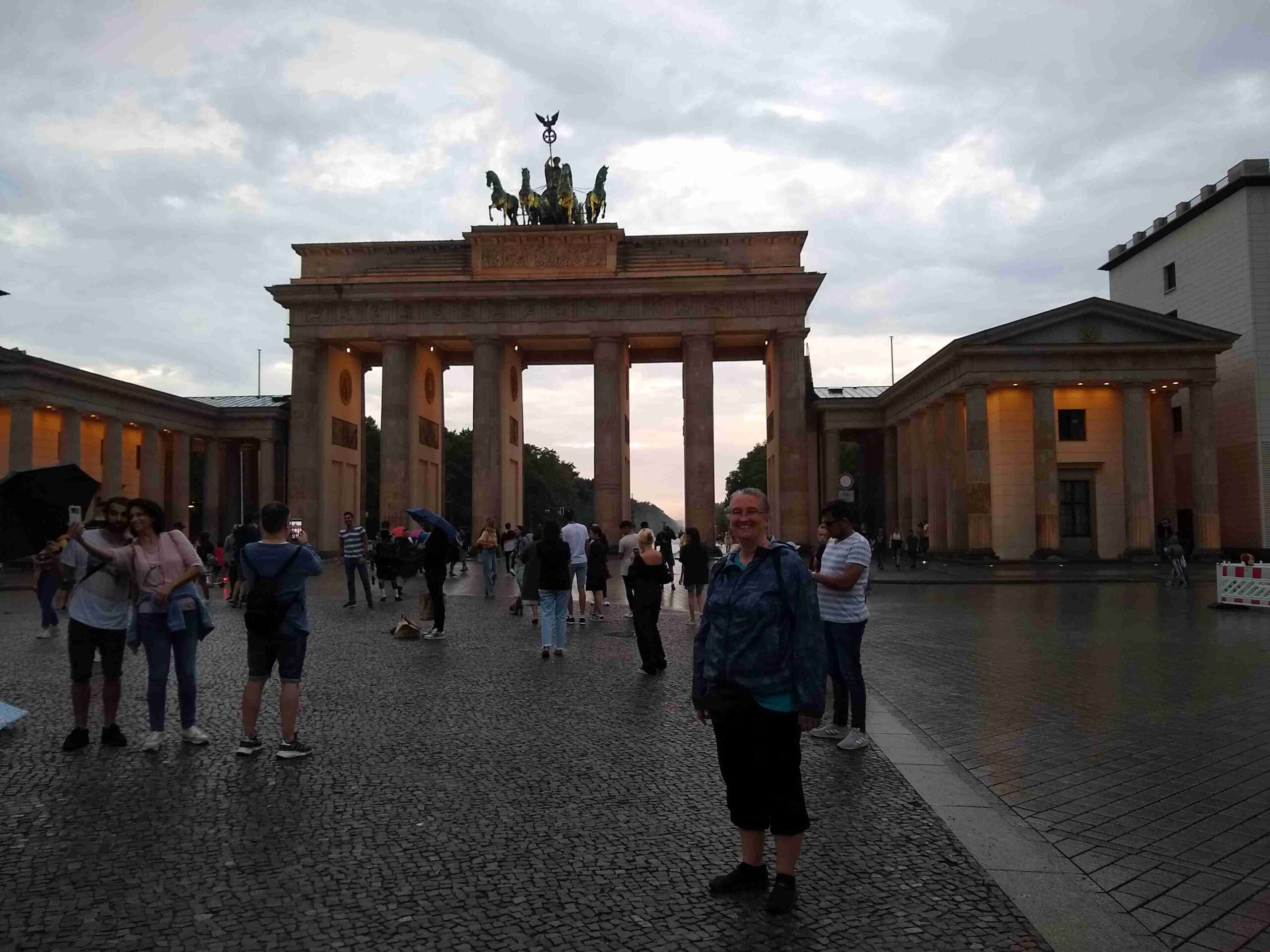
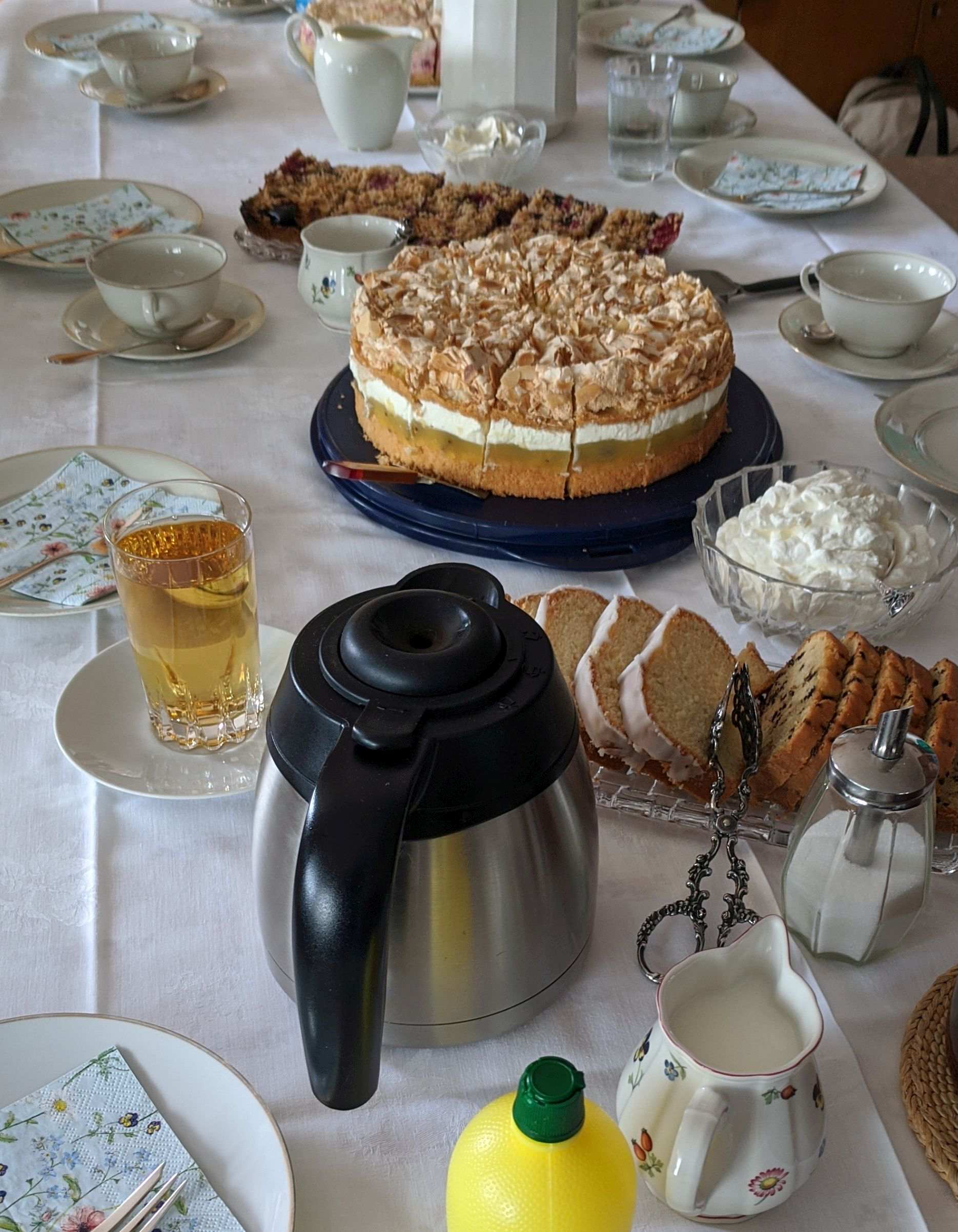
Art Nouveau Paris Metro entranceArc de Triomphe. It’s huge.One of my favourite Van Gogh paintings in the Musée d’OrsayAcres of stained glass in Sainte ChapelleYou know what that is. It’s also huge.Berlin, AlexanderplatzSanssouci Palace outside of BerlinHalf-blind mirror, ca. 1750, and tourist with audioguide, ca. 2022 (Sanssouci Palace, the little gallery)A Döner (Turkish wrap which was invented in Berlin) with Ayran, a salty yogurt drink.Inside the Bundestag (Parliament Building)Brandenburg GateKaffee und Kuchen, aka partying like Germans do
Life, the Universe, and a Trip to Europe, in One Dozen Shots.
At long last, Steve and I are packing our bags again for a jaunt to the Old Country on a family visit! And you’re seeing that right: this time, we’re going to Germany via Paris – which is also a family visit, as one of the Offspring is going to uni there at the moment. I’ve never been there (neither has Steve, for that matter), so we’re bringing a guide book to tell us where the best spots are. Paris will be just a three-day stint, so we’ll have to make the most of it.
I thought that maybe I’d give you a little glimpse into the packing process, the way I’ve done it for the last, oh, four or five years or so, and pass on a few tips I’ve collected on the way.
As you can tell by the guide book, I’m a big fan of Rick Steves, the travel writer/presenter. I have no affiliation with him or his organization whatsoever, I just like his travel philosophy, his TV shows, and his swag. (Although, Rick, if you’re reading this and want to hire me or give me a discount on one of your guided tours, my contact info is at the top…)
A few years ago I stopped in at the Rick Steves flagship store outside of Seattle and treated myself to one of his carry-on backpacks. They’re specially designed to fit the maximum dimensions of airline carry-on luggage while still being perfectly portable – genius. The other genius design is the Packing Cubes: zippered stretchy mesh cubes to hold your stuff. Of course, they’re sized to perfectly fit the inside of the backpack.
Having packing cubes in my luggage is like having portable dresser drawers: one for my T-shirts, one for my PJ’s and night things, the big one for pants and sweaters, and another medium-sized one for toiletries and bits and bobs. I always know exactly where to lay hands on what piece of clothing, which, in a soft bag, isn’t necessarily a given. And here’s a trick: always roll your clothes, don’t fold them. A nice tight sausage of a T-shirt packs more neatly and takes up less room than a flat-folded one. (I got that tip from Lee Strauss, my friend/editing client/fellow writer, who is a veteran traveller.)
The other packing trick that’s been really helpful is to vacuum-pack small items of clothing such as socks and underwear. I put them (rolled up tightly, of course) into a big ziplock freezer bag, squeeze all the air out, and zip it shut. That way it takes about half the amount of space it would take un-compressed.
So, T-shirts, a sweater or two, spare pants, maybe a piece or two of something dressy, underwear and socks, toiletries, a second pair of shoes – what else? A notebook and pen and my trusty Kobo ereader (do you think the 600 books I’ve got on there will last me the three weeks I’m gone?). This time I’m bringing my little netbook, so I can still get on the internet in case my phone packs it in or gets stolen (the latter of which is apparently a distinct possibility in Paris). A couple of collapsible extra bags – a small, lightweight backpack for a daypack, and a foldable duffle bag to haul back all the balls of self-patterning sock yarn I intend to stock up on in Germany (yes, I’ve got checked luggage booked for the return trip).
The backpack is full – very full. But everything fits. All that’s left to do is stick in my small pillow (without which I can’t sleep), put Steve on top, and tighten the straps across (he gets strapped in solidly – a bear’s gotta have his seatbelt on).
And now I’d better get to bed, as I won’t be getting a whole lot of sleep for the next couple of days.
This is Life, the Universe, and At Long Last Another Trip. I’ll try to keep you posted on our adventures!
Last week I got to fulfil an almost-lifelong dream of mine: try out camping in a campervan. The Man and I being of the tall and rather large persuasion, we rented the biggest thing that still called itself a van – it was rather more luxurious than the Westie of my dreams – and went north, to Wells Gray and Mount Robson Provincial Parks.
It was awesome, in the truest sense of the word.
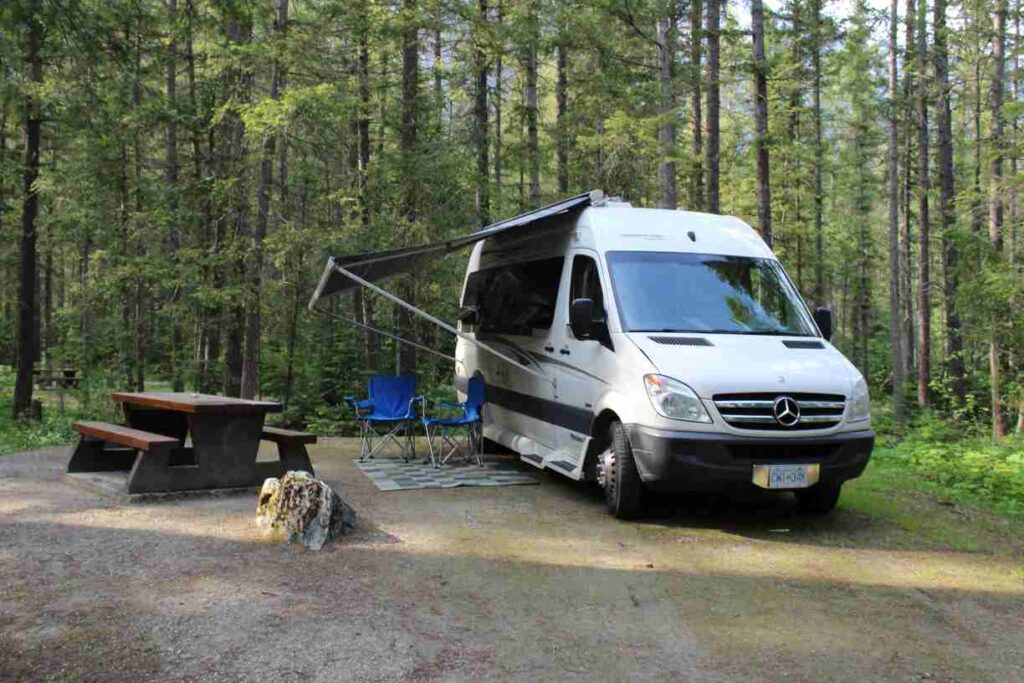
The glampervan
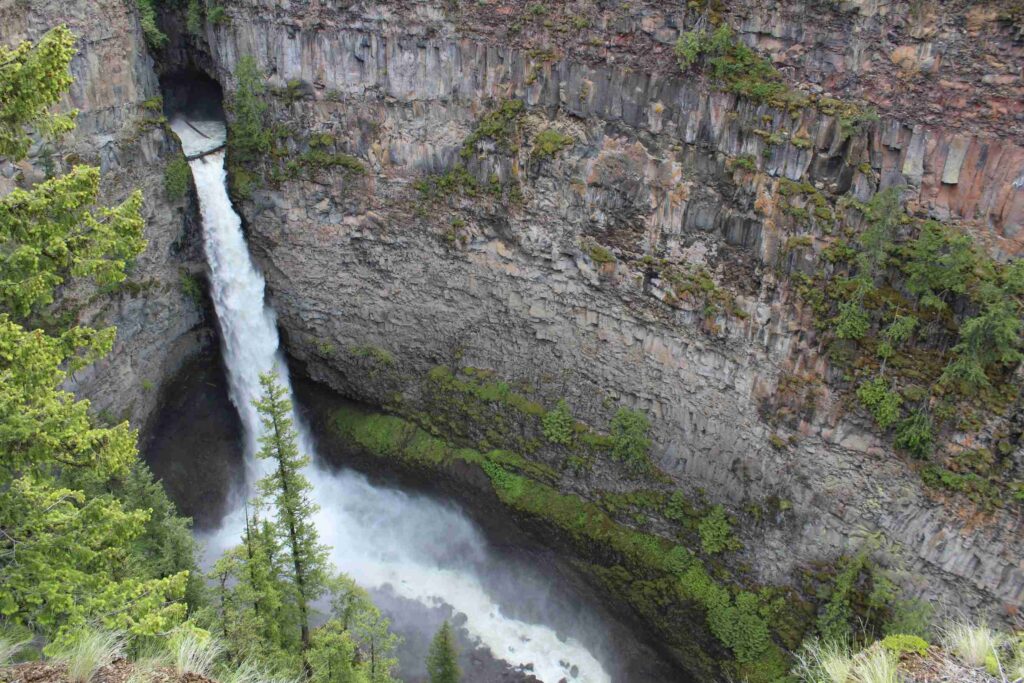
Spahats Falls, near Clearwater, BC
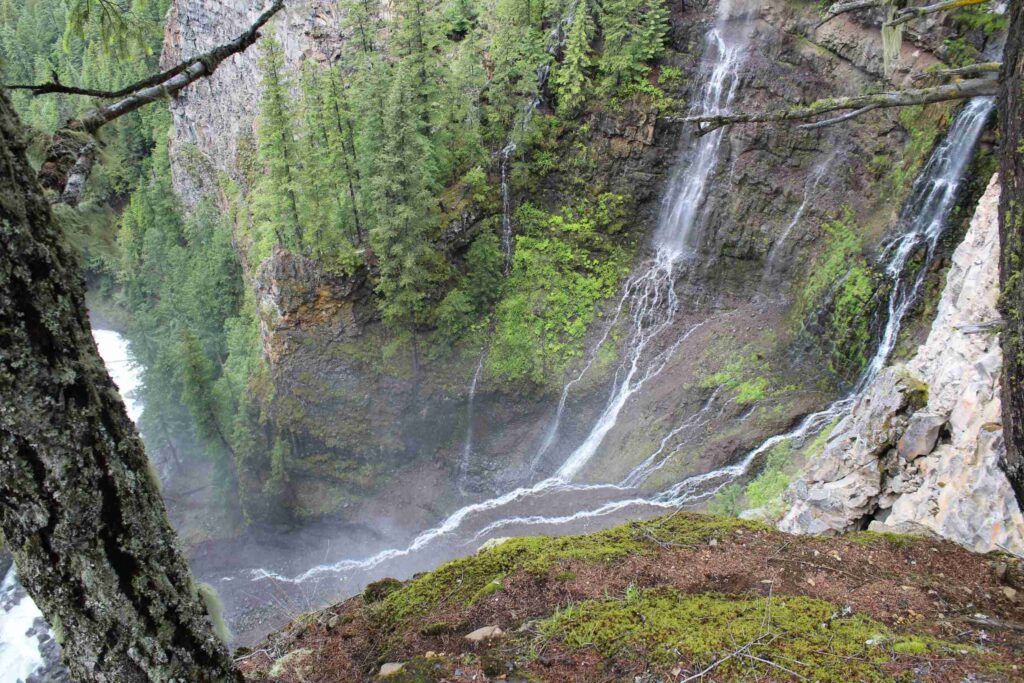
Feeder falls to Spahats Falls
Dawson Falls, Murtle River, Wells Gray Provincial Park, BC
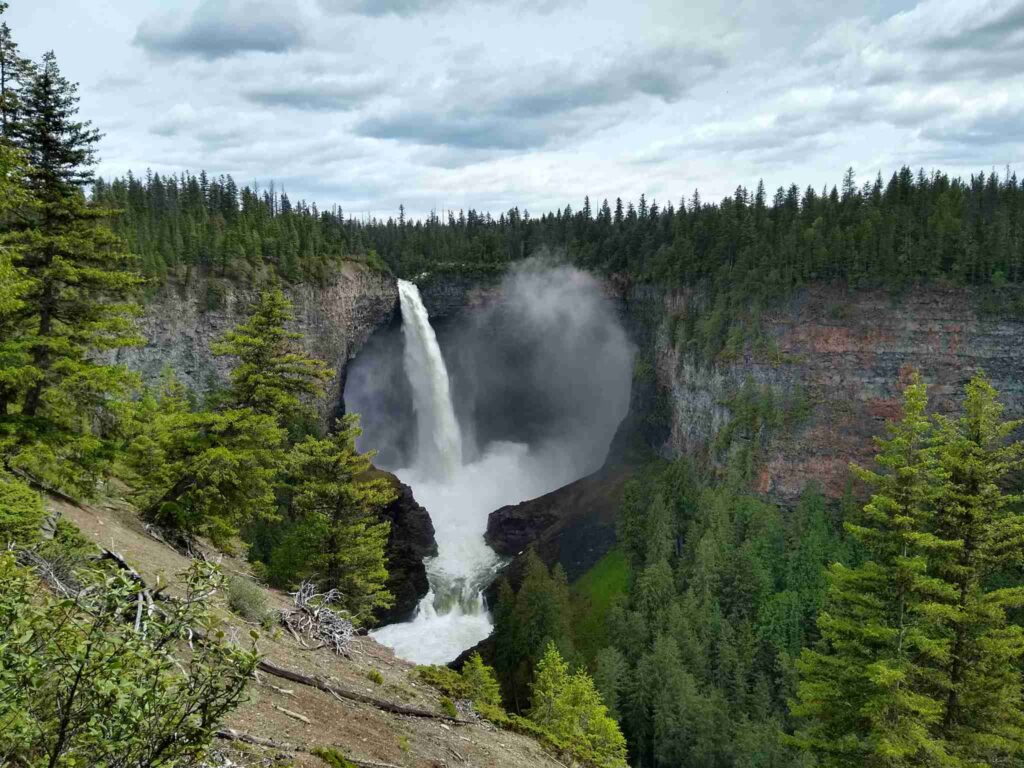
Dawson Falls, filmed from right next to the falls (no zoom lens). That’s how high the river is running right now. The force of that water is incredible. Helmcken Falls, Wells Gray Provincial Park, BC. I have never in my life seen anything like it. That’s the falls for whose protection the whole park was created, and rightly so. Helmcken Falls in motion. Incidentally, it’s the fourth highest waterfall in Canada (141m straight drop) and is of the “Plunging Punchbowl” type of waterfall. Now you know.
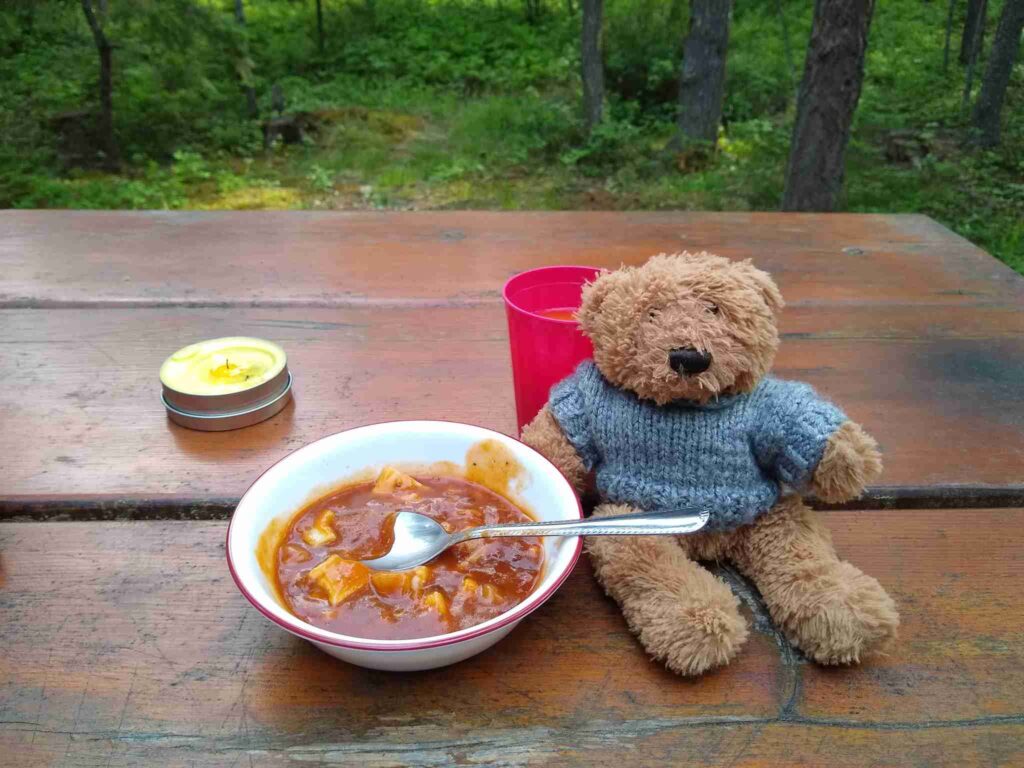
Steve was there too.
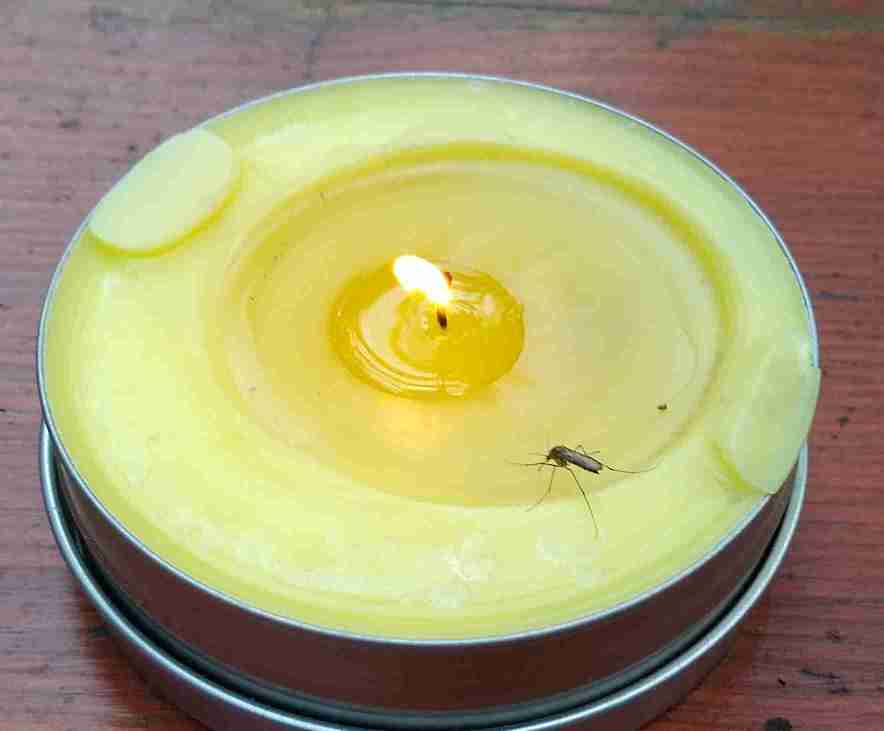
That’s meant to be a citronella candle. The skeeters didn’t get the message.
Overlander Falls, Mount Robson Provincial Park
Mount Robson (highest peak in the Canadian Rockies, 3945m)
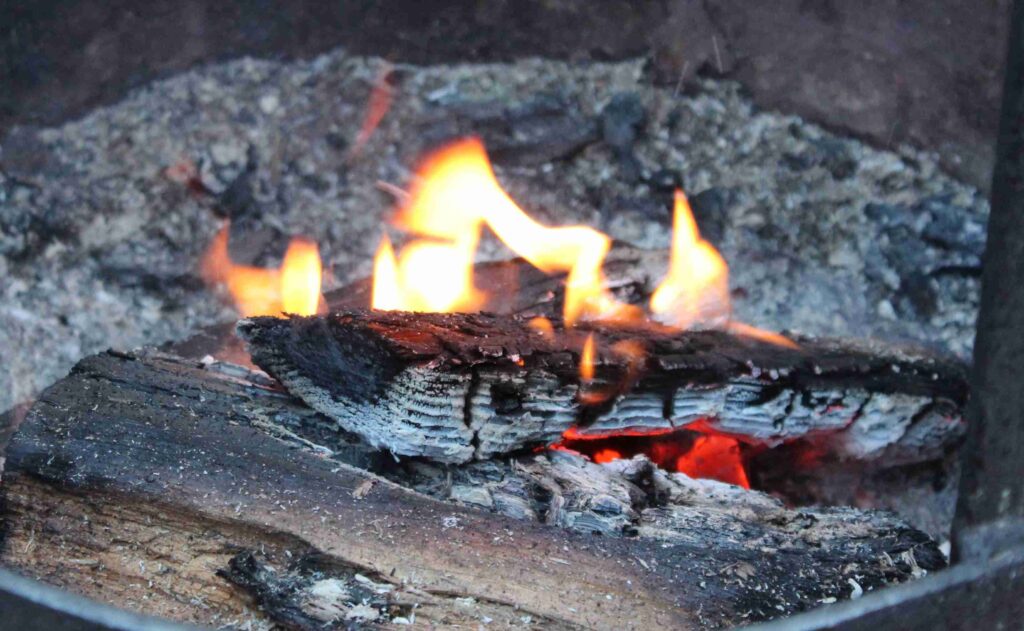
Campfire glow
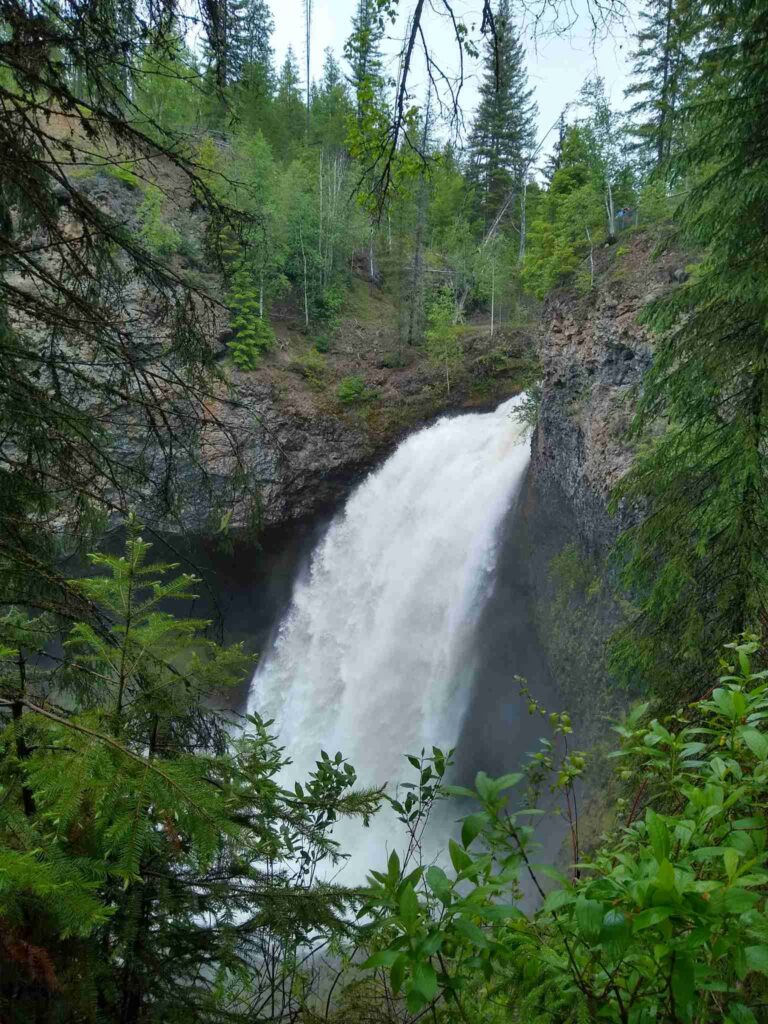
Moul Falls, Wells Gray Provincial Park
Yours Truly and Helmcken Falls. I really was there; those are not just stock photos swiped off the internet. It’s the most incredible sight, truly awesome in every sense of the word.
In a manner of speaking, this is a #ThrowbackThursday post. Not that it’s been posted before, but I started writing it exactly two years ago, on our last trip out of the country. Somehow, with the lockdown and everything, I never had the heart to finish it, but now, on the second anniversary of the trip, it seemed like a good time to dust it off and put it up. Now that things are opening up again, maybe it’ll be possible to go back there soon?
I was just on another jaunt to the Old Country. As I’ve said before, while living halfway across the globe from your family can be a pain in the neck (literally – those long flights are uncomfortable), a visit also makes for good opportunities to get in some sightseeing.
This time, I got to see the Dickens Museum at 48 Doughty Street in London*. Charles Dickens (whom, courtesy of Roald Dahl and his BFG, I am now always thinking of as Dahl’s Chickens) lived in this house in Bloomsbury from 1837 – 1839, at the very beginning of his writing career. He moved in as an unknown 25-year-old with a wife and one baby, and moved out two years later as a popular writer with two more children and an established name.
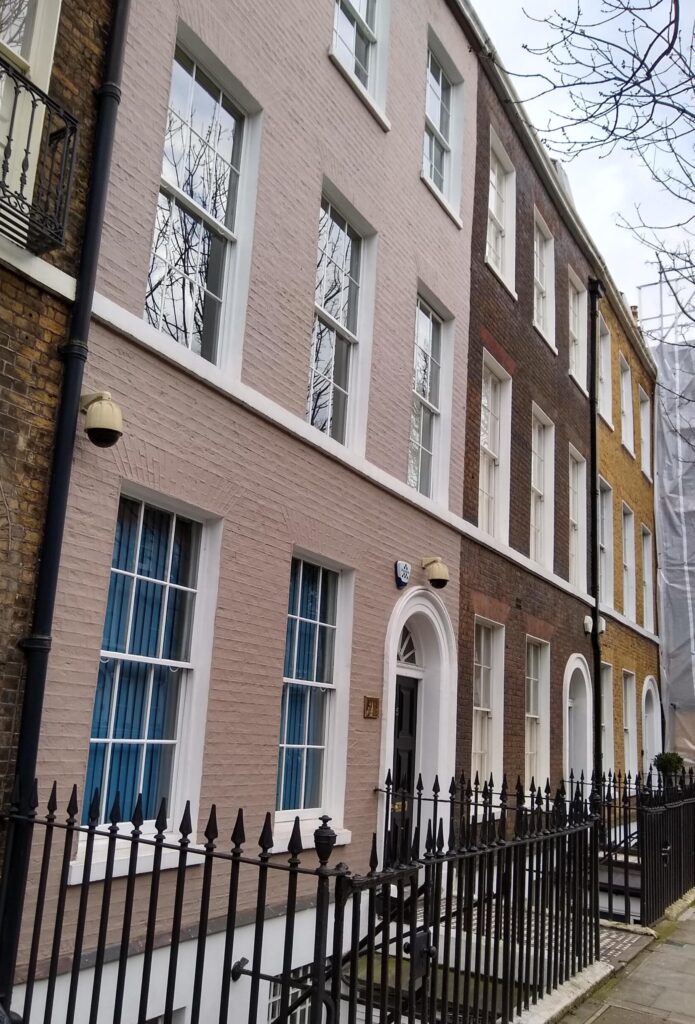
Doughty Street (the wrapped house at the edge of the picture is the Dickens house)
Now, I’m not a die-hard Dickens fan – truth be told, I’ve only read about half a dozen of his books so far. But this museum was fascinating in a way that wasn’t even directly about him. The house is a testament to the life of a middle-class family in the very earliest years of Victoria’s reign.
The Dickens family consisted of one young man (Twenty-five! He was just twenty-five!), his wife, her sister, and one-two-three babies. They had: on the ground floor, a dining room and morning room (basically Mrs Dickens’ office or place to hang out); on the first floor a drawing room and Dickens’ study; on the second floor two bedrooms (one for the Dickenses and one for sister-in-law); on the third floor, the nursery and servants’ bedroom; in the basement, the kitchen, scullery, and wash house (laundry room). That’s it.
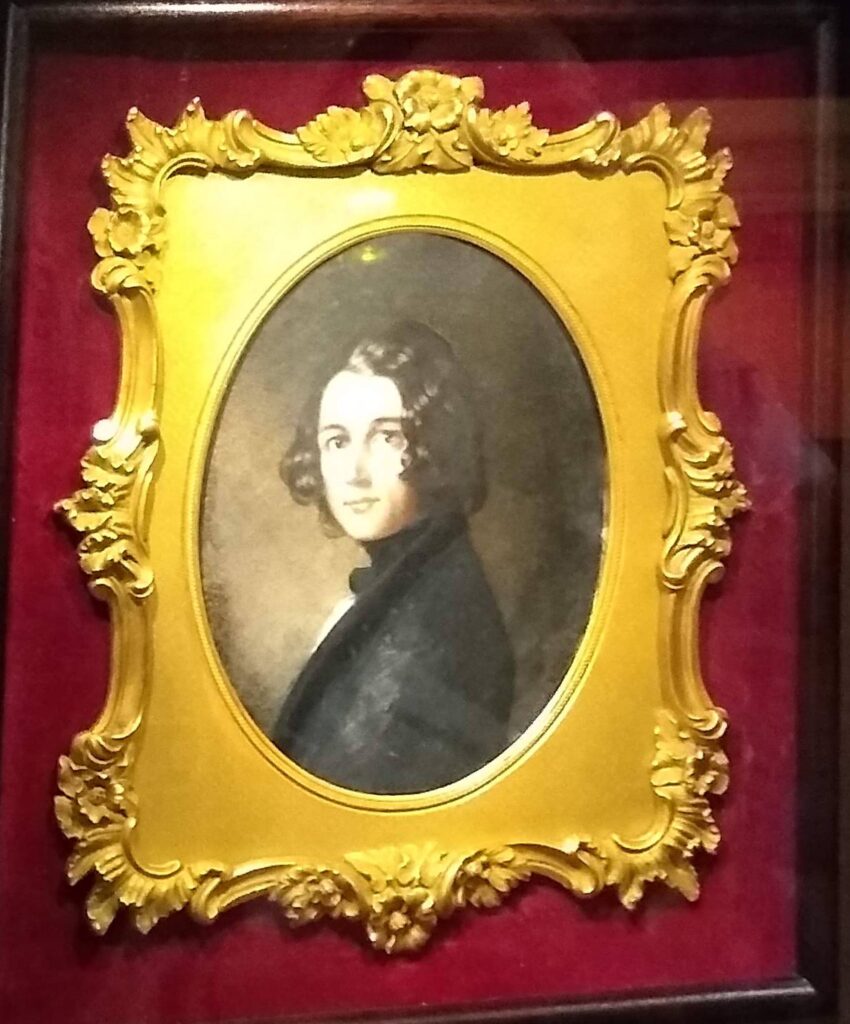
Young Charles Dickens, the “Lost Portrait” (which is no longer lost, but that’s another story)
“Oh, but of course the bathrooms, too,” you say? No. No bathrooms. No toilets**. No sinks, no places to wash hands, except for one stone sink in the basement scullery. So where did they do their, you know, business?
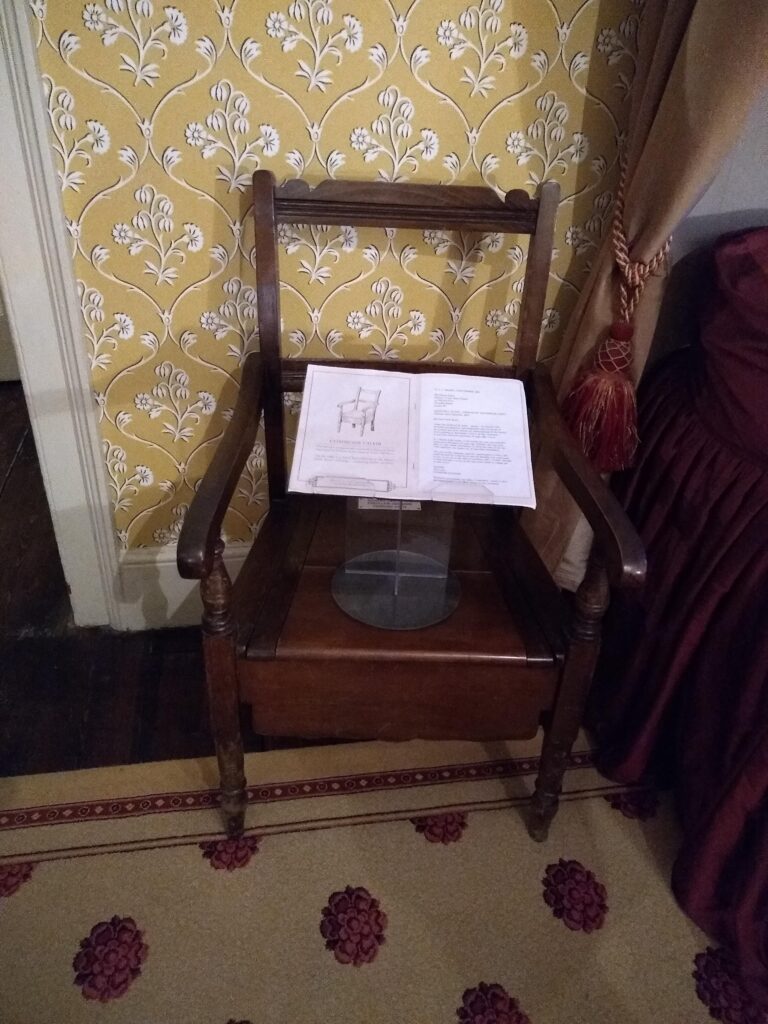
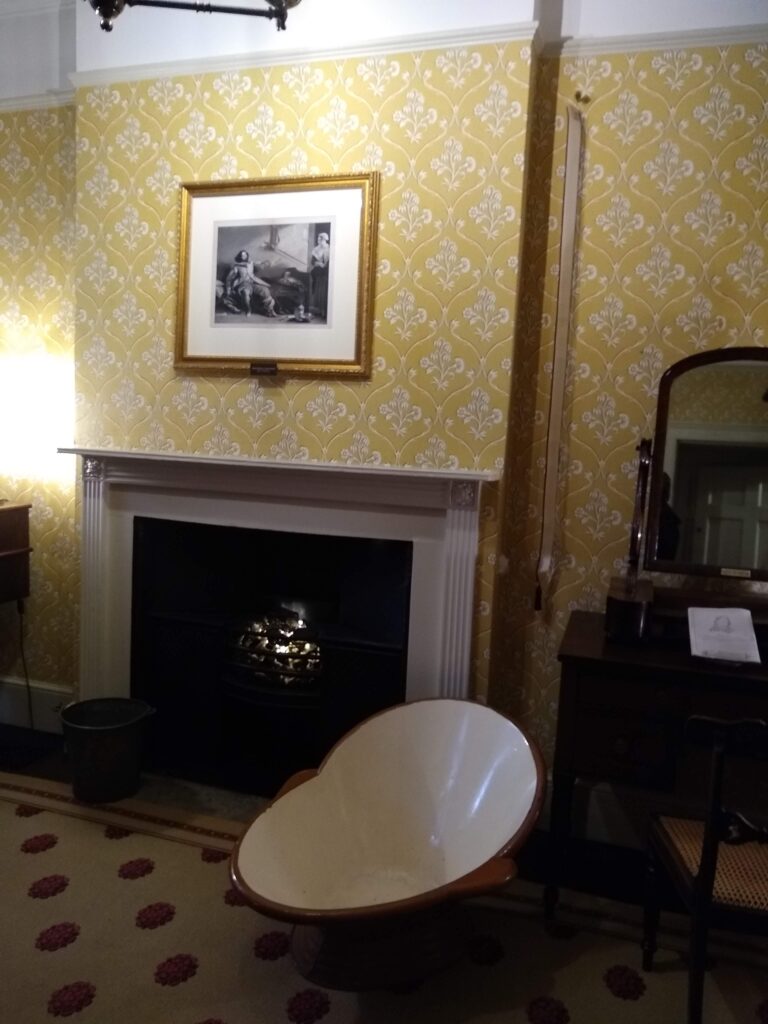
On chamberpots (ceramic bowls large enough to sit on) and commodes, which are basically chairs with a hole in the seat and a potty under it. And you guessed it: somebody had to empty them out. Somebody had to carry porcelain bowls full of smelly, stinky, gross you-know-what down three flights of stairs and dump them.
The commode
And that same somebody also got to lug pots full of hot water up the stairs every morning so the family could have a wash. In fact, if Mrs Dickens wanted a bath, she had it in front of the fire in her bedroom. The tub on display at the museum is a little hip bath – small enough that it can be carried while full. Let me repeat that: a tub full of water—let’s say, at a minimum five to ten gallons, or twenty to forty litres/kilos—carried down three flights of stairs. With how small people were in those days, that’s probably half the body weight of the person who had to do the carrying.
The hip bath in the bedroom
The maid who had to do the carrying. Because it sure wasn’t Mr Dickens himself, or his wife, or his sister-in-law.
Hence the servants’ bedroom on the third floor. The young Dickens family in that Doughty Street house, an ordinary middle class family whose sole wage earner was at the beginning of his career, consisted not only of Mr, Mrs, Miss, and Babies, but also a cook, a house/parlour maid, and a nanny. And they needed those servants, because without them, things would have been pretty darn uncomfortable. Servants’ wages and room and board were a normal part of the expenses of any middle class household; not having servants, i.e. having to do the work yourself, was the very definition of “working class.”
I had never really thought about that before. Indoor plumbing with hot and cold water at the push of a button is something we take for granted today; central heating and electric stoves and washing machines and vacuum cleaners are something we don’t even think about.
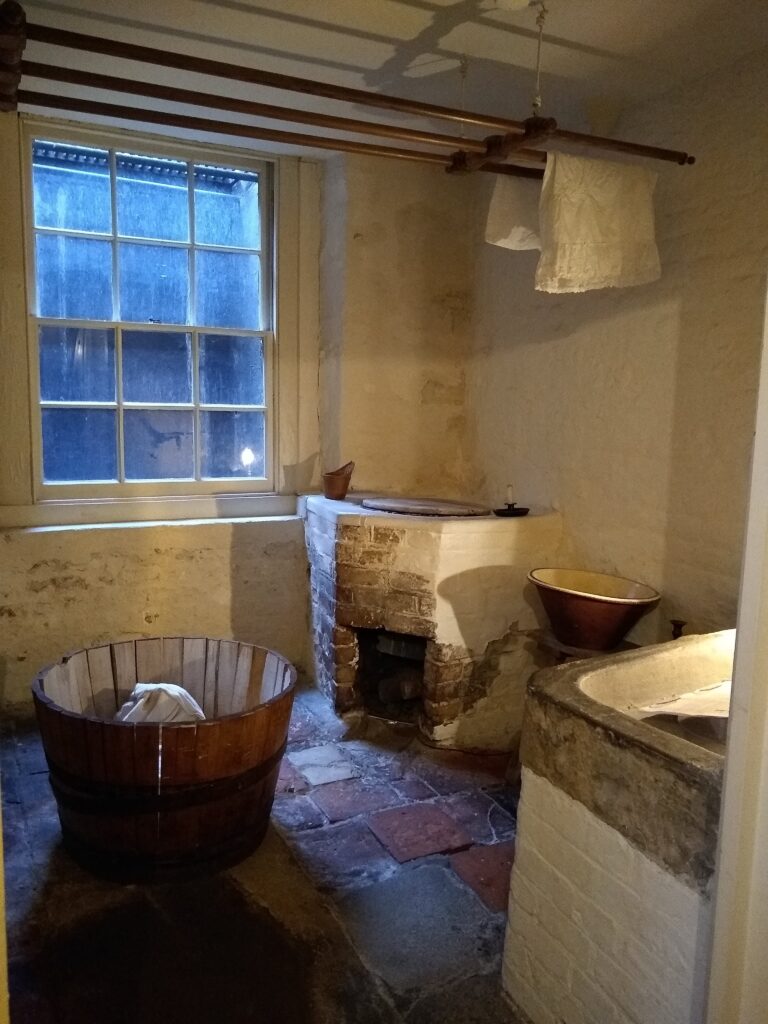
But in Dickens’ time, indoor plumbing was provided by the servants carrying jugs and buckets and tubs full of water and sewage up and down stairs. Heat to keep you warm and to cook with (Every. Single. Cup of tea!) and hot water to wash or bathe in were supplied by the servants lighting and stoking and cleaning out and re-lighting fireplaces. The scrubbing action and spin cycle of the washing machine came from the servants rubbing and plungering and wringing laundry in the cold stone-flagged wash house in the basement, and the vacuuming of carpets was accomplished by the servants lugging them out back and beating the dirt out of them with a carpet beater.
The wash house with the copper in the corner (for Mrs Cratchit to boil the pudding in)
A lot of us (myself included) have this nostalgia for the days of the past, would like to spend our imaginary lives back in the days “when life was simple,” want to hang out with Elizabeth Bennet and Mr Darcy and Ebenezer Scrooge (once he got his head screwed on straight). But life “in those days” actually wasn’t simple—it was quite complex. And it was almost entirely human-powered. We measure a car’s engine in horsepower—maybe we should measure indoor plumbing and electric washing machines in human-power (“This latest model of Maytag has a 5hu-p/day capacity and is able to draw 8hu-p of hot water in less than two minutes…”).
I’m not going to give up mentally living in the past, but visiting the Dickens Museum has given me a whole new appreciation for just how privileged we are today. Next time you flush the toilet in your second-floor bathroom or crank the handle in the tub to instantly have hot water raining on your head, give a thought to that unnamed woman who, 185 years ago, carried enormous buckets full of water and slop up and down the steep stairs of a small London house, so that a gifted young man could sit in his study and write wonderful stories about Oliver Twist and Nicholas Nickleby that are still with us today.
Life, the Universe, and Indoor Plumbing. Charles Dickens would have been nothing without his servants.
*I can highly recommend the website of the Dickens Museum at https://dickensmuseum.com. Lots of interesting information, and you can take a whole virtual tour of the museum, including admiring the hip bath by the bedroom fire! **2022 addition: Apparently, as I just found out, there was actually one “water closet” (toilet) on the ground floor and one in the basement, but firstly, that was a new and unusual thing for the day, and secondly, the servants still had to carry all the wash water and chamberpot waste up and down the stairs to the upper floors.