#FridayFragment: 20.01.2023

MAGIC POTION

The first sip tasted revolting. Bitter, burnt. I made a face.

“That’s normal,” he said. “Just keep drinking, it’ll get better.”

I doubted it. The second, third, fourth, and fifth sips were no better. I put the mug back on its coaster.

“Thanks,” I said. “I don’t care how much magic is in this, I don’t think it’s for me.”

He stared at me, his blue eyes wide with astonishment.

“You can’t be serious,” he said. “Everyone likes coffee.”

On Cambridge and Friendship and a New Book

King’s College, Cambridge

Anyone who says that online friendships aren’t real friendships has obviously never had one.

Louise Bates and I met a lot of years ago. If I remember rightly it was via the blog of another writer (Lee Strauss, to be precise, who had just published her first book). Both Louise and I were in our early days as bloggers and writers, and had yet to publish our first pieces. Her comment on Lee’s blog post caught my interest—who was this E.L. Bates person? She sounded like we might have a few things in common.

So I toddled over to her blog and checked it out. Would anyone be interested in beta reading a couple of short stories she’d written, she asked on the blog; umm, sure? I said. Not that I had much experience, I gave her to understand, but I could read the stories and tell her my opinion. Which I did. And then I sent her my fairly recently completed first novel to read (“I just want to know if it’s any good…”), and she gave me her opinion in return.

And that was the beginning of a beautiful friendship.

We found that we loved each other’s work, and had very much the same approach and attitudes to writing and to literature. And then we started talking about everything under the sun. Homeschooling, life, religion, parenting, society, food, books, knitting—and always, always writing. The emails flew back and forth. Big changes happened in our lives, all of which we shared with each other as they happened. I went to grad school and got my Master’s degree; Louise and her family moved to England for her husband to study for his PhD at Cambridge, and then moved back to the States to take up their life there again. On the way, we published our first books. And then the second, and third, and fourth. We kept blogs, and changed blogs, and got our very own websites. And both of us went into business as professional editors.

Our friendship is as real as they come, even though we’ve always been separated by at least the width of a continent and for a while even an ocean as well. We always talked about how much we’d love to meet in real life, by preference in England where so many of our favourite stories are set. Just for fun, we’d sign our emails with “Some Day In Great Britain!”

And then one day that wish became reality. Planning a trip to Germany to visit family, I realized that it was cheaper to fly via London than to go to Germany directly. Well—it was the sensible thing to do then, wasn’t it? And while I was on English soil, I might as well make it a longer layover, and take in the sights. It was practically a duty. A day or two in London, and then—Cambridge!

A short 45-minute train ride from King’s Cross Station, I made my way to the Royal Cambridge Hotel, and Louise and her family came to meet me. I still remember going down to the lobby, and there she was, just as she looked in her photos. “There you are,” I said, “it’s you!” (or something equally profound and erudite), and about five minutes later it felt like we had known each other in person for years.

Mathematical Bridge, Cambridge

We proceeded to spend the most marvellous day and a half together. They took me to King’s College Chapel for Matins and to Jesus College for Evensong; we walked through the ancient streets of Cambridge and watched punts getting snarled on the River Cam by the Mathematical Bridge; we had a proper British cream tea in a café and supper in the pub where some famous scientists used to have a pint after making their famous discoveries (I can’t remember now what they were, but they were famous, yup).

Being in Cambridge with Louise was an experience I will never forget.

Not the most flattering picture of either of us, but we were so busy having a great time together we neglected to take any others.

And now (drumroll please!) she’s written a book about the place!

I got to read the very first version of this story. But that was before February of 2019, before I had seen Cambridge. It was a good story (all her stories are), but it didn’t resonate as much with me then. She put the manuscript aside for quite some time. But then not long ago she took it back out, and completely re-wrote the story. Now, it’s suffused with Cambridge. It’s her homage to the place, and it’s a wonderful, fun, profound story.

Death by Disguise came out today! It’s Book 3 in Louise’s “Whitney and Davies” 1920’s Magical Mystery series—like Agatha Christie or Dorothy Sayers with magic.
“The walls of Saint Dorothea’s College in Cambridge hide more secrets than simply the existence of magic …” Are you intrigued? Of course you are. So I’ll stop talking at you. Go get a copy of the book, and dive into the world of E.L. Bates’ Cambridge—it’s magical all in its own right.

Life, the Universe, Friendship and Cambridge and Books. You’re in for a treat.

What I Learned at the Writers Conference

Steve at the Writers Conference

Finally, after three years of absence (one due to holidays, two to You-Know-What), this past weekend Steve and I got to go to a real-life, in-person Writers Conference again. People! Writers! Books! Workshops and conversations about plot and character and publishing and writing software and essays and food writing and the difficulties of switching genre and getting things done and how weird it is to be, well, as weird as we are… It was glorious.

What did I learn, you wonder? Well, aside from all the stuff I really can’t summarize in a little blog post—you had to have been there, that’s what we take those workshops for—there are two thoughts I came away with. Neither one of which should have been news, but they kind of were.

Thought #1: Writers don’t look like their publicity photos. Well, okay, some do; they’re just naturally handsome and photogenic and we all hate them for it. But several times that weekend, when a writer was introduced and walked up on stage, I had a little “Oh!” moment. As in, “Oh, they actually look like a normal person! They’re older/larger/less perfectly groomed/more grey-haired/whatever than I thought!” With some of them the “Oh!” moment happened when they started reading from their work: in their writing, they’re so eloquent, so polished, so poised—but on stage, there might have been a slight stammer or a lisp, or they read their work with less expression than it deserved, or their hands were shaking just a bit.

Writers, I realized, are just normal people. Even those “big names” with multiple published works and bestsellers to their credit, whom I look up to with a tinge of envy. Reading the eloquence of their writing, and looking at their attractive and polished photos, I got intimidated; then I saw them in the flesh, and they turned out to be—well, real. Actual human beings. I haven’t lost one iota of my admiration for them, I’m just not intimidated by them personally anymore (well, not as much). I can be inspired instead.

Thought #2: There is more than one way of doing things. “Thou shalt outline!”—“I can’t outline my novels, I have to write several discovery drafts and throw out the first three until I figure out what happens.”—“Write a synopsis first and work from that!”—“I don’t know what the book is about until I’ve written it.” All of those statements came from successful authors with several published books to their credit. Directly contradicting what the last successful author with several published books to their credit had said.

That there is more than one way of doing things is a revelation that I had about more than one creative field in the last couple of years. I wrote about it with regards to knitting (and life) two years ago, and just a few months back, I realized it about pottery: I was taught one particular way to throw on the wheel, and I was getting frustrated because I wasn’t doing very well with it. I concluded that it’s because I didn’t know the right way to do it. I started watching online videos, and several of the instructors were quite dogmatic about how it’s supposed to be done: Never, never use a sponge to pull up—no, always use a sponge to pull up! Wedge every piece you throw and make sure you put it on the wheel the right way around—no, just smack it into a ball, it doesn’t matter which way it lands on the wheel! This is the only right way to do it—no, this is the only right way to do it! The more online videos I watched and books I read, the more different ways of doing it I saw. And all of these people produce beautiful work.

It seems that that also holds true for writing (which, in case you missed the point, is my revelation du jour). Plotting, pantsing, structured, unstructured, according to a map, discovering as you go—what it comes down to is that you need to do what works. What matters is that you get the thing written. It’s irrelevant if you’ve outlined or inlined (I just made that up), as long as you get a piece of writing out of it. There is not just one way of doing things, and the really exciting thing about that is that because there are so many ways of doing things, you always have another option—if this doesn’t work for you, try that instead.

That’s what’s so wonderful about events like Writers Festivals: so many opportunities to learn different ways of doing things! And as exciting as it was to get back to an in-person conference, the Pandemic [ugh!] has actually had a good effect here. If you can’t make it to a real-life festival (either because you can’t afford it, or you live too far away, or, which is a perfectly legitimate reason, you’re not comfortable being physically close to so many germ-breathing strangers yet), the number of online options have proliferated in the last couple of years. You can attend festivals and learn from those amazing pros from the comfort of your own personal computer chair, finding out all about novel structure or how to plot a mystery, or, for that matter, how to sculpt a ceramic camel using newspaper as armature.

And I can tell you that the learning experience in an online conference can be just as intense; you need just as much time to recover from it as from a real-life convention (i.e., you spend the day afterwards collapsed on the couch, trying to let your poor brain recover from all the input). Speaking of which, I think Steve still hasn’t got over this one; he’s gone missing. I know he came home with me—here he is in the kitchen perched on the stack of books we brought home—but I haven’t been able to find him anywhere since. Well, I’m sure he’ll resurface once he’s had a long nap and revitalized his woolly brain.

Life, the Universe, and a Writers Conference. Writers are normal people, and there is more than one way of doing things.

Steve and our conference book haul

#FridayFragment: 29.04.2022

They came around the corner, and there it was in front of them. The blossom, enormous like a vast bowl, more than six men could span. The soft pink of the petals had a velvet sheen to it; in the centre, the golden richness of the stamens beckoned.

“The Giant Water Lily of Medulisan!” Mardrom breathed, once again exercising his proclivity for stating the obvious.

#FridayFragment: 11.03.2022

She took the lid off the sugar bowl and absentmindedly reached in for a sugar cube. She’d really have to get herself some sugar tongs.

“Oy!” cried an indignant little voice from the bowl. “Do you mind?”

She gave a startled glance into the sugar bowl. A tiny man stared up at her from under a pointy blue hat, clutching a sugar cube in front of him which was unsuccessful at hiding the fact that he was butt naked.

“I beg your pardon!” she said politely. “I didn’t realize you were using my sugar bowl for… for… What are you using it for?”

#FridayFragment: 04.03.2022

“I’m too tired,” the witch said.
“Aw, c’mon!” the wizard wheedled. “Just once? Just one teeny, tiny time?”
“No.”
“Pleeeeease?” He batted his long, silky eyelashes.
The witch sighed.
“Oh, fine.” She raised her short, stubby black wand. “Bibbety-boppety-booh!”
Sparkles shot out of the end of the wand and rained down on the wizard’s hat.
“Wheee!” he trilled, clapping his fingers together and spinning in the glittering shower.
Reluctantly, the witch gave a smile.

Shameless Advertising, or: A Roundup of Stories

I finally, at long last, finished a book again. (I know, right?) Just to clarify, no, it’s not a Septimus Series book, it’s a standalone. And by “finished” I mean that last week I buckled down and implemented the changes my editor, the intrepid and amazing E. L. Bates, had suggested. So now, I think, the story is finished and is the best that I can make it.

So now what? Actually, one thing I’m considering doing with this book is to send it to publishers, to see if one of them might put it out under their label. And one of those publishers I’m looking at requests in their manuscript submission form that I supply links to my web presence, but only of sites that I use to promote my work. Umm, okay. Then I guess I better do some promoting. The publisher wouldn’t want to just see posts about my cat and my stuffed bear, would they? No matter how handsome Louis and Steve are.

So, yes, in case you were wondering, my books and short stories are still out there to purchase and/or read! There are quite a number of them now. I tend to forget just how many.

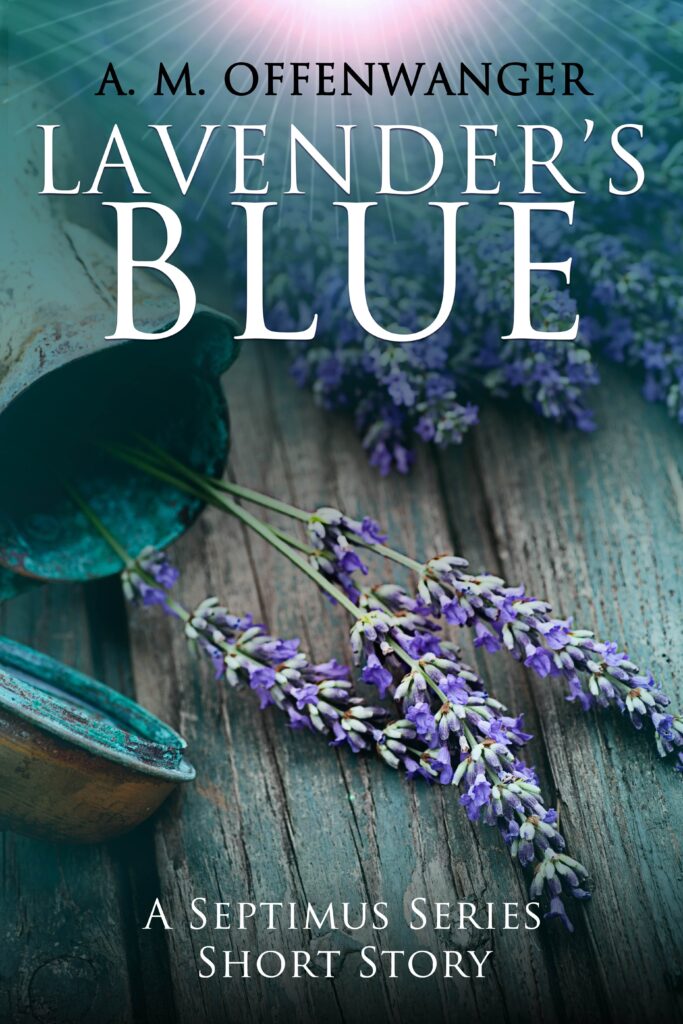
There’s the Septimus stories: Seventh Son, Cat and Mouse, Checkmate, and Star Bright. In between Cat & Mouse and Checkmate, there’s the short story “Lavender’s Blue”. The books are all available in ebook (Kindle, epub, Kobo, Nook, iBooks, pdf, what-have-you), and in print (from Amazon); the short story is free to download here.

The Septimus series is what started it all. It began with a blue pottery bowl:

“Cat was ordinary—until the day a blue bowl whirled her off to a magical medieval world…
Catriona, ex-librarian, dumped by her boyfriend, is just trying to restart her life when she gets sucked into and carried off by a blue pottery bowl. Suddenly thrown into a world where she can’t move for mysteries, how is this modern town girl going to cope alone in the woods with a comatose man and a muddy baby? And there’s that hint of something sinister…”

I do have plans for more stories in that series!

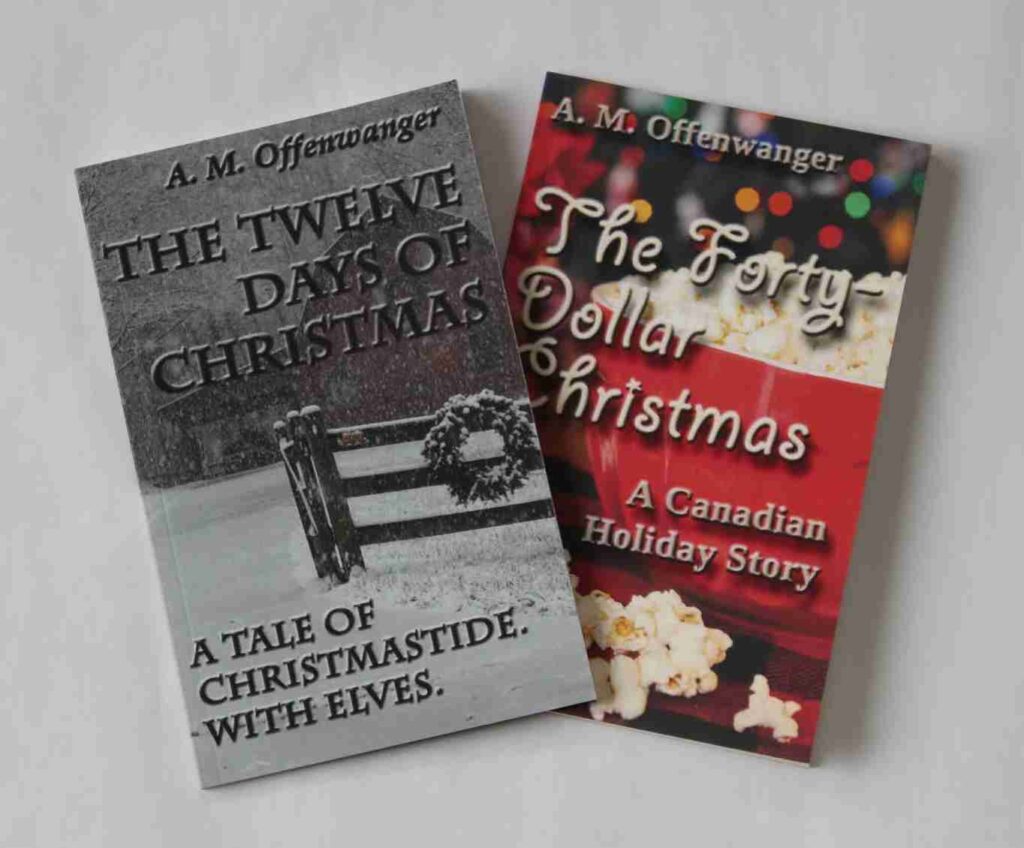
The other books available in ebook and print right now are the Christmas novellas: The Twelve Days of Christmas and The Forty-Dollar Christmas.

The Twelve Days of Christmas is the story of a woman whose boyfriend mysteriously vanishes on Christmas Eve, just when some unearthly beautiful people show up in town. Can Mac get Tom back in time before the Twelve Days of Christmas are up?

The Forty-Dollar Christmas is what I call a “here-and-now” story, i.e. contemporary fiction: a tale of how Liz tries to show her neighbour and his little girl that for celebrating Christmas, it’s not the content of your wallet that counts.

Again, both those books are available on Amazon for Kindle and print, and at most other ebook vendors in other ebook formats.

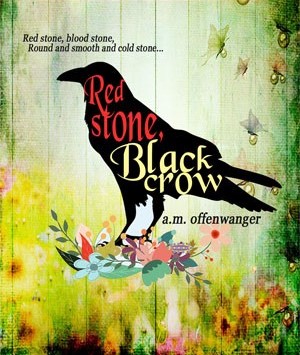
As for short stories, there are quite a number of them out there right now, and most of them are available to read for free! Go over here and follow the links.

So there you have it, that is Life, the Universe, and A. M. Offenwanger Stories to Enjoy. Get reading!

And Yet More Beginnings

Now that I think of it, even the stories started when I was thirteen.

“This is going to be the last piece of fiction you’re going to write in your school career,” our teacher said. It was Grade 7; creative writing classes did not exist in the academic type of school that I attended where we were trained for university. So this one last piece of narrative writing we got to do was an assignment to first create a “narrative core” – a fake newspaper account – and then turn it into a 2-page story.

I wrote a tale of a raccoon stolen from a circus who escapes his captors by sheer raccoonish cleverness (he chews his way out of the cage). That piece, too, I still have, in an extremely tattered blue binder. My teacher’s comment on the bottom of the second page says that it “flawlessly fulfils the requirements”. Not a single red mark on the whole two pages other than that comment.

The binder holds a number of other stories, some handwritten in my schoolgirl’s script and some typed on my mother’s typewriter, more or less hunt-and-peck style. On my own time, of course; the “writing for grades in school” train had, as mentioned, left the station.

I quit writing partway into a tale about a fifteen-year-old cowboy in the American West whose horse steps into a prairie dog hole and throws him; he gets picked up by a young man of twenty (which seemed quite old and grown-up at the time) whose fifteen-year-old sister nurses our hero back to health. The story fizzles out after some ten pages on account of lack of direction; I only had a vague idea of where I was going with it and nobody to tell me how to take that idea and turn it into a novel.

Life, the Universe, and the Beginnings of the Stories.

Chess, and Some Very Special Pieces

So, you know that Checkmate just came out, right? Of course you do, and you’ve already downloaded your ebook copy. And because you have, you know that it prominently features a chess game.

Oh, you mean you hadn’t got that far in reading the book yet? Sorry, didn’t mean to give any spoilers! But honestly, I’m not giving anything away by telling you that. I’m sure that even without getting to the part  about the game, you’ve figured out that the story has something to do with chess – because you’re brilliant like that, and put 2 and 2 together, i.e. deduced that the title Checkmate and the chess piece on the cover picture mean there’s some significance to chess here.

Checkmate_CVR_XSML

However, the chess knight on the cover is actually a tiny bit misleading – it’s the wrong style. If I’d had my druthers, the image that would have been on the cover is that of the Lewis Chessmen, a 12th-century ivory chess set that was discovered on the Isle of Lewis somewhere around 1831 and is on display in the British Museum now. The chess set in the book is modelled on them. But I couldn’t find any royalty-free images of the Lewis Chessmen, so we just went with a vaguely antique-looking ordinary chess piece for the cover.

lewisset_304x400
The Lewis Chessmen © Trustees of the British Museum

One cool & nerdy thing about the Lewis Chessmen is that they were used as the model for the chess set that Harry and Ron play at Christmas in the first Harry Potter movie, where the pieces clobber each other over the head instead of being tamely taken off the game board. I’d like to get me one of those sets…

But it would only be for display. You see, the funny thing about me writing about a chess game is that I don’t really know much about chess, myself – I know how the pieces move, and that’s about it. But fortunately, I’m married to someone who makes up for my deficiency, and so my Man alpha-read Checkmate and then set about fixing all my chess-related bloopers. He sat down and designed a chunk of game that worked with the plot as I had it, step by step. Here’s one of the configurations of the model game:

chess6

You can see his notations in the background. This is from where I rebuilt the game while I was editing, so I could get an actual image in my head of what was going on. And yes, I learned to read chess notations – who says writing fantasy fiction isn’t educational?

So that’s a little background piece on Checkmate, how it came to be written, and some of its imagery.

Life, the Universe, and – Checkmate! Have you got your copy yet?

Wordy Wednesday

It seems time is just slipping through my grasp these days. Time, and the ability to generate words. It’s not that I don’t have things to say, but somehow, sitting down at the computer, opening a document, and putting those things into actual words and coherent sentences seems to not be happening.

There’s just been too much other stuff occupying my time and, more importantly, my headspace. For one, there’s a new project I’ve got in the offing which I will tell you about soon. [By the way, did you know that the word “offing” means “the horizon on a sea shore”? So if something is “in the offing”, it’s just showing up on the horizon and about to sail into harbour. I learned that from the annotations the last time I had to read Heart of Darkness in lit class. Anyway…] There’s stories to edit and get ready to publish – yes, they’re still coming. Soon! I promise! And then there’s ordinary life – you know, dust bunnies, family meals, laundry, emails… Between all of that, somehow, elaborate erudition on this blog has been elusive.

Hence the “Wordless Wednesday” posts; one picture being worth etc. etc. And it’s true – sometimes you can say so much with just an image. Why bother spoiling the impact with excessive verbiage? That’s even true for the writer’s craft: sometimes one single verbal image is worth more than pages of exposition (it’s what’s known as the “Show, don’t tell!” rule).

And even right here – I’ve run out of things to say that actually make sense. But I just didn’t want to leave you hanging in cyberspace, thinking that I’ve abandoned you all and gone off to party with the cyber fairies (they throw mean parties, those little critters). I hope that my thoughts will, soon, gel into sense again, so I can once more drop my pearls of wisdom (or witless waffling?) into your path.

Meanwhile, let me leave you with a picture worth of Wordy Wednesday – another act of random refrigerator poetry:

IMG_20160109_220123
And that, today, was Life, the Universe, and a Wordy Wednesday.