The Things I Don’t Do Well

“Where do you get all those ideas from?” someone said to me the other day. “You have such an interesting life, you do so many things… You make things, and write books, and go to conferences, and go travelling…”

True. I do all those things. They are pretty special, which is why I write about them in this blog, and I’m very grateful that I can do them and that I can share them with you.

However, looking at the blog this past year, it has been rather full of stuff I do and places I’ve gone, and there hasn’t been very much about what my life really looks like in between all those “highlighty” events. You know, those long periods when I didn’t post anything, not even a “Wordless Wednesday” photo. When the blog was staring at me accusingly from the bottom of the long list of things that I needed to do, and that I, as per usual, didn’t do terribly well.

You see, while there are lots of things I can do, there are also lots of things I’m not very good at. I wish I were, but I guess there’s always a trade-off, isn’t there? You can’t be good at everything.

So in the name of balancing out the record a bit, here are a few things that I’m not good at. Never was, and, most likely, never will be.

Growing plants. I’ve posted pictures of my garden that make it look quite lovely, but, oh my. Those are very select images. The amount of money I’ve spent at nurseries on seedlings, the number of vegetable varieties I’ve tried to grow, the labour I’ve invested in trying to establish garden beds, all of which just… died… As for indoors, the houseplants I’ve killed are myriad; I only keep plants around that can tolerate the utmost neglect* (“Oh, you poor thing, you look dead! I probably should have watered you a month ago…”).

Keeping my house clean. On my “About” page I claim to live with, aside from my family and Steve, “a large number of dust bunnies.” That is not a joke. Okay, fine, it is—please laugh at it. But it’s also true. Well, I actually call them dust kitties, because they consist of a considerable proportion of cat hair. It’s not that I don’t see them congregating in the corners, I just don’t get around to dealing with them. And boy, can they ever pile on the guilt trips! For something that doesn’t have any eyes they can sure give you a nasty look every time you walk past them.

Oven-roasting or barbecuing meat. I make a mean pot roast, but oven-cooked beef or barbecued steaks tend to fall in the neighbourhood of shoe leather, while an oven-roasted chicken is either still half-raw or overcooked, but hardly ever tender and juicy and succulent and cooked all the way through when I want it to be.

Being consistent with things I ought to or even want to do. Like writing blog posts. Or going for walks. Or flossing my teeth. Or practising drawing or music skills. Or any of the many other good things we all know we should or would like to be doing.

I could go on for some time here, but you get the picture (I won’t post one of the dust kitties. Because, eew).
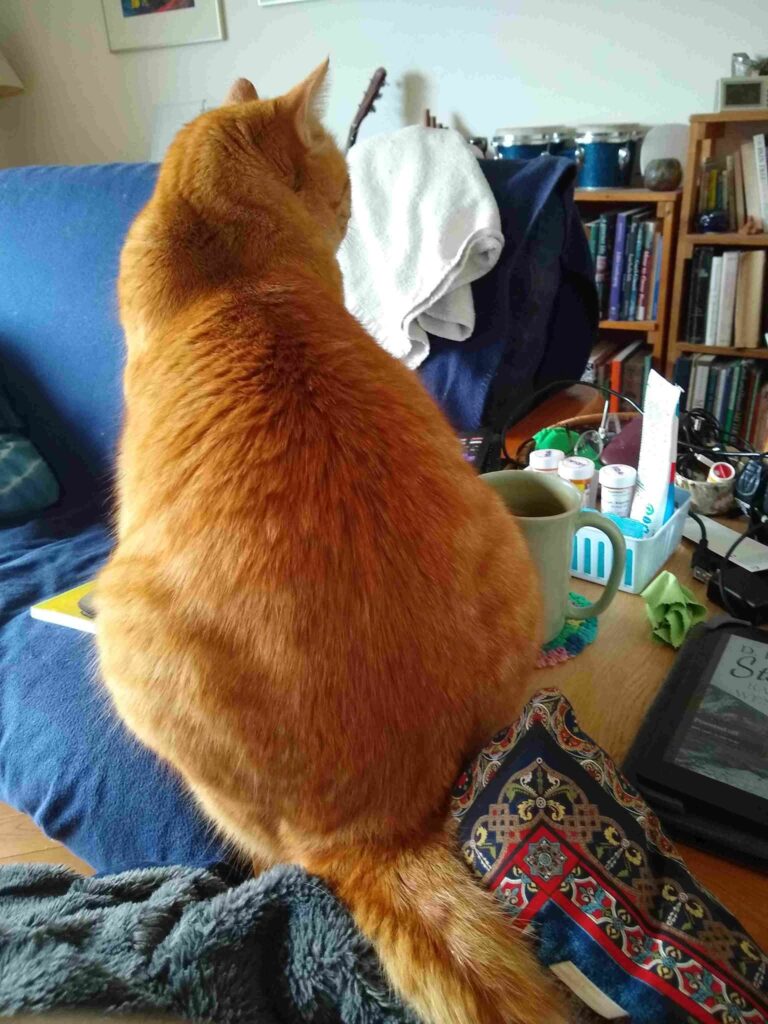
The chief contributor to the dust kitties in his pear-shaped glory

Earlier in the year, I wrote a post about Mme Curie and the Parallel Lives Fallacy. A friend of mine responded and pointed me to the work of Oliver Burkeman, who recently published a book called Four Thousand Weeks: Time Management for Mortals.

In a nutshell, what Burkeman points out is that we’re all on limited time here on earth. Four thousand weeks, give or take (which amounts to roughly eighty years), that’s it, that’s all each of us gets. And, as I was saying with my analogy of the plate full of meatballs, you cannot pack more into those four thousand weeks than what fits. If you choose to spend Week #2834 on one particular activity (say, digging a garden bed), you’re not going to spend it on another (writing a blog post, for example). Poof, that week is gone. There is only one week in a week, etc. And what that comes down to, Burkeman says, is that you have to choose. You have to choose what to do well, choose what matters. And choose what to suck at.

I suck at things—and let me tell you, it sucks. When you’re born a perfectionist, it hurts to not be able to do all those things that you’re told by—well, something, somebody, the last novel you read, the ubiquitous “they”—you should be able to do. But the reality is, that’s a hurt we have to live with. That I have to live with. It’s embarrassing to be this way.

But also (and again I’m quoting Burkeman here, in spirit, if not verbatim) to realise your limitations is also immensely freeing. I can’t do everything, and that, as I’m trying to get through my head and into my heart, is okay. Because it’s true for everyone; it is, in fact, to be human.

I’ll never definitively win the battle with the dust kitties. But maybe we can come to a truce. And meanwhile, I’ll admire those of you who have lush, thriving gardens and tidy and serene homes, with a juicy roast in the oven that you return to after your daily run. You are a gifted person, and I salute you.

Life, the Universe, and Things I’m Not Good At. And that’s okay.
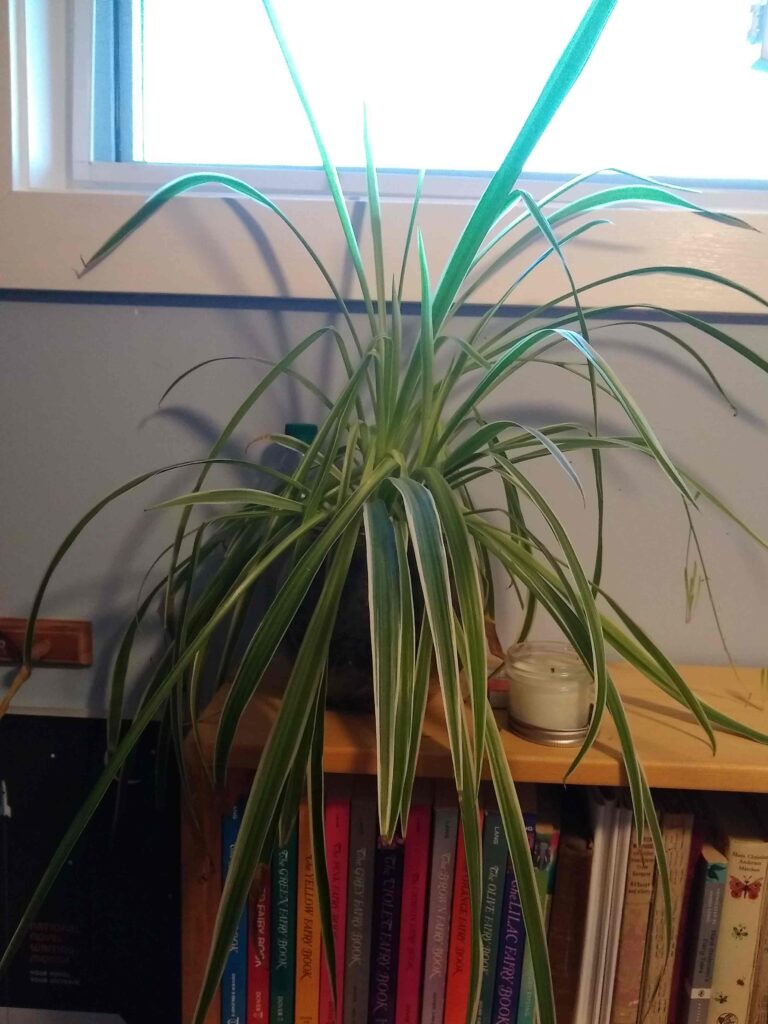
One of the houseplants that has managed to survive the treatment it gets around here

*Spider plants. Spider plants are amazing.
Marie Curie’s Bunsen Burner and the Parallel Lives Fallacy

Unknown author, CC BY-SA 4.0 https://creativecommons.org/licenses/by-sa/4.0, via Wikimedia Commons

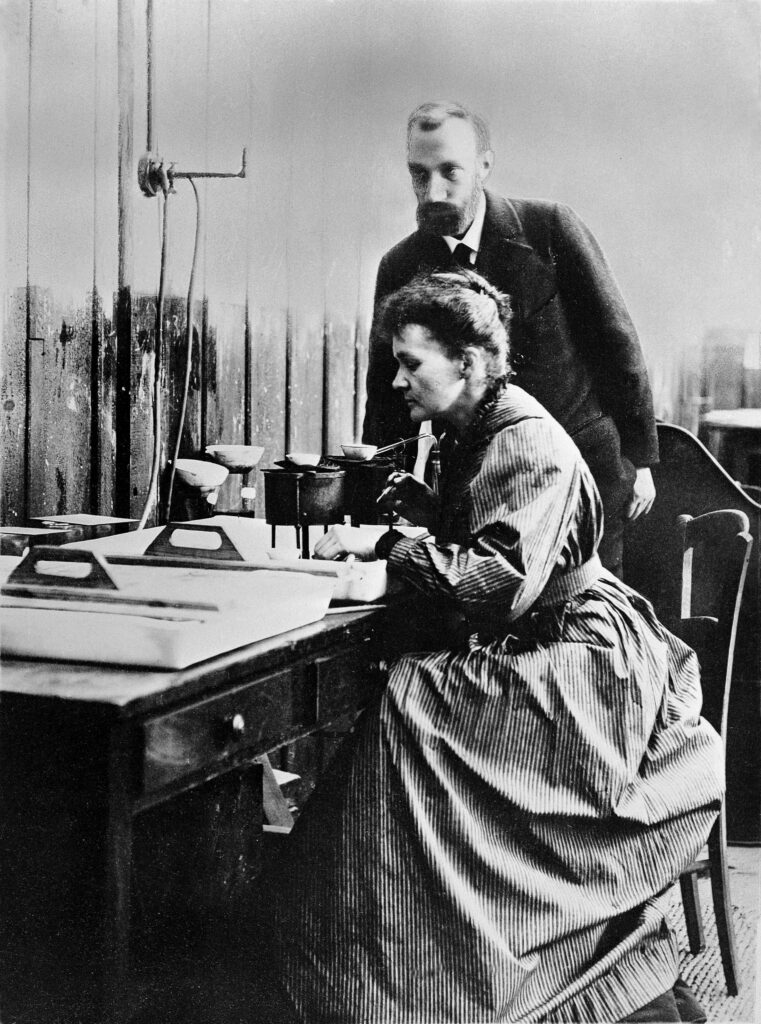
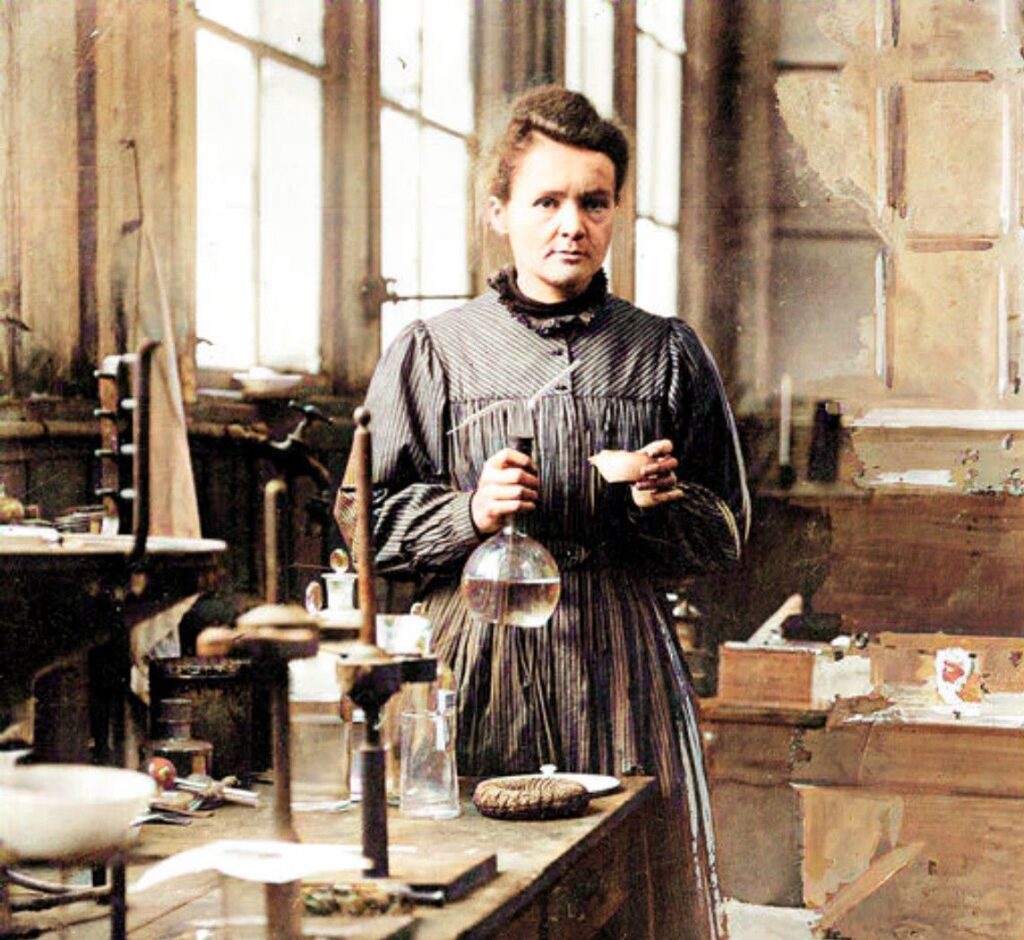
I must have been around nine or ten, reading an article in the yearly Reader’s Digest Youth Anthology about Marie Curie. You know, the famous scientist? First woman to receive a Nobel Prize? First woman to receive multiple Nobel Prizes, in fact? Only person ever to get a Nobel Prize in two different fields? Yeah, her. So inspiring, such a role model.

There’s one sentence that stuck out to me so much I still remember it forty-odd years later. The article was talking about Mme Curie’s life, and it described how she would get ready for her day at the research lab, making sure her two little girls were looked after, putting a stew on the back burner for their dinner. A little while later, she would be in the lab, and, so the article said, “adjusted the flame of her Bunsen burner with the same care that she had used for the flame of the stew pot that morning…”

Ah, thought little pig-tailed nine-year-old me, that’s how it’s done. If a girl wants to be a famous scientist and do life-changing work, she has to make sure that the beef stew for her family back in her kitchen is as well-regulated as the flame of the Bunsen burner in her lab.

Pierre and Marie Curie at work in laboratory Credit: Wellcome Library, London.
CC BY 4.0 http://creativecommons.org/licenses/by/4.0/

This morning, as I was thinking about this in the course of my never-ending struggle with running the multiple tracks of my life, I came up with a phrase to describe this idea: the Parallel Lives Fallacy. It’s the idea that if you only work hard enough, you can, in fact, excel at multiple different roles—you can lead Parallel Lives. Like Marie Curie, who so admirably regulated the flames of her role of housewife and mother and Nobel-Prize-winning scientist.

Parallel Lives: in one life, you’re a full-time award-winning scientist; in another, you’re an excellent housewife and devoted mother (also full-time). Maybe you even add a third one, where you’re a dedicated volunteer and full-time caregiver to your ailing parents. Or, wait, you could be an artist, as well! Write novels, or make pottery to sell at the market, or paint pictures to go in exhibitions!

Full-time jobs, all of them. Several full-time jobs. Wait—full-time. Several full-times. Nothing wrong with that concept, is there? It’s just like, when your plate is full, you can obviously go back to the buffet with it and start loading it up with another plateful’s worth of food, right? Several platefuls.

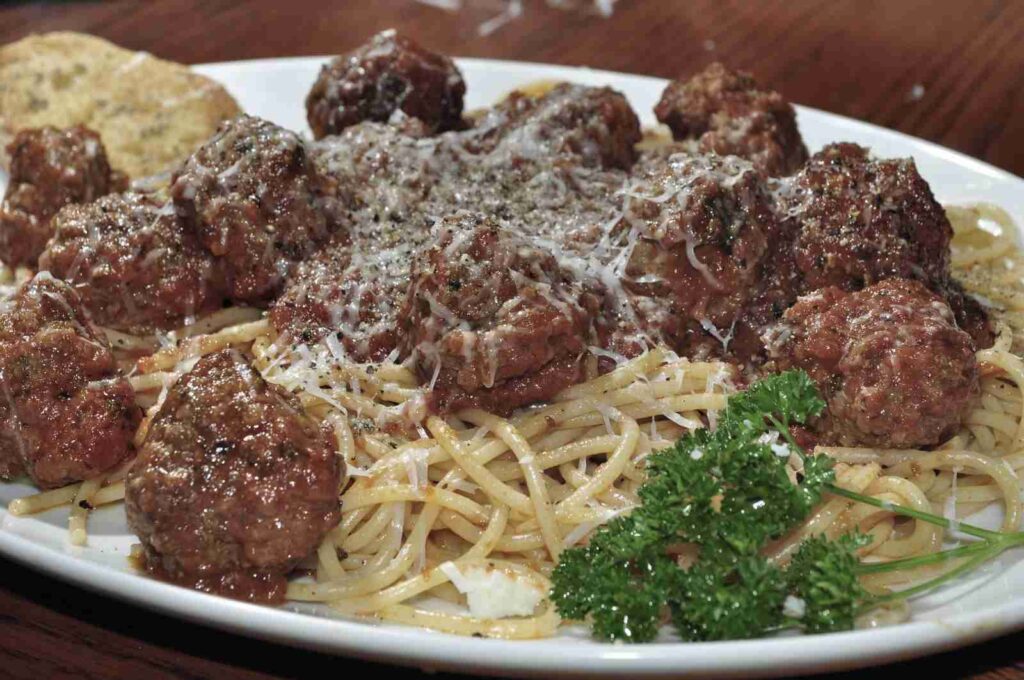
Yes, I know the image that brings up. “On top of spaghetti / all covered in cheese, / I lost my poor meatball / when somebody sneezed. / It rolled off the table, / it rolled on the floor, / and then my poor meatball / rolled out of the door…”

jeffreyw, CC BY 2.0 https://creativecommons.org/licenses/by/2.0, via Wikimedia Commons

Marie Curie was amazing. She pulled off the Parallel Lives stunt to admiration, without losing a single meatball, from what I can tell. However, her work eventually killed her, because she didn’t know to protect herself from the fascinating stuff she had discovered. It also killed her daughter, Irène (another Nobel Prize winning scientist working with radiation). Apparently (according to Wikipedia), Marie Curie’s papers—including her cookbooks!—even more than a hundred years later have such a high level of radioactive contamination that they’re kept in lead-lined boxes and are considered too hazardous to handle without protective equipment.

I can’t help but wonder about the state of that stew on the carefully regulated burner—was that contaminated, too?

The Parallel Lives Fallacy is a fallacy. Because unless you’re Marie Curie (and I sure am not), you just can’t pull it off without losing at least one or two of your meatballs off that plate. Which is a patent waste of good meatballs (I have a recipe, if you’re interested). You get one plate, and it only holds one plateful of food. There is only one day in a day, only twenty-four hours in twenty-four hours, and only space for one full-time job in your full time.

The problem with Marie Curie’s Bunsen burner is not that we admire her for her balancing act of flame-regulation. It’s that we (okay, that I) instantly think that that’s the only way to do it, the only way to be a successful and worthy person. That we succumb to the Parallel Lives Fallacy.

The reality is that one plateful of food is enough. One day in a day, one life in a life. If you try to stack more on top, the meatballs go rolling under a bush, and, contrary to the song lyrics, don’t grow into a meatball tree but just attract maggots and rats. At least in my life they do.

So I’m going to turn my back on that Parallel Lives Fallacy. I’m going to try to choose more carefully what I want on my plate, because I really enjoy meatballs and don’t want them rolling under a bush on me. I also like spaghetti noodles, and tomato sauce, and a lovely green salad, and maybe some cooked carrots or a piece of garlic bread… I want to have room for them all on my one plate, so I can enjoy the whole meal, savour it and get nourishment from it. One plate, one plateful.

Oh, but you know what? A little secret: You get dessert. In a separate little glass dish. You don’t have to pile it onto your plate with the meatballs. Make of that what you will.

Life, the Universe, and Marie Curie’s Bunsen Burner. One life to live is enough.